
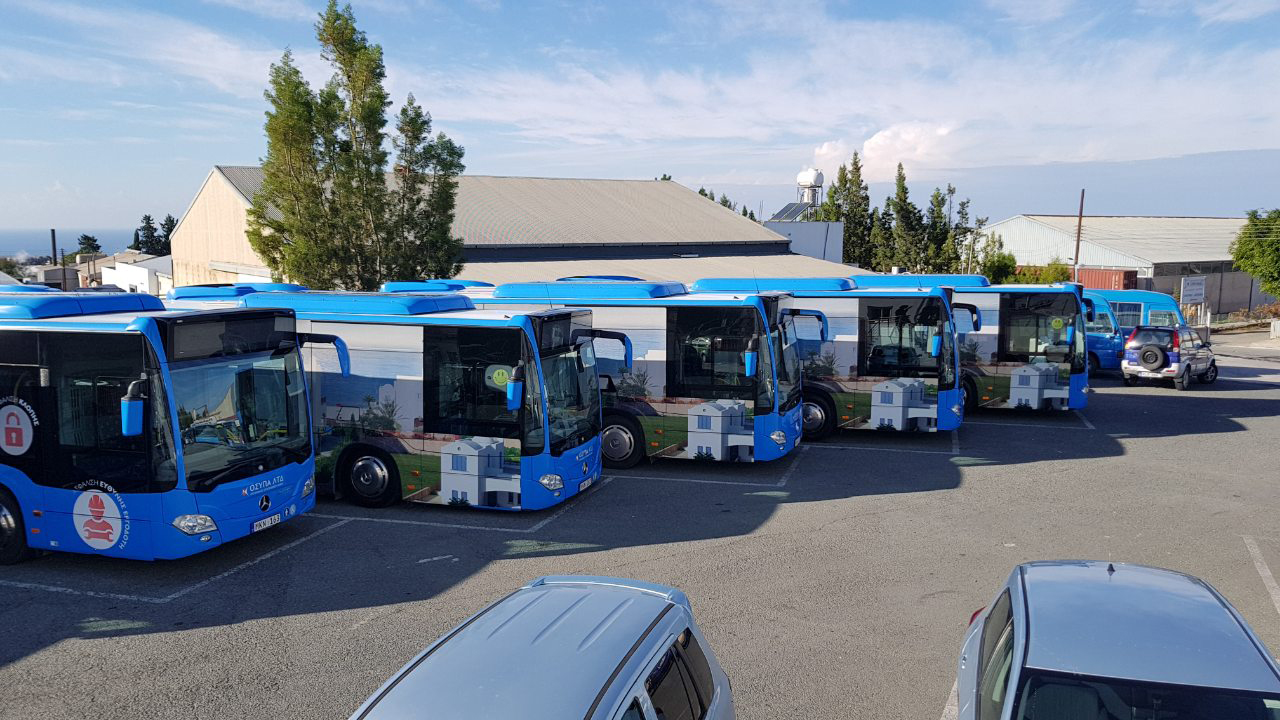
The audit office on Monday complained that the concessionaire for Paphos public transport company Osypa has purchased only 32 of the 72 new buses it was contractually obliged to add to its fleet by February, despite incurring millions of euros’ worth of financial sanctions because of its failure to buy the remainder.
It said that the concessionaire had “committed to adding 72 new buses to its fleet” by the end of a one-year “transitional period”, which began in 2024, and said that despite the financial penalties issued, the purchase of the 40 remaining buses “has not yet been achieved”.
“Even if it is considered that the [transport] ministry acted within the contractual and legal framework and utilised the means at its disposal, the result remains the same: an essential term of the contract has still, two and a half years later, not been implemented,” it said.
It said that the fact that the new buses have not been purchased “inevitably raises questions as to whether the initial design of the contract provided the contracting authority, the transport ministry, with sufficient and effective tools to enforce compliance”.
It said that the contract was initially signed on November 30, 2022, with the requirements to be 80 working buses, of which eight would be transferred from the previous contract for public transport in the Paphos district – three which were first put on the road in 2010 and five which were first put on the road in 2015 – and the remainder would be new, by this year.
During the tender stage, it said, the concessionaire had “provided a certificate from a bus manufacturer confirming its ability to deliver the vehicles which would be ordered within the time limit”.
However, it said, after this, the initial transition period, which had been set to expire on November 30, 2023, was then extended until February 7, 2024, with orders for a total of 82 buses being placed in January and February 2023.
Even then, it said, by February 7, 2024, only 20 new buses had been put into service, while this number had only risen to 32 when the audit office inspected the matter in February this year.
More than €4m in fines incurred
It said that at present, in the absence of newly bought buses, the concessionaire is providing services using rented buses as well as “existing, older vehicles”.
The concessionaire, it said, has been amassing daily penalties for failing to comply with the contract, which had by February reached exactly €2,373,693.60. In a response letter written by the transport ministry in July, it was said that that figure had since almost doubled, reaching €4,512,967.12, and was “rising at a rate of around €150,000 per month”.
The ministry also said that last year, the concessionaire covered 98.7 per cent of the kilometres it is contractually obliged to cover in line with what it described as “basic service”.
According to the audit office, “the concessionaire’s failure to respond despite the imposition of financial sanctions by the contracting authority may indicate poor initial planning on the part of the contracting authority”.
Additionally, it said, “the financial consequences imposed may be such that it would be financially advantageous for the concessionaire not to comply even if the penalties provided for are imposed”, but stressed that instead, “logically, the financial consequences of non-compliance should have been such as to have a serious impact”.
Such an impact, it said, should have been able to “force it to comply”.





Click here to change your cookie preferences