
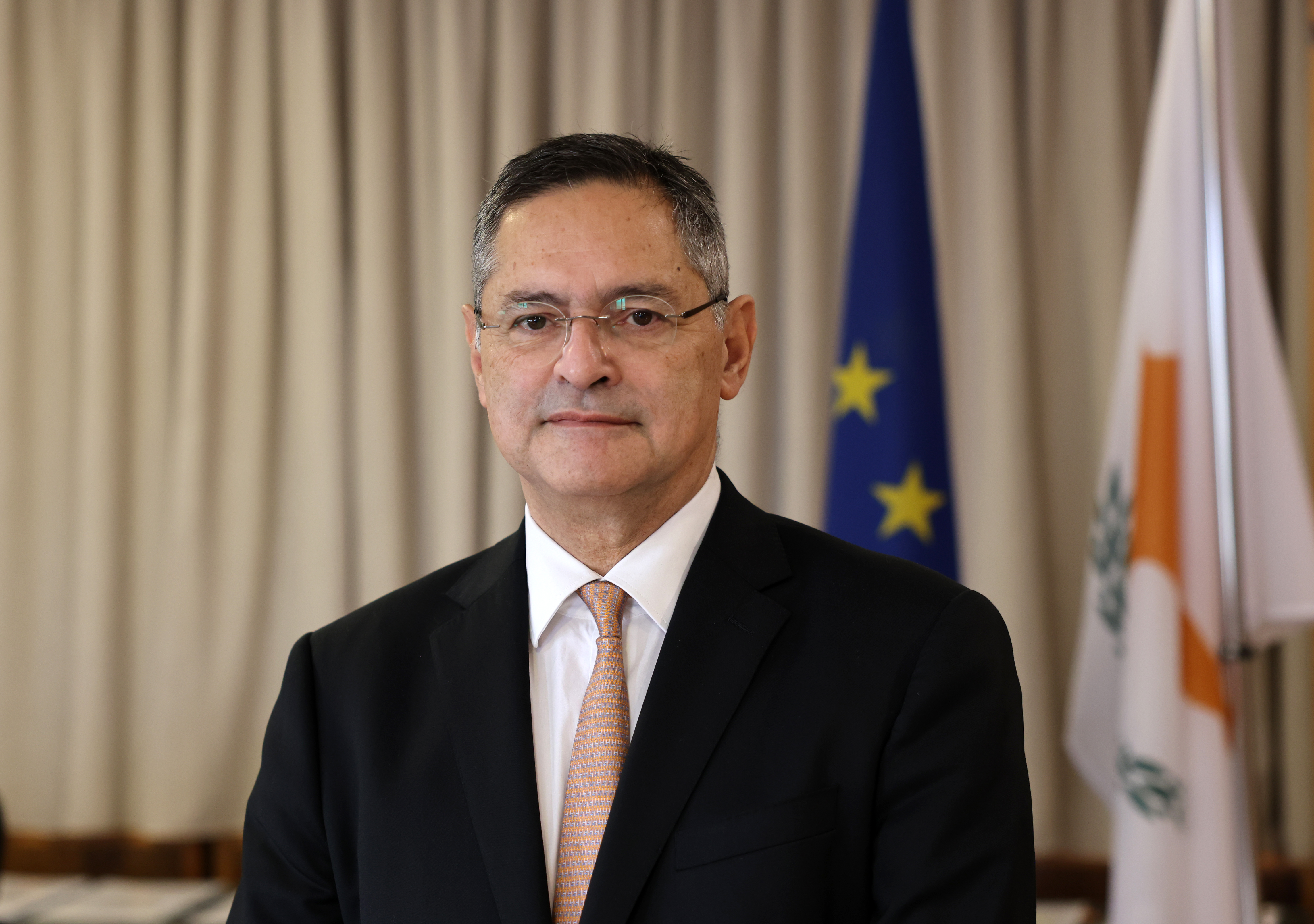
Patsalides flags risks from $570bn hyperscaler bond market
Central banks must look past headline inflation and examine how energy shocks and artificial intelligence are reshaping economic activity, financing conditions and financial stability, Central Bank of Cyprus governor Christodoulos Patsalides said on Wednesday.
He also warned that the combination of geopolitical disruption and rapidly expanding technology investment is creating increasingly complex challenges for policymakers.
Addressing an MNI Connect video conference with economists, investors and financial market participants on November 11, Patsalides, who is also a member of the European Central Bank’s Governing Council, said the persistence of the energy shock and the rise of artificial intelligence were two developments requiring particular attention.
In a speech titled ‘Monetary policy at a crossroads, the energy shock and the rise of Artificial Intelligence‘, he argued that central banks needed to look beyond aggregate economic indicators and examine the underlying mechanisms through which disruptions spread across markets and the wider economy.
“Today’s theme brings into focus the complexities of an ever-changing world where geopolitical fragmentation, disruptive technologies and recurring economic shocks continually reshape the landscape in which monetary policy operates,” Patsalides said.
He recalled attending an ECB Governing Council policy retreat in Kilkenny, Ireland, in May 2024, where policymakers were already discussing the difficulties posed by supply shocks and the appropriate monetary policy response.
During a walk with former International Monetary Fund chief economist Olivier Blanchard, Patsalides had shared his concerns about the challenges ahead.
“He smiled and replied, ‘Well, you have a tough job ahead of you’,” Patsalides recalled.
Looking back, the Central Bank governor said he could not have anticipated the range or scale of the disruptions that would subsequently confront policymakers worldwide.
Energy shock requires continued vigilance
Drawing a historical parallel with the strategic importance of trade routes, Patsalides opened his discussion of energy markets by referring to the Peloponnesian War and Sparta’s seizure of the Hellespont in 405 BC.
The move cut Athens off from grain supplies arriving from the Black Sea, triggering famine and forcing the city to surrender the following year, bringing an end to its dominance.
“Strategic choke points have held the global economy to ransom since the ancient world,” he said, before drawing a comparison with the disruption surrounding the Strait of Hormuz.
While acknowledging that the current situation might not be as dramatic as the ancient blockade, he argued that its consequences had nevertheless been significant through the energy inflation channel.
“The blockade at the Strait of Hormuz may not be as dramatic. But it has altered the course of history through the energy inflation channel,” Patsalides said.
He added that consumers were already feeling the consequences through higher fuel costs, with their responses reflecting the political and economic pressure created by energy prices.
“The global citizen at the gas pump has been casting their vote,” he said.
Patsalides stressed that supply shocks differ considerably in their magnitude, duration and economic consequences, meaning policymakers could not rely on a uniform response to every disruption.
The ECB’s task, he explained, was to understand how the energy shock was spreading through the economy while applying its three-pronged monetary policy reaction function and ensuring that inflation returned to its two per cent medium-term target.
“Policy credibility is best preserved through disciplined adherence to a robust analytical framework grounded in data, careful assessment of underlying inflation dynamics and rigorous evaluation of transmission mechanisms,” he said.
He maintained that the ECB’s approach of taking decisions based on incoming data and assessing developments at each meeting remained essential in an environment characterised by heightened uncertainty.
“Amid heightened uncertainty our data-dependent, meeting-by-meeting, approach remains essential to ensuring price stability,” Patsalides said.
Referring to the ECB Governing Council’s October meeting, he said policymakers had decided to keep key interest rates unchanged, with inflation expectations remaining well anchored and monetary policy transmission continuing to work effectively.
He added that second-round effects from the energy shock had not emerged to any meaningful extent.
According to ECB analysis cited by Patsalides, approximately 90 per cent of the increase in energy inflation reflected adverse supply-side developments linked to the conflict in the Middle East, rather than excessive domestic demand.
At this stage, he said, the inflationary impulse remained predominantly supply-driven.
However, he cautioned against interpreting that assessment as a reason for complacency.
Food and services inflation under scrutiny
A central concern for policymakers is whether higher energy costs are gradually becoming embedded in wider inflation dynamics, particularly through businesses passing increased costs on to consumers and workers seeking higher wages.
Patsalides said recent developments suggested that the effects of the energy shock could be broadening, even though underlying inflation remained broadly stable.
“We have recently observed a slight upward pressure in food-price and services inflation, while core inflation remains unchanged,” he said.
He also pointed out that crude oil prices had retreated substantially in recent weeks, although the outlook remained uncertain and required continued monitoring.
The governor warned that the longer an energy shock persists, the greater the possibility that it will influence how businesses set prices and how consumers form expectations about future inflation.
“The mere passage of time since the beginning of the conflict is bound to create its own momentum on price formation and expected inflation,” he said.
He called for more detailed research into how price increases were transmitted through individual sectors and supply chains, rather than relying exclusively on broad inflation indicators.
In particular, he said, policymakers needed to understand the granular sectoral networks of price dynamics and the structural mechanisms through which higher energy costs were passed on.
“On price formation, it is imperative that we remain vigilant and carry further our research and analysis into the granular sectoral networks of price dynamics and structural pass-through mechanisms,” Patsalides said.
He added that monitoring potential second-round effects remained essential, particularly if businesses and employees began adjusting their behaviour in response to expectations of persistently higher prices.
Inflation expectations were another area requiring close attention.
Although long-term expectations remained firmly anchored, Patsalides warned that the prominence of headline inflation in public debate and persistent increases in short-term expectations could complicate the outlook.
“Although long-term inflation expectations are firmly anchored, headline inflation is making headlines, and higher short-term inflation expectations remain persistent,” he said.
He argued that the evolution of inflation expectations required heightened vigilance, even in the absence of a significant deterioration in underlying inflation measures.
Artificial intelligence reshaping the economic outlook
Turning to artificial intelligence, Patsalides said the technology was becoming another major disruptive force for central banks, with implications extending well beyond productivity and economic growth.
“Artificial intelligence is disrupting our lives and is here to stay,” he said.
He also referred to recent remarks by IMF managing director Kristalina Georgieva, who had described the technology as an unavoidable force changing everyday life.
“Love it, hate it, fear it, it is here. It has arrived and it is changing our lives. The way we work, the way we live,” Georgieva had said.
Patsalides argued that energy and artificial intelligence share important characteristics as global disruptive forces, with both affecting growth, inflation, financing conditions and financial stability.
He said AI was rapidly reshaping the euro area economy and becoming an increasingly important driver of structural change.
Referring to a recent keynote speech by ECB executive board member Philip Lane at a symposium organised by the Federal Reserve Bank of San Francisco, Patsalides said AI was already making a significant contribution to euro area growth.
This was being driven both by expenditure on adopting AI technologies and by the participation of European companies in the global artificial intelligence supply chain.
He explained that discussions about AI in international economic forums generally concentrated on its relationship with growth, productivity and inflation.
However, when viewed from a financial stability perspective, the focus shifted towards potentially stretched company valuations, concentration risks and the increasing use of debt financing.
Patsalides said he wanted to draw particular attention to the implications of hyperscaler debt financing for European financial markets, as major technology companies seek increasingly large amounts of capital to fund AI infrastructure.
Hyperscalers turn increasingly to debt markets
The governor warned that the rapid expansion of AI infrastructure was driving an extraordinary investment cycle at a time when governments were already facing substantial public financing requirements because of elevated fiscal deficits.
“The AI infrastructure buildout is boosting investment at a time of a rising global public funding requirement owing to the elevated fiscal deficits,” he said.
The scale of investment being contemplated was considerable, with research suggesting that AI-related investment could reach as much as $9 trillion between 2025 and 2032.
Patsalides described this as potentially one of the largest concentrated investment booms in modern economic history.
Although estimates varied significantly, he said the overall direction was clear, with technology companies committing increasingly large sums to infrastructure, computing capacity and related equipment.
The challenge, he explained, was that capital expenditure was growing faster than the cash being generated by some of the companies involved, prompting greater reliance on external financing.
“With capital expenditure rising faster than cash generation, financing is increasingly being pursued in the debt market, and particularly the bond markets, private credit, and circular funding and contractual commitments through interlinked ownerships,” Patsalides said.
He warned that the growing complexity of financing arrangements was making it more difficult for investors and regulators to assess the underlying risks.
These arrangements included special purpose vehicles (SPVs) and project-level financing, alongside interconnected ownership structures and contractual commitments.
“Complex and opaque financial structures, including SPVs and project-level finance, are making underlying risks more difficult to assess,” he said.
Providing an indication of the scale of borrowing, Patsalides said technology and hardware companies had reportedly issued approximately $350 billion in bonds during 2026, roughly twice the amount issued over the corresponding period a year earlier.
The total outstanding bonds issued by hyperscalers stood at around $570 billion, of which approximately €39 billion were denominated in euros.
He also highlighted the participation of European investors in euro-denominated bond issues, explaining that this was taking place primarily through a lower allocation to US Treasury bonds.
The increasing supply of debt, combined with higher credit risk and wider uncertainty, was contributing to wider credit spreads in both debt markets and the credit default swaps (CDS) market.
Nevertheless, Patsalides said investor demand had so far absorbed the additional issuance relatively smoothly.
“Yet, investor absorption has been smooth so far,” he said.
He cautioned that the absence of immediate market disruption did not mean the development should be overlooked, particularly as the scale of AI-related borrowing continued to increase.
Potential implications for European financial stability
Patsalides said there was currently little evidence that financing for artificial intelligence was materially crowding out funding available to other economic sectors.
However, he warned that hyperscalers were becoming an increasingly significant segment of the bond market, meaning their financing requirements could eventually have wider implications for capital markets.
“To date, there is little evidence that AI-related financing has materially crowded out funding for other sectors,” he said.
He added that the situation could change if projected investment continued to expand at its current pace.
“Should projected investment continue to expand, AI-related financing may become an increasingly relevant consideration for capital markets,” Patsalides said.
He stressed that the issue deserved closer attention from policymakers and financial stability authorities, particularly given the interconnected nature of financing structures and the uncertainty surrounding future investment returns.
“This must be an area of focus,” he said.
The governor’s remarks highlighted a growing challenge for European financial markets, as technology companies increasingly turn to debt to finance the infrastructure required to support artificial intelligence, potentially creating new concentrations of credit exposure.
The concern is not limited to the overall volume of borrowing, but also the transparency of financing arrangements, the assumptions underpinning investment projections and the ability of markets to absorb additional issuance without generating vulnerabilities.
Central banks must look beyond headline figures
What is more, Patsalides returned to the two central themes of his speech, arguing that the energy crisis and artificial intelligence represented very different types of disruption but required a similar approach from monetary policymakers.
He contrasted the immediate inflationary consequences of energy pressures with the longer-term economic potential of artificial intelligence.
“The energy crisis and the rise of AI are both disruptive forces. The former erodes purchasing power and constrains production; the latter holds the promise of higher productivity and growth,” he said.
He warned that, given sufficient time, the effects of both developments would become increasingly pervasive, influencing economic decisions and transmitting disruption across the global economy.
“For central bankers, both call for the same analytical discipline, rigorous, detailed examination of the evidence and careful assessment of uncertainty,” Patsalides said.
For energy markets, this would mean further research into the detailed networks through which price changes spread across different sectors and businesses.
For artificial intelligence, it would require greater visibility into complex and sometimes opaque funding arrangements, alongside closer examination of the assumptions underpinning investment forecasts.
He said policymakers needed to move beyond aggregate developments to identify the mechanisms through which disruptions were transmitted and remain prepared to revise their assessments as new evidence emerged.
The governor also argued that the increasing complexity and speed of global economic developments meant that the analytical tools used by central banks needed to evolve accordingly.
“The global economy has become faster-paced and increasingly granular. To navigate these shifting dynamics, data sets and analytical tools must evolve to match this precision,” he said.
He added that artificial intelligence itself could help policymakers improve their ability to analyse increasingly complex economic information.
“After all, we have AI to help us do that,” Patsalides said.
He concluded by warning that further economic shocks and disruptions were likely to emerge, making it essential for central banks to continuously strengthen their analytical capabilities.
“New shocks and disruptions are likely to continue emerging. Our capacity to understand them must keep pace,” he said.
Reflecting on the conversation with Blanchard in Ireland in 2024, Patsalides said the experience had reinforced an important lesson about the unpredictable nature of monetary policymaking.
“Perhaps this is the most important lesson I have learned since that conversation in Kilkenny,” he concluded.





Click here to change your cookie preferences