
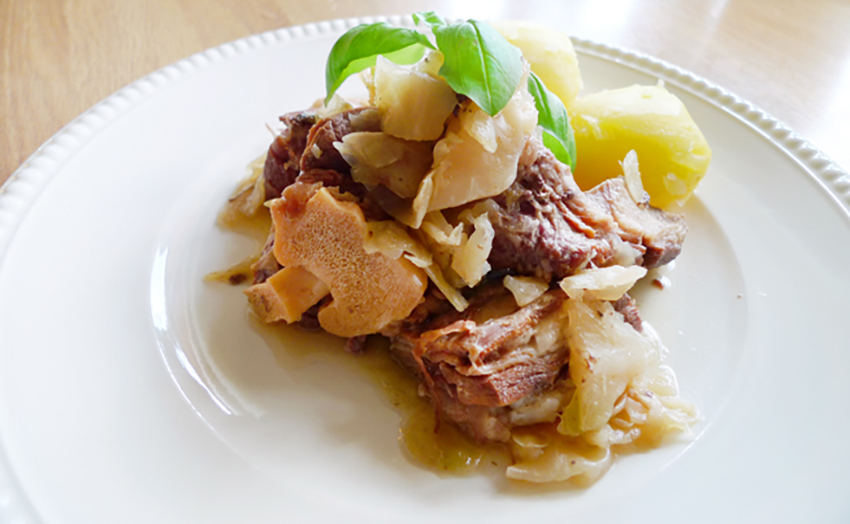
Long before anyone tried to enshrine it as a national icon, farikal was simply what Norwegians turned to when the first cold winds swept in. Nothing more than a pot where lamb meets crisp cabbage, in typical Norwegian fashion for simplicity.
Crafted from mutton or lamb, often shoulder or neck cuts layered alternately with wedges of white cabbage, the stew simmers gently with whole black peppercorns, salt and minimal water, allowing the ingredients’ natural flavours to meld over two to three hours.
Boiled potatoes, slicked with butter and parsley, customarily accompany it, transforming this humble potage into a meal that warms body and spirit alike.
The dish’s origins go back to Norway’s rugged agrarian past, where sheep have roamed steep, saline shrublands since Neolithic times, their wool, milk and meat sustaining communities through harsh winters.
Cabbage, too, arrived as a hardy staple in medieval diets, referenced in 13th-century trade laws and Old Norse proverbs likening modest fare to everyday resilience.
By the 19th century, farikal emerged among farmers as an autumnal rite, coinciding with lamb slaughter and cabbage harvest, its layers evoking the very strata of Norway’s fjord-carved terrain.
Over time, farikal evolved from simple peasant food to a powerful symbol of national identity. In 1972, Norwegians took part in a public vote organised by a newspaper to choose their official national dish. Thousands voted, and farikal was chosen, marking an expression of popular will and cultural pride.
A dedicated Farikal Day graces the last Thursday of September, drawing families to tables laden with this traditional dish, while modern iterations occasionally incorporate root vegetables or herbs, though purists insist on the elemental quartet.
Regional nuances persist: coastal variants might favour fresher lamb, inland preparations lean towards mutton for deeper savour, and some scatter peppercorns generously, challenging diners to navigate their burst of heat.
Beyond its recipe, farikal reflects Norway’s deep-rooted pastoral traditions, where over a million sheep, one for every sixth inhabitant, graze the land. This long history of herding helped shape the landscape and maintain a balance between cultivated pastures and wild areas, indirectly reducing the need for poaching by supporting sustainable livestock farming.
All in all, humble though it is, the stew has weathered centuries and arguments with a kind of sturdy, unshowy grace. Each bowl serves not just lamb and cabbage, but a taste of Norway’s long, steady relationship with its land and the people who have tended it.





Click here to change your cookie preferences