
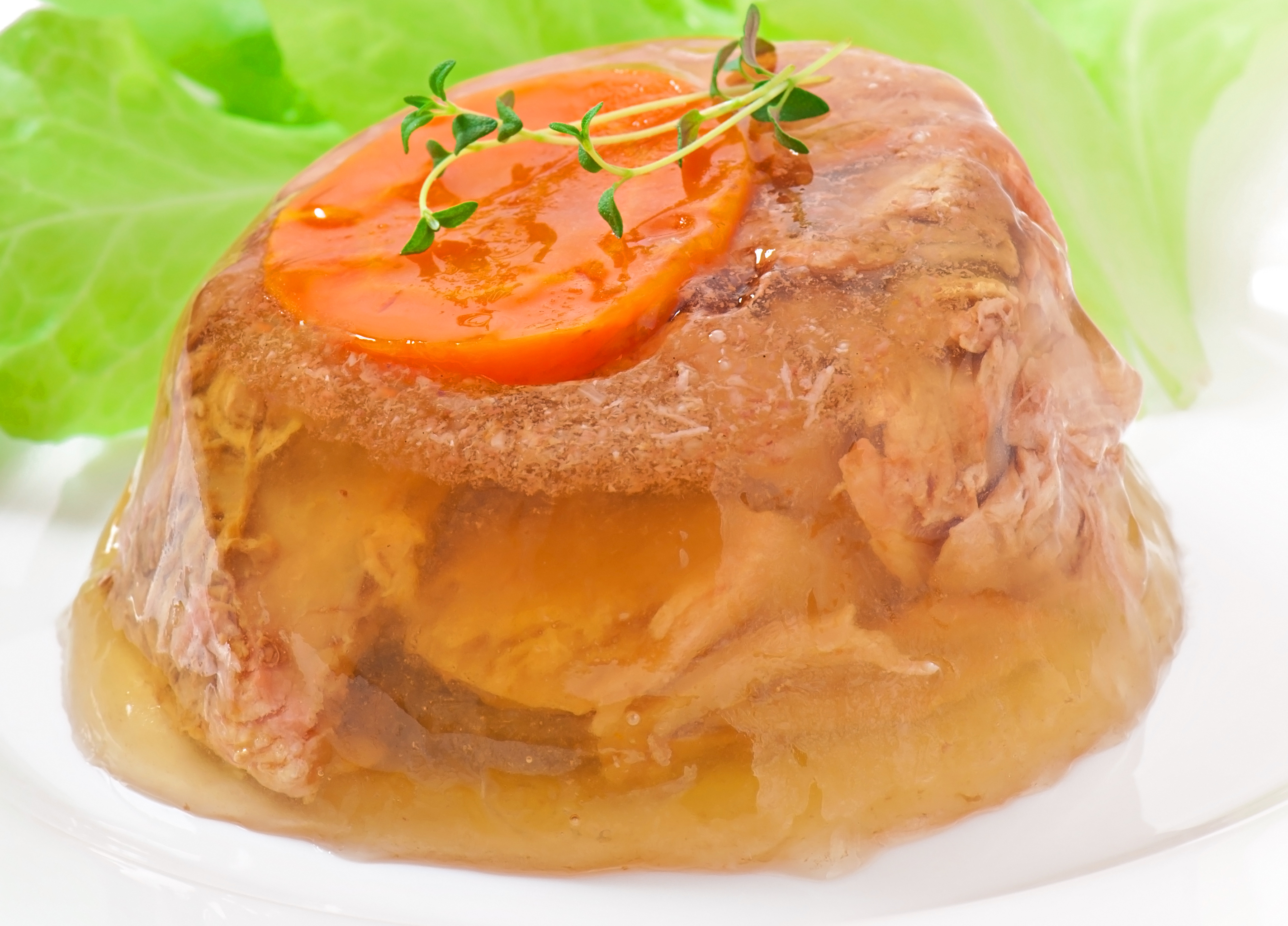
Polish Galareta is one of those beloved traditional recipes the unfortunate appearance of which may discourage the uninitiated.
Also known colloquially as “cold feet,” this savoury jelly, a type of aspic, typically features pork or chicken meat with vegetables suspended in a rich, gelatinous broth. The jelly comes from collagen released by simmering meat and bones for five to eight hours. After the ingredients and seasoning are added, the dish is cooled into its characteristic jiggly form.
Served chilled, galareta is a popular appetizer or snack enjoyed especially during holidays or even formal dinners.
The earliest records of “cold feet” in Poland date back to 1518, when meat aspic accompanied by salad was served at the wedding feast of King Sigismund I the Old and Bona Sforza.
Back then, the dish was made a bit differently than it is today. Instead of pork, people used poulard (young chicken), capon or fish cooked in a rich broth. After cooking, the clear, seasoned jelly was sometimes coloured using linen flakes.
This method of serving meat jelly was detailed by Stanisław Czarnecki in his 1682 Compendium Ferculorum, which translates simply as “A Collection of Dishes.”
Centuries later, in the late 1990s, public trust in gelatin products took a serious hit following widespread media coverage of mad cow disease. Concerns arose that gelatin, often derived from animal organs, could carry deadly prions.
As a result, beef gelatin almost vanished from the market, replaced by pork gelatin, which manufacturers now clearly label in their products. Despite lingering doubts and ongoing fears that pork gelatin might also carry hidden prion risks, galareta has mostly reclaimed its traditional place on Polish tables.
Galareta is not unique to Poland. It belongs to a wide family of savoury jellies cherished across Eastern and Central Europe, and beyond. Similar dishes appear in England, Romania, the Baltic states, Slovakia, Hungary, Ukraine, Finland, Vietnam, Nepal and many more.
Among Slavic countries like Russia, Belarus, Georgia and Ukraine, meat jelly goes by names such as kholodets or kholodne, derived from the word for “cold.”
Cyprus’ own take on the technique, called zalatina, shows just how many cultures have chosen to jelly‑fy their favourite ingredients.
Simmered slowly from pork with salt, pepper, chili, rosemary, vinegar, and citrus juices, traditional zalatina made use of the whole animal, from head and feet to, at times, even ears and eyes.
Traditionally prepared on the eve of Lent, zalatina carries religious significance. Yet at its core, whether zalatina, galareta, or similar variants, the practice reflects a practical approach to preservation, often aimed at making the most of the meat and reducing waste, especially when using larger portions or whole animals.





Click here to change your cookie preferences