
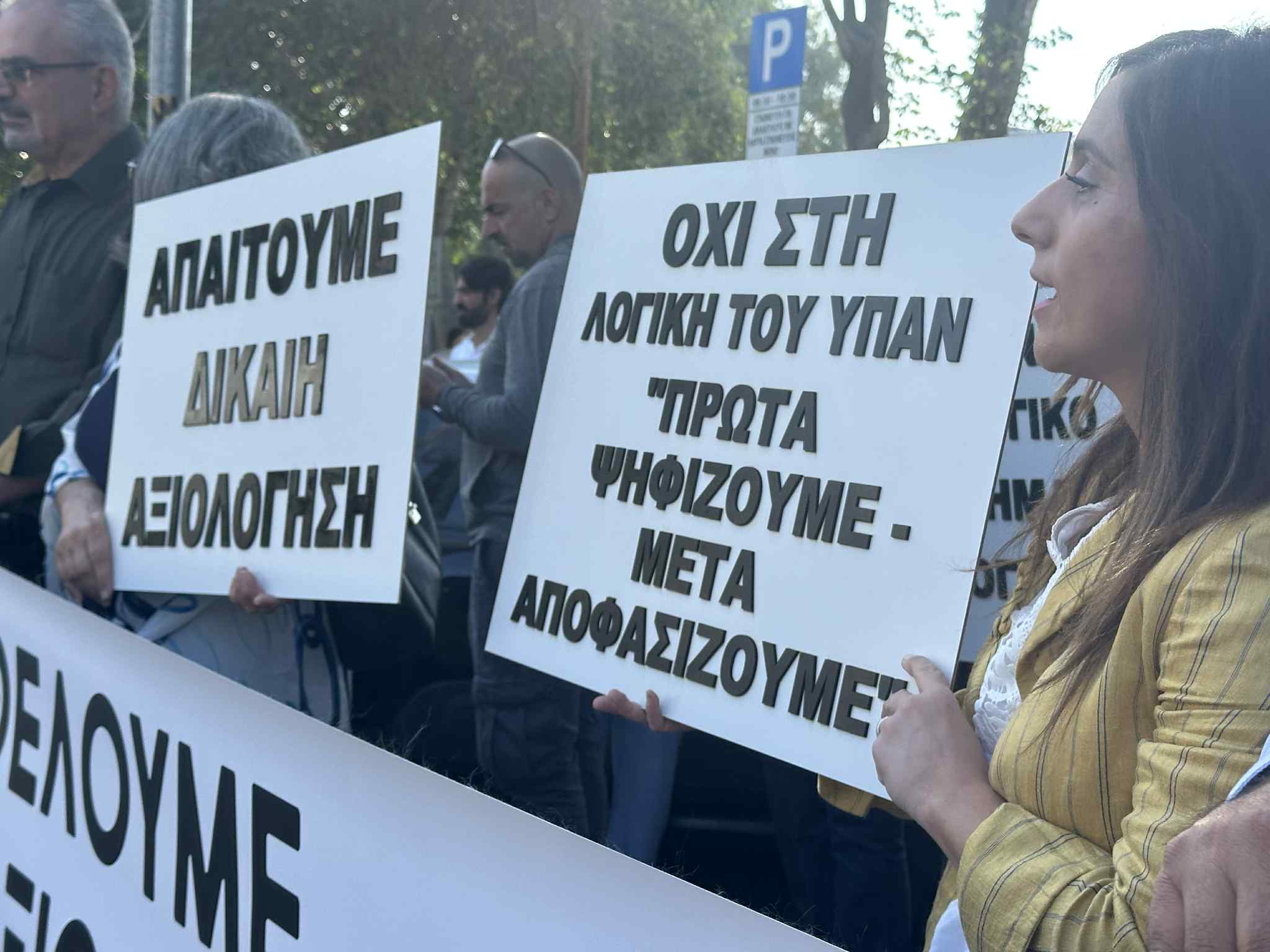
Renewed calls for cooperation over teacher evaluations were made on Tuesday a day after the House ended nearly a year of political deadlock by approving a new system as teachers unions said it was not workable.
House education committee chairman Pavlos Mylonas said the passage of the legislation marked a decisive moment for public education and all parties must now work together to ensure its effective implementation.
His plea follows months of intense negotiations between the education ministry and unions, driven in part by pressure to meet obligations tied to EU funding.
The bill legislating teacher evaluations passed on Monday with 29 votes in favour and 18 against.
The first stage of implementation is expected to begin in March with full rollout scheduled by 2028.
He described the reform as a “living process” that would continue to evolve through dialogue between the ministry and teachers’ organisations.
He said the ministry of education had committed to a series of measures aimed at making the new system functional and fair, arguing the new framework was an improvement on a system that had remained unchanged for decades.
According to Mylonas, the reform offers both personal and collective incentives for teachers and introduces a “meritocratic and transparent” approach to evaluation.
He urged teachers’ unions to contribute constructively, saying that problems which arise should be corrected “through cooperation rather than escalation”.
However, teachers’ unions reiterated their opposition to the new evaluation system, arguing that the framework remains flawed.
High school teachers union Oelmek vice president Andreas Mavratsas said the system for evaluating teachers and educational work cannot be considered fair or meritocratic.
Speaking on CyBC radio, he said the reform contains gaps, shortcomings and ambiguities, adding that exhaustive dialogue had not taken place.
Mavratsas said that several issues remain open and will be discussed both within the monitoring committee and directly with the education minister.
He stressed that while there is time before full implementation of the evaluation plan, Oelmek will continue to demand improvements to the system.
Discontent was also voiced by the primary education teachers’ union Poed.
Union president Myria Vassiliou said that “many new elements” would need to be added to the new evaluation system for it to be “applicable in practice”.
Vassiliou said Poed does not believe the new framework, as currently structured, will “bring about the desired change or deliver the expected results”.
She said the organisation would study the final legislative text before deciding on further action, with “any possible measures being taken after the Christmas period”.
But parents’ associations of both primary and secondary schools praised the reform, decrying the previous evaluation system as “outdated”.
The reform was also welcomed by the government as a milestone in its efforts to modernise education.
President Nikos Christodoulides said the new framework would benefit teachers and deliver better learning outcomes for all children, while Education Minister Athena Michaelidou said implementation would begin immediately.
At the House plenum, the bill was supported by Disy, Diko, Dipa, Edek, the Ecologists movement and several independent MPs.
Akel however voted against, and its amendments regarding the role of school directors in final evaluations were rejected.





Click here to change your cookie preferences