
But it has to dump a lot of baggage first
By Kerry Abbott
When Cyprus hosted the conference of European Small States in September, it was not so obvious that its president harboured great ambitions for Cyprus in the international, or at least regional, arena.
Now it seems that Cyprus does not aim to be a Malta, but a Qatar – a small country with a big role to play in generating complex solutions to diverse regional problems. Qatar has gained broad influence by befriending Western enemies and hosting delegations from countries with whom the US and Israel are at war. It mediates between warriors. So what advantages could Cyprus offer? How has Cyprus proven itself fit for the task of regional fixer?
As Cyprus assumes the EU Presidency for six months next week, President Nikos Christodoulides has said the country plays a unique role, situated closest geographically to the Middle East and the crises that could spill over into Europe. That does not mean it is culturally similar, as most countries in the region are majority Arab and Muslim, with Israel as the obvious exception.
Does Cyprus speak the languages or share cultural norms with the Middle East? Can it be a facilitator like Qatar, both flexible and tenacious? Or more like the barrier to protect Europe from Middle East discord – the role that Zionist leader Theodore Herzl described when he called Israel the “wall of defence for Europe in Asia, an outpost of civilisation against barbarism”.
As Cyprus draws closer to the Western orbit and the United States, it appears to gain favour by improving relations with America’s closest regional ally, Israel. When Cyprus served as a neutral territory to facilitate the transfer of Russian-Israeli hostage Elizabeth Tsurkov from Iraq, where she had been held by a Shia militia for two and a half years, it signalled a willingness play intermediary.
Soon after, President Christodoulides offered to mediate the release of Lebanese prisoners detained by Israel in the current war. However, Israel is experienced at bargaining in the marketplace and gives nothing without something more valuable in return – such as security guarantees with Hezbollah that Cyprus cannot deliver. What does Cyprus have to offer to mediate such a transaction?
President Christodoulides and Lebanese President Joseph Aoun did agree on the maritime border between Cyprus and Lebanon, unresolved since a previous effort in 2007. That could lead to the discovery of new energy sources and joint ventures. Since the signing, the Shia political parties have challenged the constitutional validity of such an agreement without the approval of Parliament. They also question the maritime border agreement made with Israel, a declared enemy. As usual in Lebanon, there are multiple interpretations, with no consensus, and well-meaning outsiders soon tire of the uncertain dynamic. So that apparent achievement may not deliver much, unless Cyprus builds some leverage.
Talks of collaborating on the supply of electricity could be an option, as Lebanon still only provides a few hours per day and relies on local generators as a parallel supply. The current supply includes bartered fuel from Iraq and, possibly, gas via the new Syria, but the pathways are convoluted. In the Middle East, traditional diplomacy has its limits, and there is a cost to wasted efforts.
Maybe Cyprus will play a role in the recovery of post-war Gaza, as its president joined other leaders at the Sharm el Sheikh summit that led to US President Donald Trump’s peace plan. So did Turkish President Recep Tayyib Erdogan. Arabs have no particular fondness for Turkey, the former occupier, who they say hindered their progress for 400 years. However, fellow members of the Muslim Brotherhood, like Hamas, rely on Turkey for support, which assures Israel will then view Turkey with suspicion, and attempt to bar it from joining the new security force that could lead to the disarmament of Hamas.
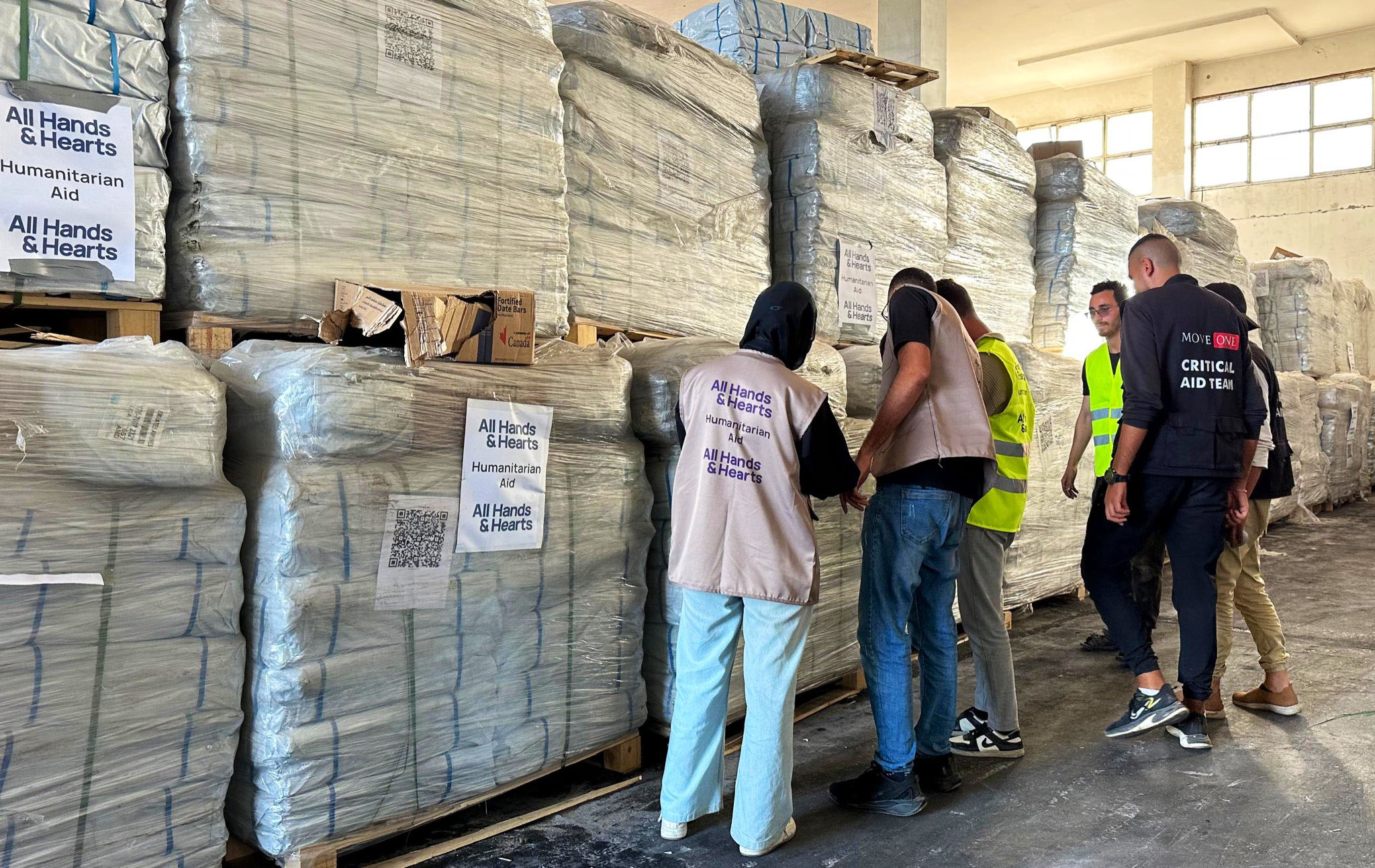
Only Muslim states can participate in the security force, but Cyprus still has the potential to participate in the delivery of aid and massive reconstruction projects. A diplomat from the UAE recently came to Cyprus to coordinate pre-screened aid shipments from Limassol to Israel, and assure that dual-use items were not included. This presupposes that the real reason for delayed delivery stems from security screening instead of willful restrictions to pressure Hamas.
Long lists of banned items predated this war and seemed crafted to deprive Gazans of anything that might make life enjoyable – like fruit jam. Israel routinely withholds aid that it deems either non-essential or dual use. A metal pole in a shelter kit renders it dual use. Cooking utensils for a community kitchen are considered non-essential. Hence, the Hamas tunnels brought in supplies from Egypt.
Although thousands of tonnes of aid have been sent from Cyprus, there is no assurance that it will be delivered when it reaches the port of Ashdod. A recent NGO shipment of shelter materials from Cyprus arrived, but its distribution was delayed. Just because relief supplies travelled from Cyprus to the border of Gaza does not mean they were received by the people in need.
The original Amalthea aid corridor to Gaza failed due to the poor design of the landing dock. If the land routes remain restricted, can the sea corridor assure relief supplies do not sit in warehouses in Israel? If Cyprus is helping to provide safeguards for aid shipments, can it insist that their delivery is not then obstructed? Or does it risk being manipulated to suit Israel’s agenda.
Perhaps a more enticing role for Cyprus would be as a contractor in the large infrastructure projects that will reconstruct Gaza and all its basic services. What is the record of Cyprus in the design and implementation of water, energy, transport, health and education infrastructure? Is it a model of efficiency, with highly functional systems? If not, many other countries are poised to fill the role, and finance the projects – if they are sure that what is rebuilt now is not destroyed in a future war. The options for Cyprus on the regional stage may not be as plentiful as imagined.
To play the most useful role in a region in conflict, might Cyprus set an example to inspire its neighbours, as a divided country that was able to devise a process to bridge cultural differences and antagonism? Can it show how invasion and occupation can be rectified because people are ready to live beyond their resentment. In the process, with Turkish Cypriot partners, the Republic of Cyprus could mediate between Israel, Turkey and other countries who are patching together an intervention strategy.
First, it needs to prove itself by enacting the political reform being asked of others in the region and agreeing with Turkish Cypriots on a federal solution. International law does not need to change and history need not be rewritten. For some, alienation will remain and engagement will be limited. But others can pursue a promising future that a shared and united country can offer, as it builds by avoiding past mistakes.
Leaders must simply commit 100 per cent to a solution and then make it happen – no “if” there is an agreement, no possibility of failure, only the specifics of the adaptive stages that will be formulated.
And that is where Cyprus may have something unique to offer. If it can manage to navigate a resolution of its own divisions within and between communities, it can prove itself on the world stage as a country that is resolute and perseveres until all obstacles are removed.
Once committed to the outcome, there is no shortage of capable people who can make it happen. The Republic of Cyprus will not only be the European Union’s anchor in the East. It will bridge Europe and the Middle East with its dual Greek and Turkish Cypriot identity.
Kerry Abbott is a consultant evaluator of interventions in 24 divided societies and a Supreme Court-certified mediator, based in the Middle East for 25 years





Click here to change your cookie preferences