
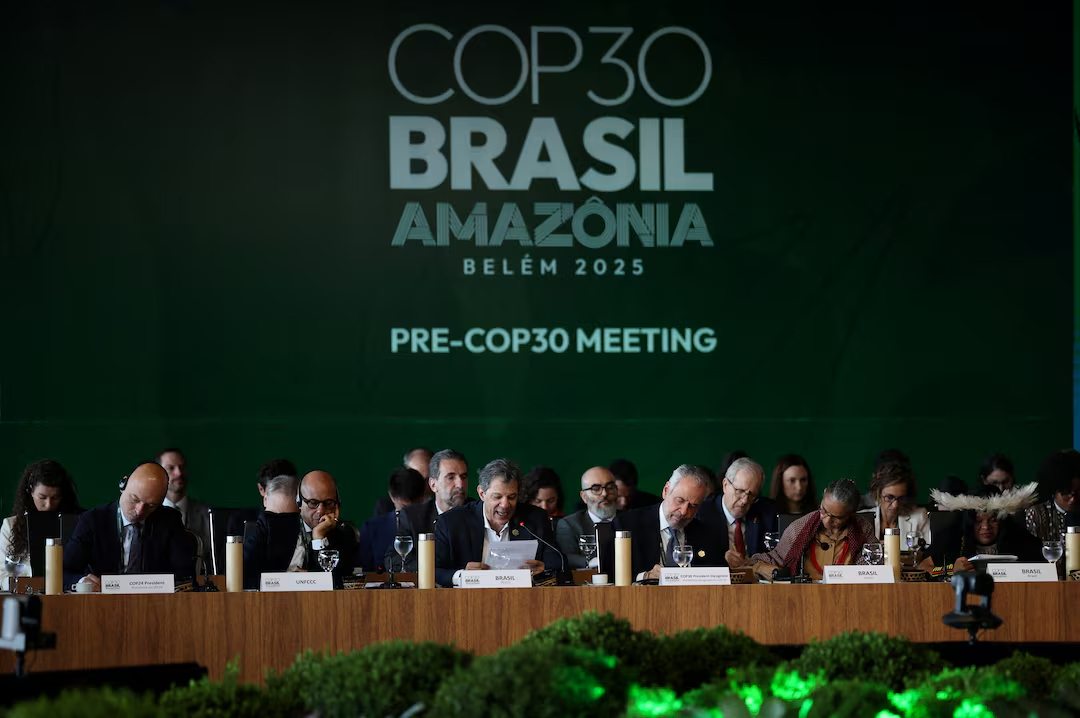
The United Nations climate change conference, known as COP30, recently held in Brazil, was a landmark one. It was the tenth since the Paris Conference, in which a binding agreement was reached to limit the rise in average temperature to below two degrees, and it was the first time that the US was absent.
Progress in combating climate change is mixed. On the one hand, the penetration of renewable energy sources (RES) has been spectacular: prices, especially of solar energy, have fallen sharply, while substantial progress has been achieved in energy storage, an issue of key importance for the development of RES.
On the other hand, the political environment has become less supportive. Major countries, led by the US, have abandoned the Paris Agreement, while within the EU, commitments to reduce emissions and impose a ban on the sale of new cars with combustion engines from 2035, have become less ambitious.
Specifically, for the 2040 emissions reduction target, while the 90 per cent reduction remains in place, flexibility mechanisms were added that make the target less binding.
At the same time, a decision is expected soon from the responsible European Commission bodies that will modify the provision for a complete abolition of the sale of new combustion engine cars, a development that is widely expected to negatively affect the adaptation of the automotive industry.
In general terms, there is a trade-off between the required high investment and transition costs for businesses and households, and the long-term benefits of the green transition, including ensuring sufficient energy supply at relatively low prices.
The results of the United Nations conference are considered inadequate. The main targets set, limiting the temperature rise to below two degrees and ensuring adequate financing for the transition to climate neutrality, do not have a binding character and their implementation is, therefore, uncertain.
In this regard, it is emphasised that even if the existing commitments are fully implemented, the temperature rise will still significantly exceed the targets set.
The effects of the weakening of commitments could prove catastrophic for humanity, as most scientists warn, and are already visible, with extreme weather events increasing.
Addressing the dilemma between high transition costs and long-term benefits requires the implementation of ambitious national action plans, with specific objectives, focusing on a number of specific areas, such as pricing policy, long-term investments in research and infrastructure, and strengthening financing for vulnerable groups and less developed countries.
It is important to emphasise that the vital support of vulnerable groups should preferably be promoted through targeted government spending instead of energy price subsidies, which discourage energy saving and, hence, delay the achievement of climate neutrality.
It is equally important to note that the transition should be based on known sustainable technologies. New technologies, such as the production of renewable energy through hydrogen and the absorption of carbon dioxide from the atmosphere, may become sustainable in the future, but according to scientific studies, they are not expected to make a noticeable direct contribution to the green transition, within the required time frames.
For the EU, including Cyprus, the green transition is important for an additional reason: it is the only way to achieve autonomy and reduce dependence on unstable foreign energy sources.
Andreas Charalambous and Omiros Pissarides are economists and the views they express are personal






Click here to change your cookie preferences