
Officials put positive spin on EU trade deal with South America. Farmers not convinced
The trade deal signed between the European Union and South American trade bloc Mercosur will bring about greater stability for Cyprus and its farmers, Commerce and Trade Minister Michael Damianos has said.
“The agreement creates clear and substantial benefits for the Republic of Cyprus, both in terms of trade and services, in an environment of increased international uncertainties,” he told the Sunday Mail.
He added that as a result of the deal, the country’s security of supply for critical raw materials would be strengthened, adding that almost all of Cyprus’ imported soybeans came from Argentina and that a “significant part” of imports of coffee and fruit juices come from Brazil.
“By reducing or eliminating tariffs and establishing predictable rules, greater price stability and better conditions for Cypriot farmers, livestock breeders, and consumers has been ensured,” he added.
Crucially, the deal would bring about “new prospects … for exports of Cypriot products and services” through the abolition of export tariffs on products being sent from the island to South America.
One example he gave was the existing 28 per cent tariff on cheese products, with the forthcoming abolition of this tariff possibly opening up new markets for Cypriot dairy producers.
He also made reference to Cyprus’ small but not inconsiderable pharmaceutical products industry, saying that the easing of trade between Europe and South America “may open avenues” for the export of pharmaceutical products from Cyprus to Mercosur states in the medium term.
In addition, he said that another point “of particular importance” is the inclusion of “substantive provisions for maritime services”.
Cyprus’ maritime services sector, he said, is “one of the most strategic sectors of the economy”.
“Finally, the agreement contributes to the diversification of markets and trading partners of the European Union, strengthening the resilience of the Cypriot economy and creating new development opportunities,” he said.
The government is in lockstep regarding its agreement regarding the benefits of the deal, with a document sent to MPs by the agriculture ministry, which was seen by the Sunday Mail, stating that the government believes that the deal will “open up significant prospects for businesses and producers in Cyprus”.
“Cypriot businesses and small- and medium-sized enterprises will find it much easier and cheaper to operate in Mercosur countries,” Argentina, Bolivia, Brazil, Paraguay, and Uruguay, it said, with Cypriot companies in the service industry set to have “greater access” and able to “offer services more efficiently and with fewer administrative obstacles”.
It added that producers of goods and agricultural products in Cyprus will have “improved access to exports to Mercosur markets”, and that to this end, traditional Cypriot products are “expected to sell at premium prices in these markets due to the improved trading environment”.
The trade deal eliminates tariffs levied on 91 per cent of products exported between the EU and Mercosur, and that this “benefits almost all of Cyprus’ exports to Mercosur”.
It explained that at present, Cypriot agricultural products being exported to Latin America are subjected to tariffs as high as 55 per cent, and that as such, “access to Mercosur for Cypriot agricultural products is very limited”.
“The agreement is expected to open this barrier, giving Cypriot farmers the opportunity to boost the export of their products,” it said.
Cyprus is also expected to benefit from what it will soon be able to import more easily from Latin America, explaining that the island is a net importer of “feed raw materials”, such as soybeans, which will now be imported tariff-free.
It also promised benefits for Cypriot products which have been placed on the EU’s protected geographical indication (PGI) list, saying that those products are now “protected … from counterfeiting in the Mercosur market”.
This, it said, will make the real Cypriot products “more distinctive with higher added value”.
Upon its entering into force, this part of the agreement will apply to Yeroskipou loukoumi, wine grown in the Limassol and Paphos districts, commandaria, ouzo and zivania.
Halloumi did not make the initial list, with the ministry explaining that it had not yet achieved its current protected designation of origin (PDO) status when it was compiled.
However, it said, the agreement “provides for the possibility of revising the list immediately after the ratification” of the deal.
In another section of the document, the ministry also stressed that the government had made efforts during negotiations to safeguard the interests of the island’s agriculture industry.
It said it “firmly supported the principle that products imported from third countries must comply with European production standards so as to ensure fair competition and protect producers” in Cyprus and the wider EU, and that this principle had been adopted in the text of the agreement.
Additionally, it said, it advocated for “the construction of an effective ‘safety net’ for European agriculture”.
Among other things, it provides for the possibility of the EU reintroducing tariffs on certain products if it is perceived that European producers of those products are being subjected to unfair competition as a result of the deal.
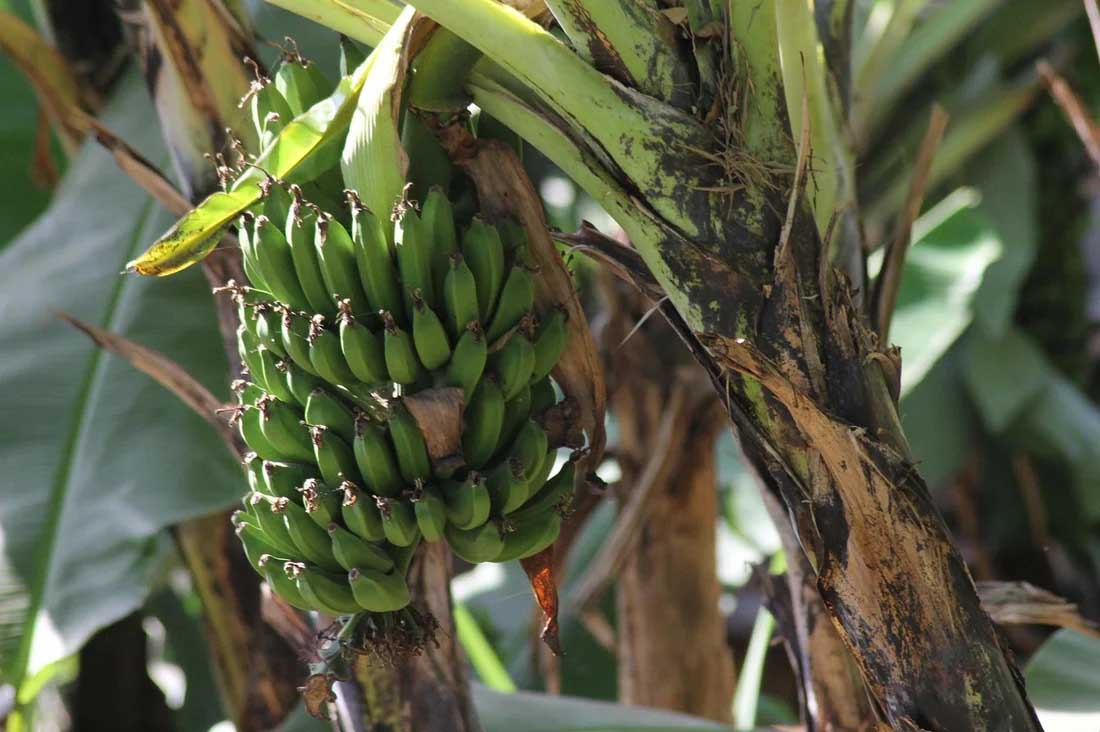
However, outside the central government, some remain unconvinced, with Nikolas Theodosiou, deputy mayor of the banana-producing Paphos district village of Kissonerga having said this week that banana farmers in the Paphos district “must be protected” when the deal comes into force.
“It must be ensured that the local producers are protected when the deal enters effect, so that they are not negatively affected by competition and cheaper products being imported from Latin America,” he said.
He added that in many cases, including with bananas, “the products coming in are often much cheaper than what local producers can afford to produce”, and as such, he said, without adequate protection, “local producers could be placed in a very difficult situation”.
Earlier, Akel MP Yiannakis Gavriel had warned that the deal “will be disastrous for all of Europe, especially for us in Cyprus, which is a small island”.
Nonetheless, European Commission President Ursula von der Leyen was expected to travel to Paraguay on Saturday to sign the deal, which will create the world’s largest free trade area and cover more than 700 million people.
Outside of Cyprus, support for the deal has not been unanimous across the EU, with Austria, France, Hungary, Ireland and Poland all voting against it and Belgium abstaining at a European Council summit earlier this month.
Those in the opposition camp faced fierce domestic criticism for not doing enough, with French far-right leader Jordan Bardella accusing the country’s President Emmanuel Macron of hypocrisy and “attempting a communications manoeuvre” in his opposition to the deal.
“This staging is a betrayal of French farmers, who will directly suffer the consequences of the agreement,” he said.
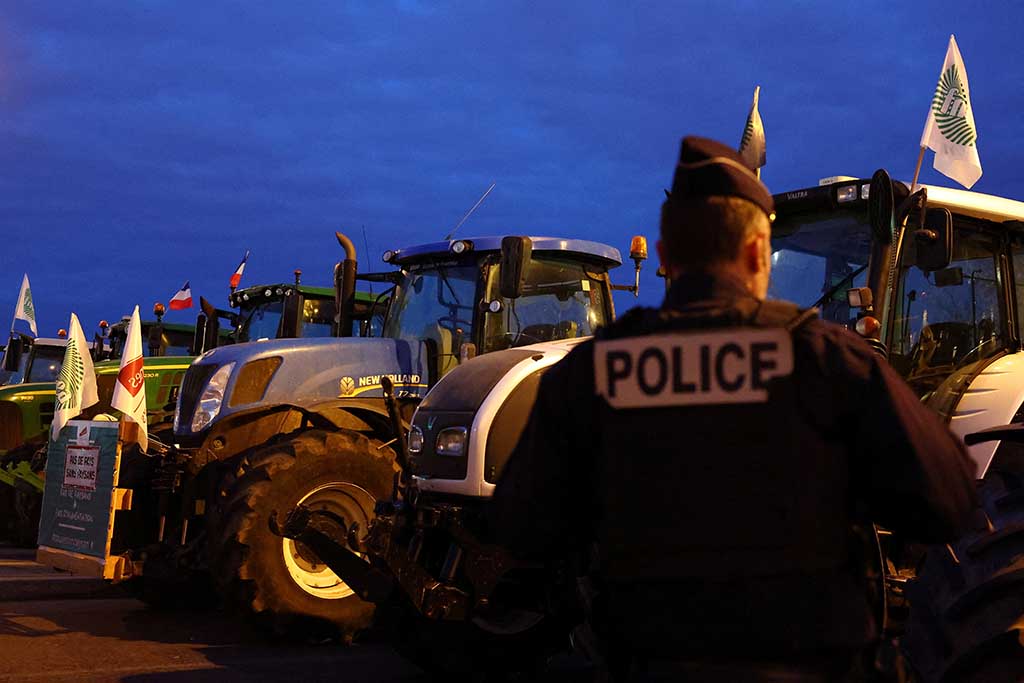
Tuesday saw more than 350 tractors descend on Paris with farmers expressing distaste at the deal, while in Ireland, local media estimated that 20,000 people took to the streets of the town of Athlone in County Westmeath to demonstrate their opposition to it.
Meanwhile, the country’s beef and lamb association (Ibla) demanded that Taoiseach Micheal Martin resign in the wake of the deal’s approval, despite Martin’s opposition to it, accusing him of a “distinct lack of consideration for the farming community”.
EU law allows the deal to be provisionally implemented without a vote in the European Parliament, though the bloc’s director-general for trade Sabine Weyland has, according to news website Euractiv, reassured MEPs that the deal will not necessarily be automatically implemented after the weekend.
MEPs will likely vote on the deal in February or March, with no motion on the deal having been put forward for the European parliament’s next session in Strasbourg next week.





Click here to change your cookie preferences