
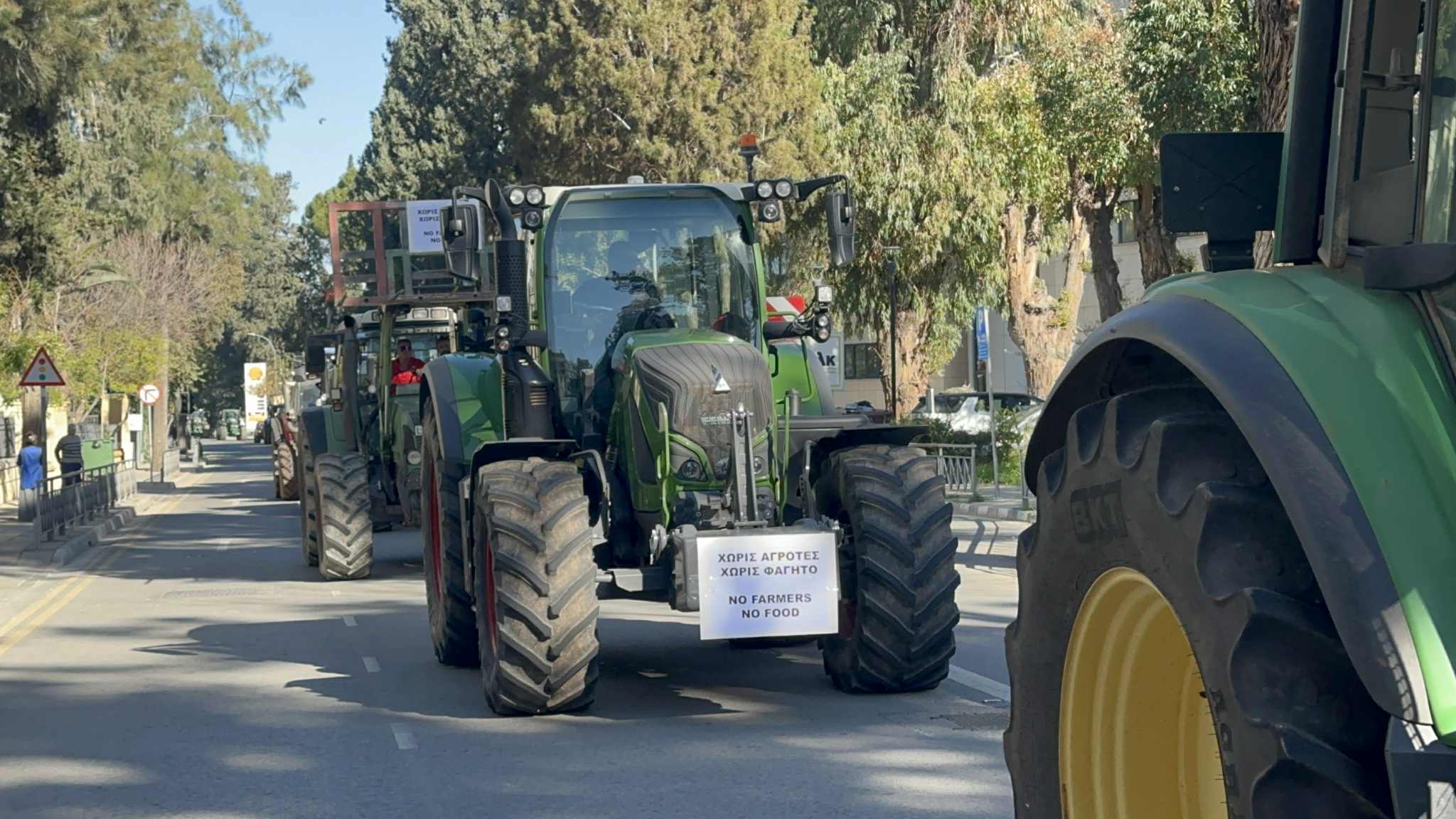
Tractors were stationed line astern outside the presidential palace on Thursday as Cypriot farmers joined a continent-wide protest against planned changes to the European Union’s common agricultural policy and its proposed free trade agreement with South American traed bloc Mercosur.
At the demonstration, Pancyprian farmers union leader Christos Papapetrou called for solutions to “some serious issues which face the agricultural sector today”, while grain producers’ organisation chairman Kyriakos Kailas also called for the government to provide farmers with subsidies to keep the agriculture sector sustainable.
“Farmers continue to need the support and blessings of the state and the substantial interventions of technocrats so that problems can be resolved,” he said.
Union of Cyprus farmers leader Panikos Hambas, meanwhile, called on President Nikos Christodoulides to vote against the changes to the common agricultural policy when the European Union’s next multiannual financial framework – its budget for the period covering the years between 2028 and 2034 – is brought before the European Council, likely at some point next year.
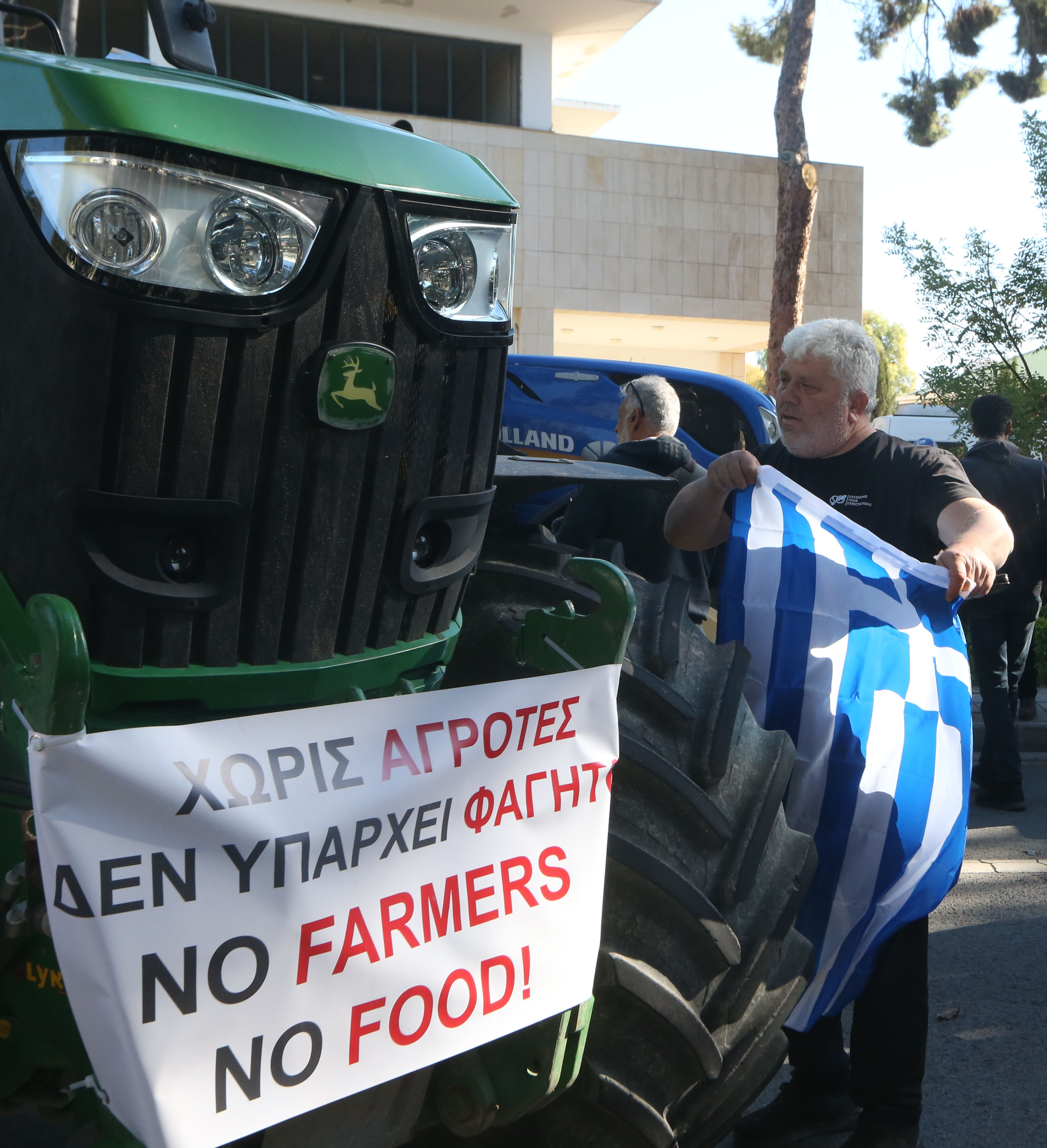
“If he does not vote against it, Cyprus is finished both environmentally and economically,” he said.
Responding to the farmers’ concerns was the agriculture ministry’s permanent secretary Andreas Gregoriou, who reassured farmers that at September’s Council of the EU agriculture and fisheries (Agrifish) council, agriculture ministers from the bloc’s member states had “found that the package of regulations presented by the European Commission … is not satisfactory”.
He said that when Cyprus takes over the Council of the EU’s rotating presidency next month, Agriculture Minister Maria Panayiotou will “work in consultation with her colleagues to improve these proposals”, so that the package will be improved by the time Ireland takes over the Council of the EU’s rotating presidency from Cyprus in July.
The protest was also attended by a number of MPs, with Akel’s Yiannakis Gavriel warning that a trade deal with Mercosur in its currently-proposed form “will be disastrous for all of Europe, especially for us in Cyprus, which is a small island”.
“The food security of this country is at risk, and this is what we should focus on,” he said, before lambasting plans to reduce the common agricultural policy’s budget by upwards of €80 billion in the next multiannual financial framework.
“Imagine this money being taken away from the primary sector and directed to the weapons manufacturing industries,” he said.
Disy’s Prodromos Alambritis, meanwhile, called on the government to “stand by the farmers”, because “the primary production sector is very important for both our survival and for the food security of the country”.
Nicosia’s protest was pedestrian compared to that which was held in Brussels, where police deployed tear gas and fired a water cannon at thousands of farmers who had converged on the city.
Farmers were seen throwing potatoes and eggs at the Europa building, where the leaders of the EU’s 27 member states had gathered for the day’s European Council summit.
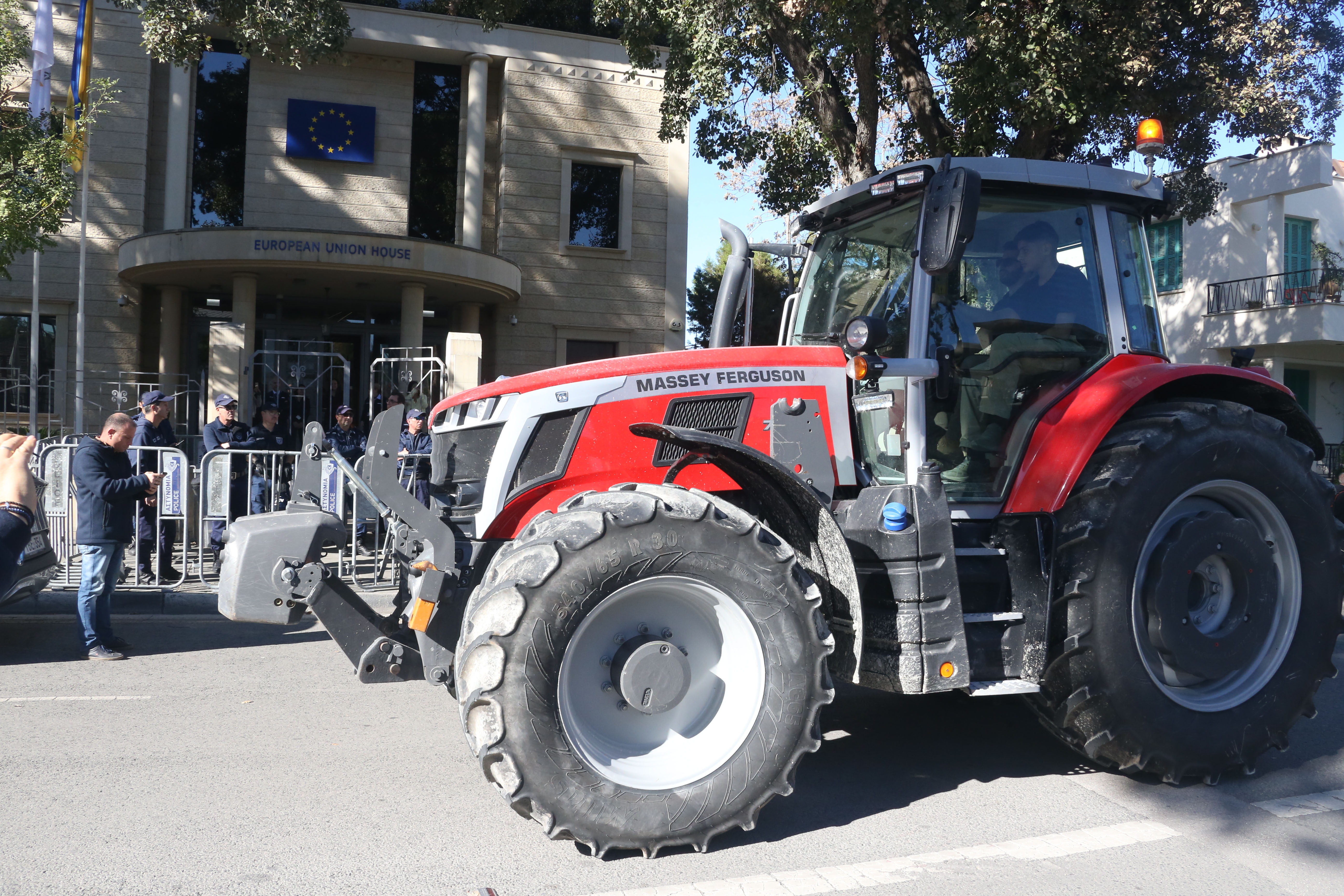
Opposition to the Mercosur trade deal among the bloc’s 27 governments has been led by France, which has previously demanded stronger safeguard clauses to protect the European single market from “disruption” caused by an increase in imports from South America.
France seems to have been joined by Italy in the opposition camp, with the country’s Prime Minister Giorgia Meloni having told her country’s parliament on Wednesday that signing the agreement in its current form “would be premature”, and requested “adequate reciprocal guarantees” for Italy’s agricultural sector before signing the deal.
French President Emmanuel Macron, meanwhile, maintained his stance, saying upon his arrival in Brussels on Thursday that “we are not ready”, that “it does not add up”, and that “this accord cannot be signed”, before calling for further negotiations on the matter to be held in January.
It is also understood that the governments of Poland, Ireland, Hungary, the Netherlands, and Austria have also expressed reservations.
However, German Chancellor Friedrich Merz has warned that delaying or abandon the deal could harm the EU’s reputation.
“If the European Union wants to remain credible in global trade policy, then decisions must be made now,” he said.
Earlier in the year, farmers had expressed fears that loosening import controls on agricultural products from South America may see European farmers undercut, with the EU having reacted to this by loosening industrial emissions rules for pig and poultry farms.
Additionally, livestock farms in the EU may soon be relieved of their obligations to report their usage of water, energy, and raw materials, with member states set to gain the option to report emissions to the EU on farmers’ behalf instead.





Click here to change your cookie preferences