
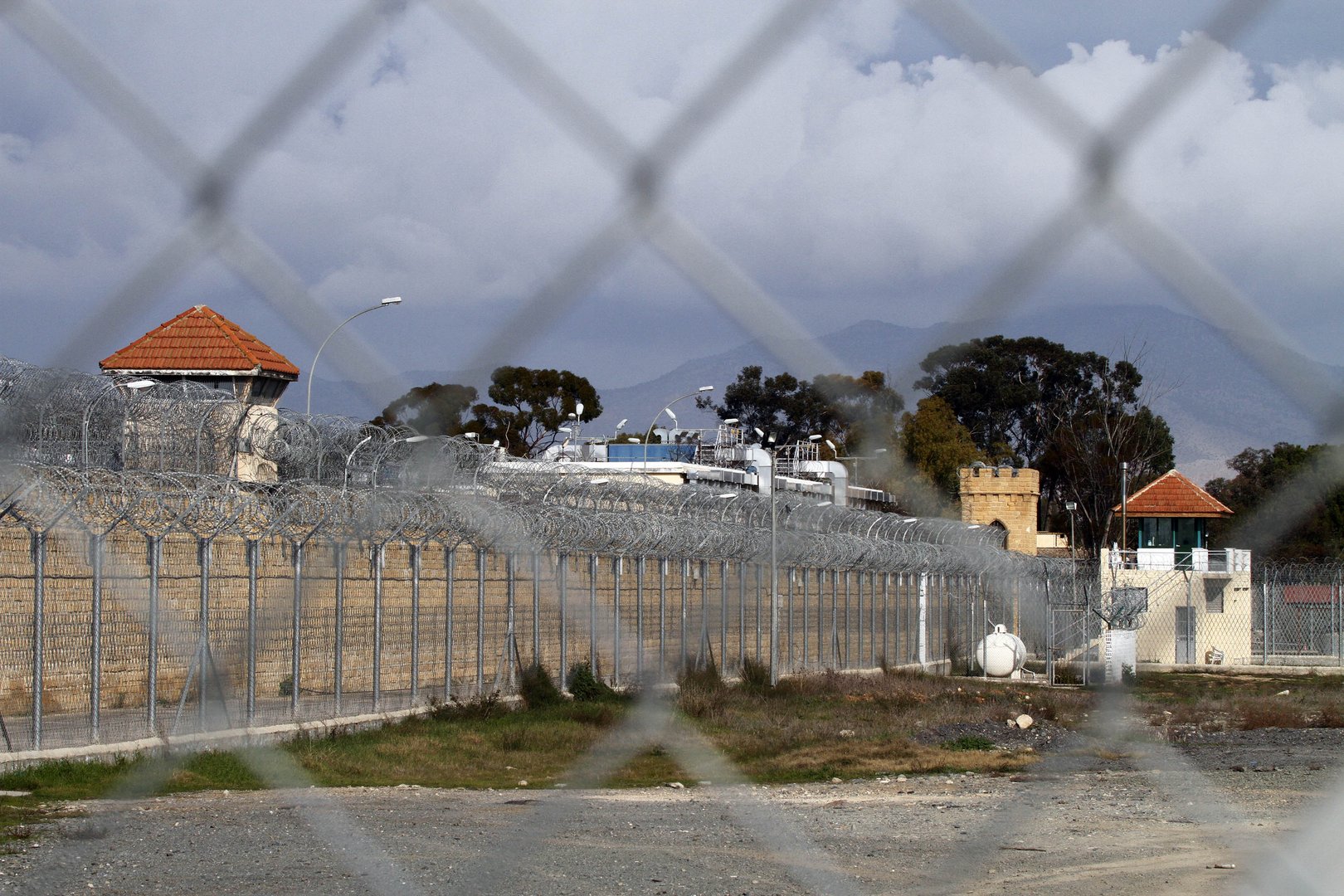
Plans to address the persisting problems in the central prison will likely include a mobile phone signal interruption system and the creation of a new facility, with a corresponding set of measures to be made public by the end of March, Justice Minister Costas Fitiris said on Monday.
Speaking before the House human rights committee, Fitiris said that he has proposed to discard the initial plans for the expansion of the existing building, amounting to an estimated cost of €40 to €50 million, and instead suggested the establishing of a new prison outside of the capital’s urban area.
He said that the government to complete the design of a new facility within a year, however added that construction may take up to five years, even if works were to begin immediately.
Fitiris identified overcrowding and the co-imprisonment of serious and low-level offenders as the facility’s most pressing issues, stressing that measures to address them were already underway.
These include the deportation of migrants convicted of minor offences, such as illegal employment, though he conceded that deportations alone would not significantly ease overcrowding.
Further measures involve the use of electronic surveillance and an extension of the period for granting presidential pardons.
Meanwhile, a system detecting mobile phone signals inside prisons has been put in place for three months, resulting in the confiscation of 90 mobile phones as part of efforts to curb organised crime activity behind bars.
The minister said that he was planning to pay another visit to the central prison and meet with involved stakeholders soon, in what would mark his fifth visit since he was appointed minister in early December.
Head of the association for the protection of the prisoner’s rights Alexandros Clerides, speaking at the committee meeting, said the central prison currently remained in a “state of emergency.”
“Today unfortunately are not a correctional institution, they are simply a building that functions as a warehouse for individuals, with no view to correction or reintegration,” he said.
Clerides stressed that immediate action is required to address the issues, saying that introduction of electronic monitoring for undertrial detainees, the option of deporting foreign nationals following conviction, and the reduction of sentences through presidential pardons needed to be implemented without further delay.
He said that situation at the central prisons left Cyprus with no scope to refuse the transfer of convicted persons from other European or third countries to serve their sentences locally, with Fitiris responding that he had recently signed requests for the continuation of the serving of sentences in the United States and Spain.





Click here to change your cookie preferences