
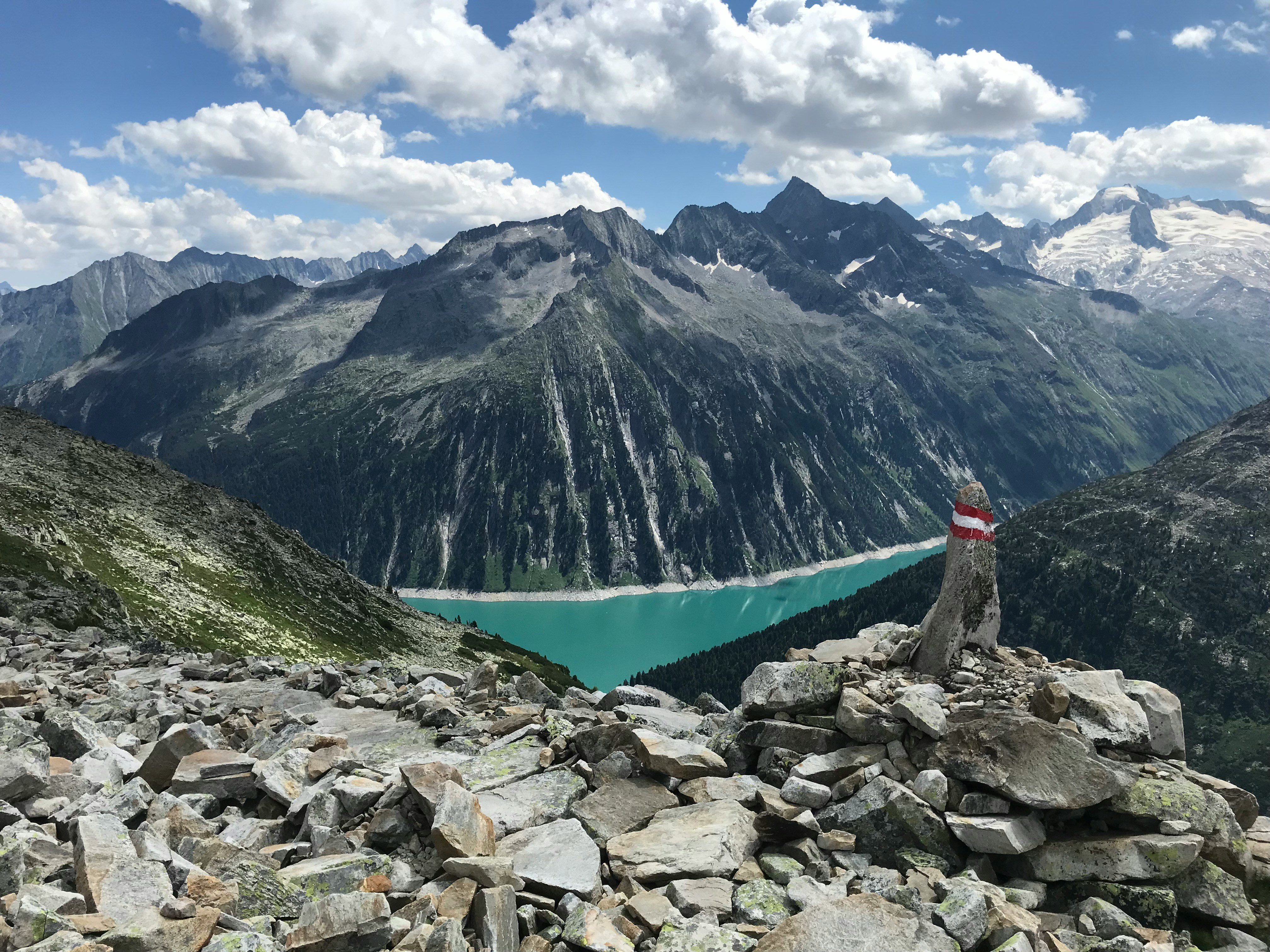
Many assume they need detailed planning, precise itineraries, and a careful strategy to “do it right.” In reality, most of that mental effort is unnecessary. Hiking in Austria works because the system absorbs mistakes, indecision, and changes of plan without punishing you for them. What matters is much simpler than people think, and what people stress about usually turns out to be irrelevant once they’re on the trail.
People overthink route planning
Before arriving, many hikers spend hours comparing routes, calculating elevation gain, and trying to optimize each day. Once they start walking, that level of planning quickly feels excessive. Austrian trails are designed so that most reasonable choices work out fine. Distances are manageable, alternatives are nearby, and routes rarely funnel you into a single irreversible decision.
You don’t need the perfect plan. You need a general direction and an honest sense of how long you want to walk. The trail network fills in the rest. If a route feels longer than expected, there’s usually a shorter option. If the weather shifts, a lower path appears. The system is forgiving, which means precision matters far less than people assume.
What actually matters is picking the right scale
The most important decision in Austria is not which exact trail you take, but what scale of day you choose. Short valley walks, mid-level mountain routes, and longer ridge hikes all exist side by side. Problems usually arise when people pick a scale that doesn’t match their energy, not when they choose the “wrong” trail.
Once that scale is right, the rest tends to fall into place. Austria is good at giving you many routes that feel different but demand similar effort. This is why hiking there feels consistent from day to day even when the scenery changes.
People worry too much about navigation
There is a persistent fear among first-time visitors that alpine navigation will be stressful. In Austria, that fear fades quickly. Trail markings are clear enough that navigation becomes background noise. You follow signs, confirm occasionally, and keep moving. There is rarely a moment where you stop and feel genuinely unsure.
What matters more than navigation is pacing. People who struggle usually aren’t lost; they’re tired because they walked too fast early in the day or underestimated cumulative elevation. Austria doesn’t punish navigational mistakes harshly, but it does reward steady movement.
What actually shapes the day is how you use breaks
One of the biggest differences between people who enjoy hiking in Austria and those who feel worn down is how they treat breaks. Austrian trails naturally offer places to pause, whether at a hut, a meadow, or a viewpoint. People who stop briefly and regularly tend to finish days feeling balanced. Those who push long stretches without rest often feel drained, even on moderate routes.
This isn’t about fitness. It’s about rhythm. Austria works best when you walk, stop briefly, and continue without urgency. The environment is built for that pattern, not for endurance pushes.
People assume the mountains will feel demanding all the time
From photos alone, it’s easy to think Austria’s hiking is constantly steep or intense. In practice, most of the walking happens on moderate terrain. Forest paths, alpine pastures, and contouring trails make up the bulk of the experience. Steep sections exist, but they’re usually short and purposeful, not relentless.
What surprises many hikers is how much of the day feels calm rather than strenuous. The mountains are present, but they don’t dominate every step. This is why Austria suits people who want real alpine scenery without constant effort.
What actually matters is where you end the day
Another thing people overthink is how to start a hike. In Austria, endings matter more than beginnings. Finishing near a village, a hut, or a transport link defines how relaxed the day feels afterward. The country is good at offering clean finishes. You don’t usually end exhausted miles from help.
This shapes the psychology of hiking here. Knowing the day has a clear, comfortable end removes pressure from the middle. You walk more calmly because you’re not worried about getting stranded or needing to rush the final section.
People think they need to commit to multi-day plans
Many visitors assume that to “do Austria properly,” they need to commit to long hut-to-hut routes. Those routes exist, but they’re optional, not essential. Some of the best hiking experiences come from staying in one place and exploring outward each day.
This flexibility is a major strength. You can adjust plans daily based on weather, energy, or mood. Austria supports this approach better than many mountain regions because the trail density is high and the transport system quietly fills the gaps.
What actually makes Austria comfortable is its margin for error
Austria doesn’t demand perfection. If you misjudge a route, you rarely pay a high price. If you start late, there are shorter options. If clouds roll in, lower trails remain interesting. If you feel tired, huts and villages are close enough to change plans.
That margin for error is what makes hiking here feel comfortable, even for people who don’t see themselves as “experienced alpine hikers.” It’s also why organized options like hiking tours in Austria work smoothly without feeling restrictive. The environment itself carries much of the responsibility.
People expect constant highlights
Another misconception is that every moment will feel spectacular. In reality, some sections are simply pleasant walking. Forest paths, quiet slopes, and transitional terrain make up a significant portion of the day. These sections matter because they create contrast and prevent visual fatigue.
Austria doesn’t overwhelm you with constant drama. It spaces things out. That pacing keeps longer trips enjoyable rather than exhausting.
What you take away after a few days
After a few days of hiking in Austria, most people stop thinking about logistics entirely. They stop checking maps obsessively. They stop worrying about whether they chose the “best” route. The experience becomes about moving steadily, noticing small changes in terrain, and ending each day feeling used but not depleted.
That’s the real strength of hiking in Austria. Not the peaks, not the huts, not the scenery alone, but the way the country removes unnecessary friction from walking. You’re left with something rare in mountain environments: days that feel purposeful without feeling demanding.
DISCLAIMER – “Views Expressed Disclaimer – The information provided in this content is intended for general informational purposes only and should not be considered financial, investment, legal, tax, or health advice, nor relied upon as a substitute for professional guidance tailored to your personal circumstances. The opinions expressed are solely those of the author and do not necessarily represent the views of any other individual, organization, agency, employer, or company, including NEO CYMED PUBLISHING LIMITED (operating under the name Cyprus-Mail).





Click here to change your cookie preferences