
Mushroom foraging excursion reveals impacts of climate change
By Martin David Clark
Here in Cyprus, the wild mushroom foraging season is a bit ‘hit and miss’ this year, due, in my opinion to the impact of climate change. As I visited my usual picking places around Vavatsinia, Lythrodondas and Troodos my alarm increased. The forests of Cyprus are showing that the heating and drying of the island’s climate is taking its toll.
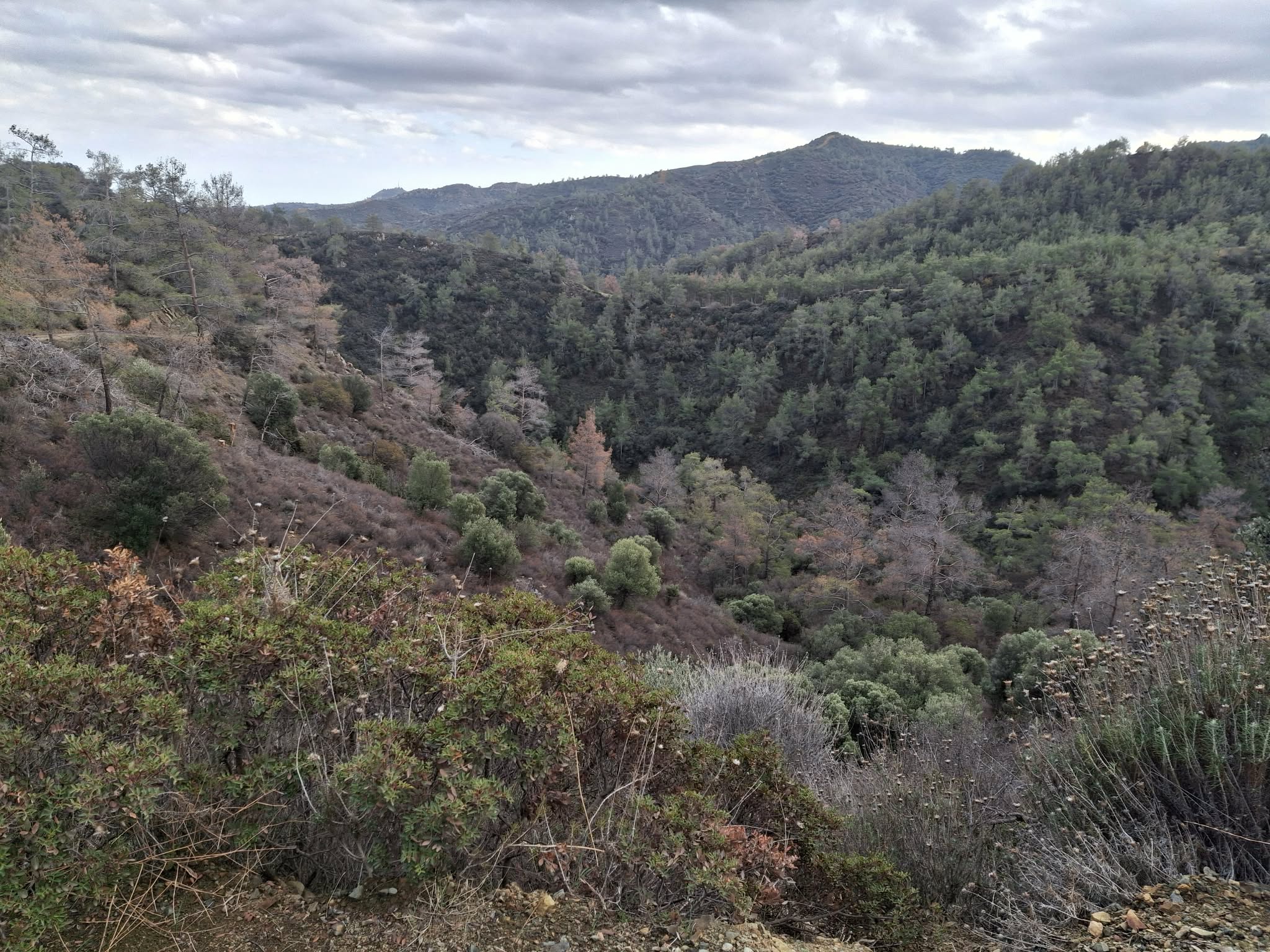
Last week I drove one of my favourite forest road (4WD needed) routes from Vavatsinia to Kyprovasa and past Lefkara dam. There had been quite a lot of tree felling and there were plenty of dead trees, even big mature Calabrian pines (Pinus brutia). With a shock I realised that they’d died from drought!
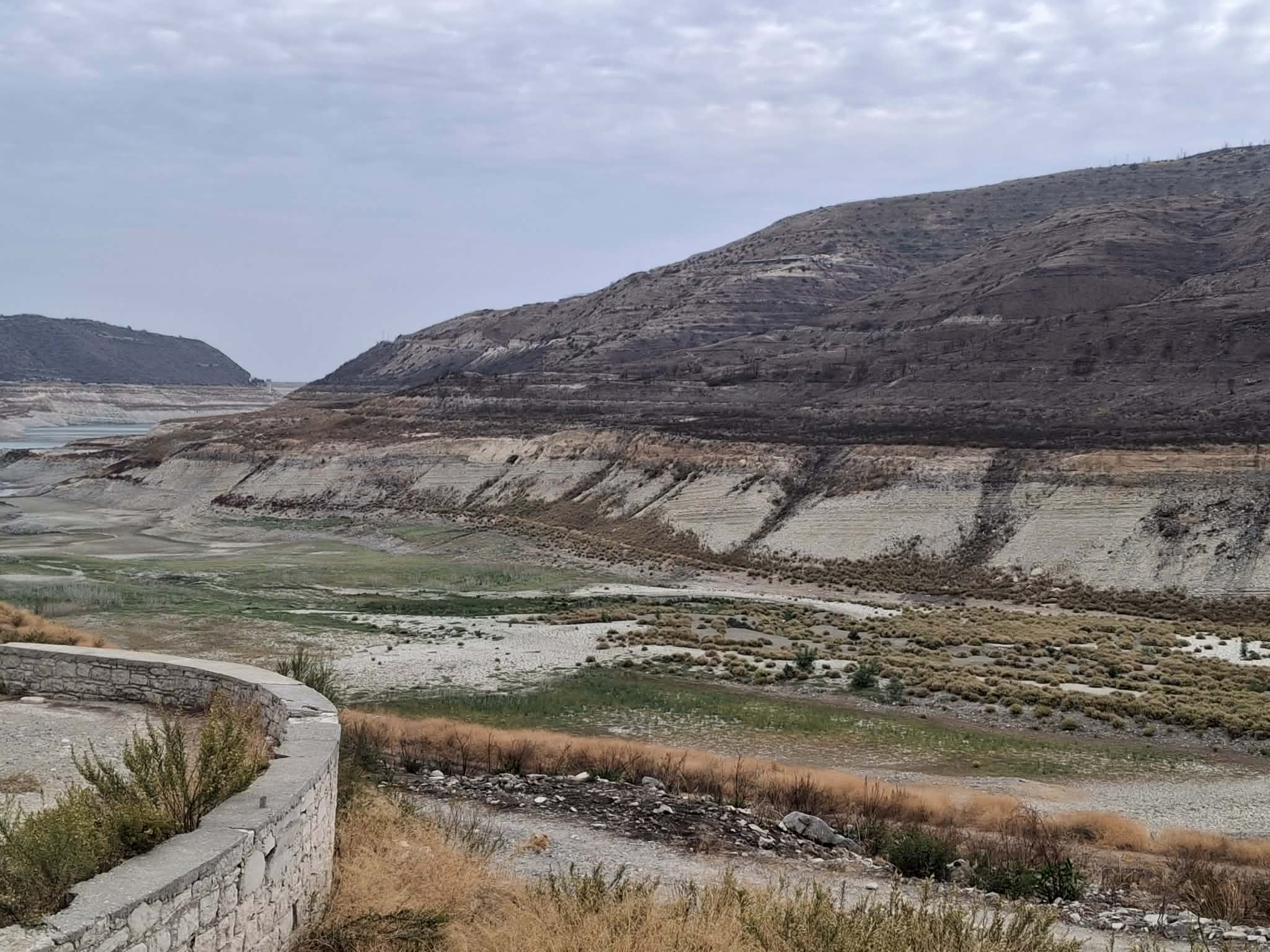
Tree death was on the south facing slopes, where the soil dries out and the water table drops below the level where tree roots can reach it. I was also shocked to see how low the water level was in Lefkara dam.
The impact of climate change is pretty severe here in Cyprus. According to the Cyprus Institute, “Looking in more detail at model results for Cyprus and the period from 2020 to 2050 one of the most striking results is an increase in extremely hot summer days with maximum temperatures exceeding 38˚C for an additional two weeks per year compared to the already quite warm summers we are used to.
“By the end of the century the number of hot days per year in Nicosia will increase by two months, resembling conditions currently experienced in cities like Cairo or Bahrain. Given the ongoing decrease in rainfall observed for the last three decades, climate change in Cyprus will result in additional reductions of rainfall of 10-15 per cent over the 2020 to 2050 period”.
This is bad news.
Back to those forest mushrooms; climate change isn’t the only issue. I am always saddened to see how some people forage for mushrooms with rakes, completely turning over the deep bed of leaves, pine needles and decomposing twigs. Literally millions of insects have their life cycles interrupted and many die from exposure.
Also, all fungi are ripped from the soil and discarded, often before they can distribute spores. The use of tools such as rakes, is expressly prohibited by the Forest Law. Conviction for using such tools can result in prison sentences of up to one year or fines of up to €5,000, or both. Despite these penalties being in place, I see this destructive practice year after year.
This year’s harvest of wild mushrooms has been a poor one because the rains came too late. By the time the ground was wet enough it was already getting too cold. Wild fungi need 10 to 13°C for growth and if it is cold and wet they get water filled and moldy.
Cypriots like to pick a ‘milk cap’ mushroom, the Lactarius deliciosus, known here as the red pine mushroom. It is one of the best-known members of the large milk-cap genus Lactarius in the order Russulales. As a lifelong forester, I am a bit more adventurous, eating several other Russula varieties (brittle gills) but I don’t advise novices to try them unless they are with an expert; one pink-capped variety is called ‘the sickener’ and will give a bad stomach reaction.
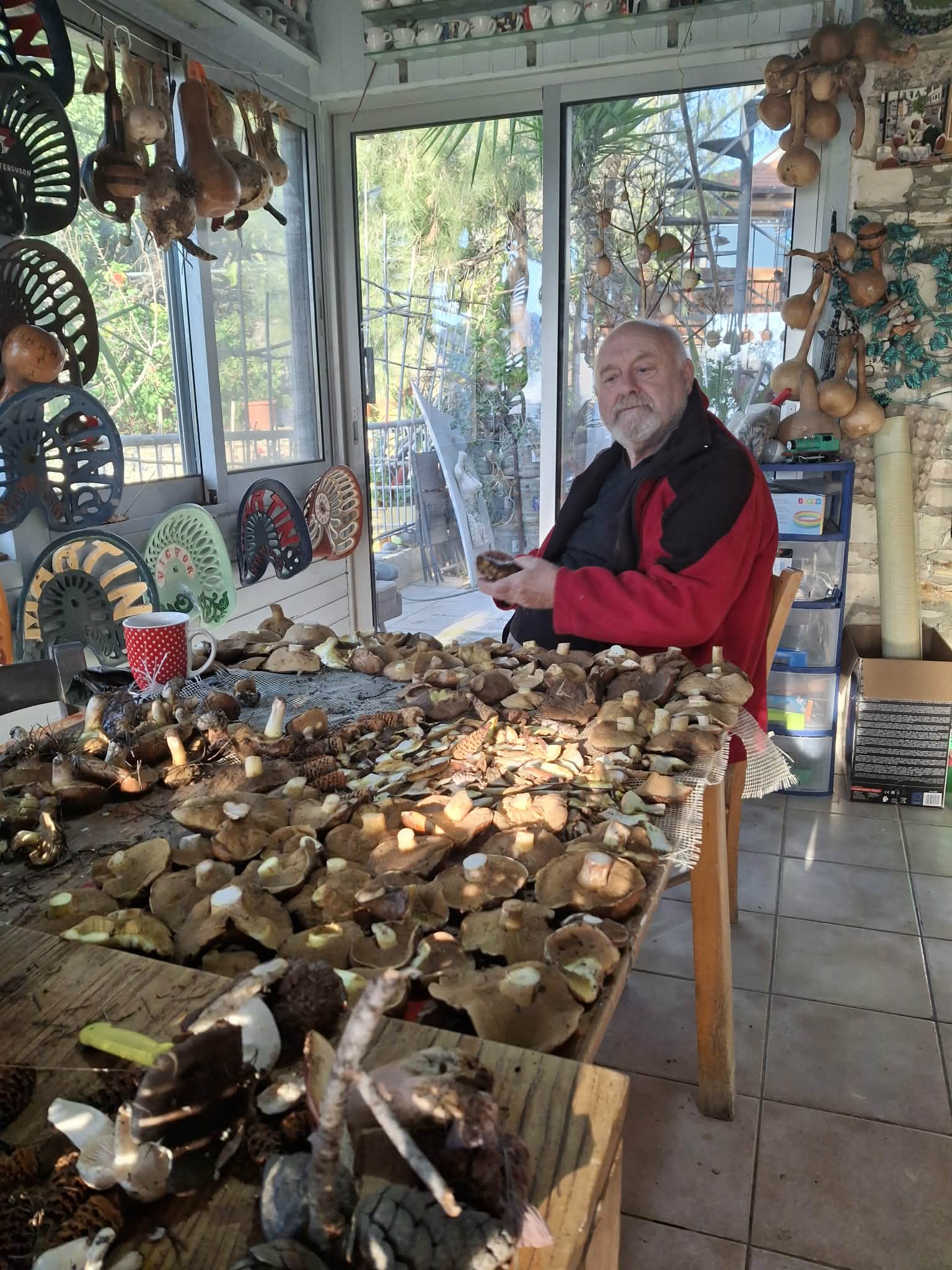
I do love to gather ‘Slippery Jack’ (Suillus luteus), a yellow sponged, brown capped boletus type, but I always slice it and dry it for soups, stews and risotto. Rather ironically this Mediterranean species is the most commonly used form of Italian ‘porcini’ mushroom but in Europe it comes by the plane load from the pine forests of Chile in South America.
Living in Lefkara, I am very familiar with the ‘Giant Fennel Oyster Mushroom’ (Pleurotus eryngii var. ferulae) and many locals are superb at finding it and there is a lively trade (at €20 euros a kilo). It is not a forest mushroom but is associated with the giant fennel (not an edible fennel), feeding on the decaying roots.
It is found along the Mediterranean, including Malta, Spain and North Africa. I love it cooked with salt, lemon and the new olive oil! Sadly, it has not been a good year for these field mushrooms either and lack of autumn rain is again the reason. If we get some warm days now, there still might be some hope!
Lack of wild mushrooms is a consequence of climate change. It is a serious situation, but of course we can live without such wild food. There are, however, much greater impacts likely in Cyprus. We will find it hard to cope with increasing heat and drought and we must prepare, be brave and accept sacrifices.
Since I first notice these dramatic problems in the forests of Cyprus, and used social media to raise awareness, I received a strong response. “When I was shown the excellent work by the Cyprus Forestry Department [on a study visit] it was very obvious that growth on the south facing slopes was affected by the more extreme summer climate than we are used to here”, said Roger Cartwright of the UK’s Landscape Trust.
Evgenia Emets, a former student on our ‘Guardians of the Forest’ programme, and since a founder of Eternal Forest Global (Portugal), commented “we need more forests that generate and protect water… protect water springs, make sure you have humidity guarding trees around. It’s everywhere in the Mediterranean, which has been decimated”.
True, but how to establish forests in Cyprus, when precious water is given to tourists and landowners are starved of irrigation?
Here are some actions to think about.
Tell tourists they don’t need three showers a day, they can wash in the sea! Remember, tourists will not come to Cyprus if it is a desert.
Support should be given to schemes that recycle water off roofs, even washing machines and swimming pools, even sewage. It this way tocks of non-potable water can be developed.
Don’t plant trees on hot and dry south facing slopes. Good advice and support for communities regarding tree planting is needed. Plant the right trees – native species are generally more able to cope with heat and drought. Trees from tropical Africa and Asia (where there is plenty of water) are not a good idea. Garden centres need to be more responsible.
Reduce planting of pines, especially Calabrian pine (Pinus brutea), it cannot cope with dramatic heating and drying and sheds pine needles, which are a fire hazard. Stone pine (Pinus pinea) are more hardy and not attacked so much by the hairy monster of the pine processionary caterpillar (Thaumetopoea pityocampa).
Stop landowners from drilling more and more wells. The ground water is being seriously depleted.
Swimming pools in villas are no longer sustainable.
Shiny and washed once a week cars are not worth living in a desert. There are far too many car washing facilities in Cyprus. Also, washing door steps is a luxury Cypriots cannot afford!
Stop building golf courses, they need far too much water that we’d be better saving depleted water to ensure food security.
More use of hydroponics technology to use less water in agriculture and the correct amounts of nutrients. State agricultural researchers at the Research Institute in Zygi have been doing important trials and research for some years now; I have visited several times with students.
Store more water in underground tanks and cisterns, like Cypriots did in the past; open water reservoirs lose too much water to evaporation.
Too much water is wasted in Cyprus due to leaks. In Lefkara we saw burst underground pipes every week in 2025. Water transporting infrastructure needs a massive overhaul.
Sorry to be so ‘blunt’, but desperate times…
Martin David Clark is a former advisor on forestry to the UK government and the Royal Forestry Society and was once Head of the UK’s National School of Forestry. Retiring three years ago, he is a permanent resident in Cyprus but is still active in rural development and training. He is the Director of Grampus Heritage, which ran the UK’s largest vocational and adult education EU training programme in more than 15 countries. In Cyprus he has worked with the Forestry Department and the Cyprus Forestry College since 1996




Click here to change your cookie preferences