
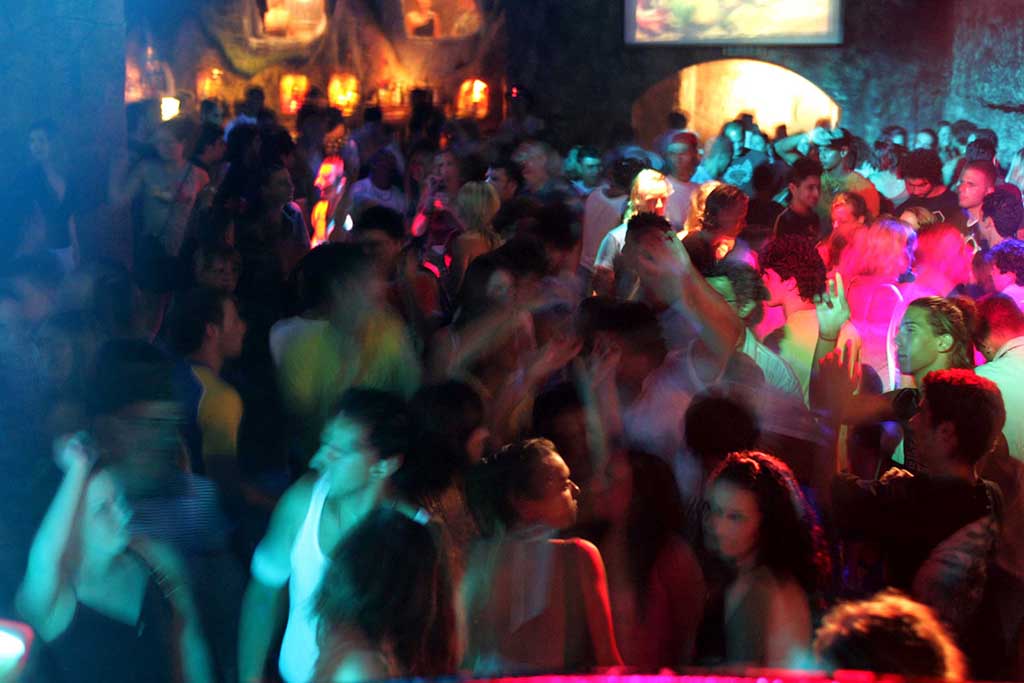
Indecision and the avoidance of reforms have exposed the Cyprus internationally, as it once more appears hesitant to address human trafficking cases following the release of Channel 4’s documentary on Ayia Napa
By Efi Xanthou
It has become tiresome to listen to the cheap excuses of Cypriot authorities for their ineffective handling of illegal activities and criminal elements in our country. Look at what happened with the human trafficking case in Ayia Napa.
The UK’s Channel 4 broadcasts an investigative report that had been in preparation for months, exposing labour exploitation, sexual harassment, and a host of other violations by owners and managers of clubs in Ayia Napa.
The reaction of the Republic? None at first.
Only the Mayor of Ayia Napa came forward to say that this was an isolated incident he was hearing about for the first time, that illegal employment of staff was not his responsibility, and that his primary concern was to make sure the “good” name of his city isn’t “dragged through the mud” and its tourist image damaged.
On the second day after the revelations, we heard statements from the police spokesperson saying that the case would be investigated, and on the third day there was also an intervention by the Head of the Police Office for Combating Human Trafficking. There was no official position taken by the Ministry of Justice, nor by the Law Office of the Republic.
Most importantly, there was absolutely no reaction from the Deputy Ministry of Migration, which leads the Multidisciplinary Coordinating Group for combating human trafficking. This is a horizontal committee established under the 2014 Law on the Prevention and Combating of Trafficking and Exploitation of Persons and the Protection of Victims, intended to better coordinate the numerous government departments and institutions that have some responsibility in this area.
Under the law, it must meet at least four times a year and should ensure the rapid response of all involved parties, so that victims can be immediately protected, assisted without delay, and justice can be facilitated.
I assume there is no need to inform you that this committee did not meet even once in 2025, in 2024 it met twice, and prior to that I cannot find any minutes documenting meetings for 2023, 2022, or 2021.
Nevertheless, the Deputy Ministry of Migration insisted that it wanted to be the competent authority to chair this multidisciplinary body, taking over from the Ministry of Interior, which had initially been responsible since 2014 and, again, never showed particular zeal in advancing the committee’s purpose.
When, however, the NGOs involved in this issue joined forces with Rita Superman, Disy member of parliament and former head of the Police Office for Combating Human Trafficking, to assign the responsibility to the Ministry of Justice instead, we did not receive a positive response from the Christodoulides government.
As a result, once again, indecision and the avoidance of reforms have exposed the Republic of Cyprus internationally, as it once more appears hesitant to address human trafficking cases with determination and effectiveness.
The government’s supposed surprise at what is happening in Ayia Napa is an outright lie. Let me remind you that the young British woman who was raped by a group of Israelis in 2019 (yes, the case that once again humiliated us internationally and led to a damning judgment by the European Court of Human Rights in 2025) was working in Ayia Napa under the very regime exposed by this revelatory Channel 4 video.
Even if we assume that there was a delay on the part of the Famagusta CID and the attorney-general’s office in investigating this aspect of the case (as they were too busy prosecuting the victim), it is unjustifiable that the issue was not examined by the Ministry of Labour and the Police Office for Combating Human Trafficking.
The matter had received wide publicity at the time, and NGOs had made public statements regarding the labour exploitation that emerged from the investigation.
Furthermore, the issue was again publicised in 2024 through an extensive report by The Guardian, which exposed this specific form of labour exploitation and human trafficking in various tourist destinations, including Ayia Napa – once again without anyone in Cyprus batting an eyelid.
Channel 4 had also announced for an entire month that it would publish a major exposé on sexual harassment and human trafficking, yet no competent authority thought it a good idea to contact them to obtain the testimonial material and begin an investigation before the broadcast. Systematic exploitation of people from third countries on the “holy island” appears to be a footnote for those in charge.
I sometimes wonder whether we will ever be able to shake off the persecution complex that characterises us as a people and fix what is wrong in our country by taking responsibility for our actions – or our inaction.
Personally, that is a world I would prefer to live in, rather than the delusional reality some try to construct every time something goes wrong.
P.S. The Multidisciplinary Committee for Combating Human Trafficking was dissolved in November 2025 on the initiative of the Deputy Ministry of Migration, and the publication of its new composition has yet to take place…
Efi Xanthou is a political scientist and secretary of Cyprus Stop Trafficking

Click here to change your cookie preferences