
By Martin David Clark
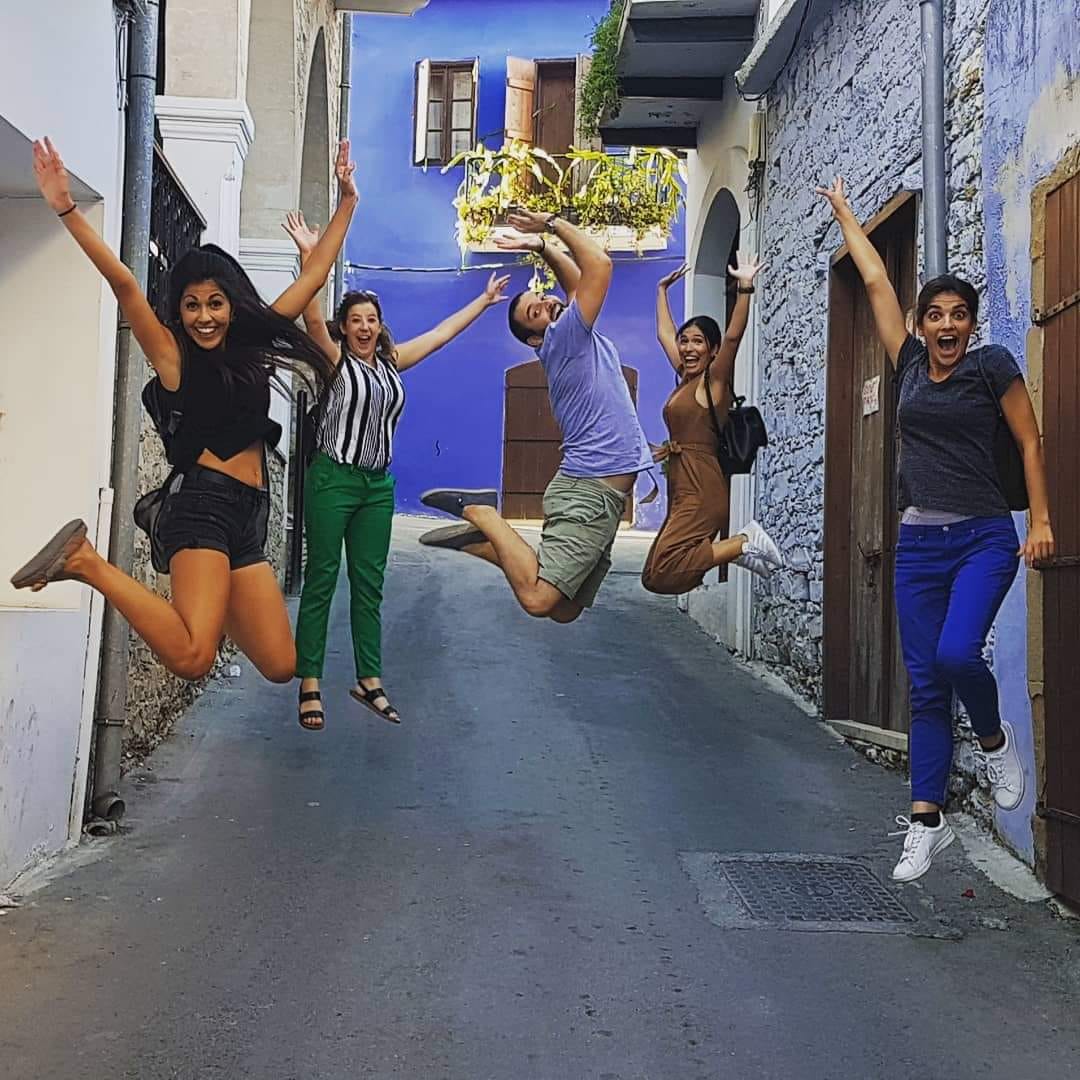
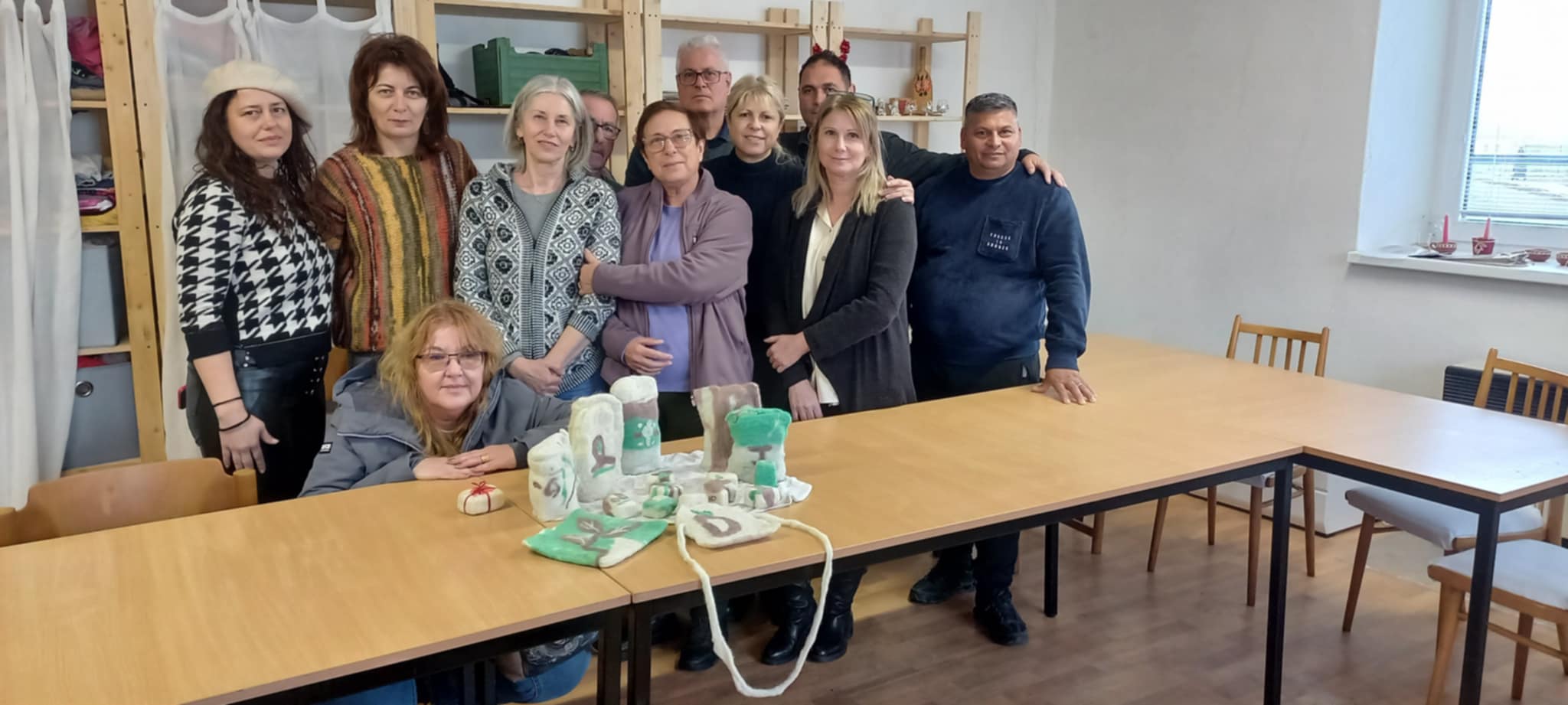
Just before Christmas, a team of five people from Kato Drys, led by Community Council president Nikos Vasiliou, visited the Lisov Museum in Slovakia. Also attending was a team from Saul Verde (Green Village) Association in Romania.
Cyprus, Slovakia and Romania have been collaborating since 2011 to promote rural sustainability. and the visit aimed to present the outcomes of an EU Erasmus Plus project titled Crafts in Rural Europe.
As part of the event, visitors and delegates watched 15 short documentary videos, five from each participating country.
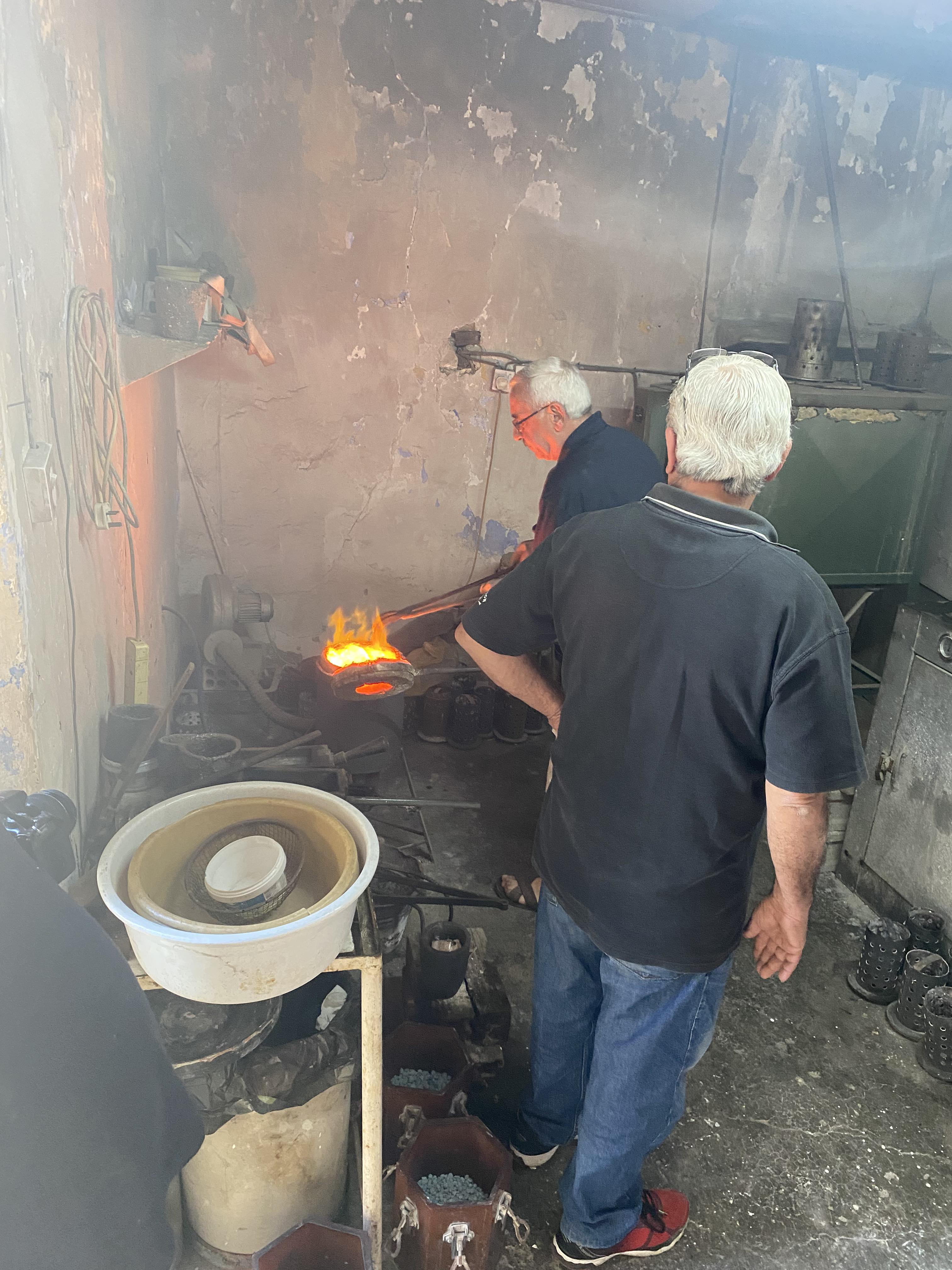
The Cypriot contribution was produced by a team led by Larnaca-based Andria Ethymiou and focused on traditional crafts and food production. These included Lefkara lace-making, mosaic art, tremithopittes biscuits made with terebinth seeds, silversmithing in Lefkara, and halloumi production at Loulla’s Farm in Choirokoitia.
The overarching aim of the project was to highlight the environmental value of crafts and handmade production, while underscoring the importance of European rural communities such as Kato Drys and other mountain villages in Larnaca district as destinations that promote a more sustainable way of life.
Here are some reasons to starts switching your choices today:
Conscious Consumption: handmade and locally produced goods represents a conscious rejection of the disposable culture associated with fast fashion and mass production.
Handmade items are not factory-produced and generally carry a significantly lower ‘carbon footprint’. Opting for local craftsmanship is often a deliberate decision that prioritises quality, environmental responsibility and long-term value over convenience.
Handmade items are different from industrial, factory-made products: They are often unique or one-of-a-kind, and they carry (even food items) the “spirit” or “soul” of the maker, which comes from the effort, time, and personal touch invested in their creation.
There is a technical description of this in the study of ‘thermodynamics’….. it’s not just a ‘brown bread and sandals’ statement
Evidence of human effort: Unlike machine-made products designed for perfect uniformity, handmade goods show slight, charming variations in shape, texture, or finish that indicate a human being made it. These small imperfections are viewed as signatures of authenticity.
The “spirit” of the maker: Handmade items often represent a labour of love, where the maker infuses their own creativity and passion into the piece. There is a tangible link to the artisan that is absent in mass-produced items.
Unique personalisation: Because they are created in small batches or one at a time, handmade products often allow for customisation that reflects the user’s personality or the maker’s artistic vision. Such products are ‘grounded’ and maintain a link between maker and consumer.
Cultural and ethical value: Many handmade items carry regional or traditional heritage, and buying them directly supports the artisan, allowing them to continue their craft rather than feeding into large-scale corporate, often ethically ambiguous, supply chains. This approach reflects the principles of Local Agenda 21, launched at the 1992 Rio Earth Summit, which promotes sustainable development at the local level through cooperation between communities, authorities and businesses.
Kato Drys is actively working towards such locally driven action plans.
While mass-produced goods offer consistency and affordability, they are typically designed for replacement and lack the personal, emotional connection found in a handcrafted piece.
To be direct, society today is choosing consistency and affordability over care for the environment. Even in these far from prosperous times, as consumers, we should be prepared to pay a little more money for products that do not damage the environment.
It is definitely the time, faced with damage to nature, loss of biodiversity and climate change, for all the Community Councils of Cyprus to make action plans to protect their local environments and try to reverse the alarming results of consumerism and industrialisation. A good starting point is promoting LOCAL & HANDMADE
The visit to Slovakia also allowed the Kato Drys delegation to see first-hand how village craft markets, selling exclusively handmade goods and artisan food and drink, can generate prosperity, strengthen community ties and encourage conscious consumption.
We need to do this now to try to halt serious environmental decay.
Martin David Clark is a former advisor on forestry to the UK government and the Royal Forestry Society and was once Head of the UK’s National School of Forestry. Retiring three years ago, he is a permanent resident in Cyprus but is still active in rural development and training. He is the Director of Grampus Heritage, which ran the UK’s largest vocational and adult education EU training programme in more than 15 countries. In Cyprus he has worked with the Forestry Department and the Cyprus Forestry College since 1996

Click here to change your cookie preferences