
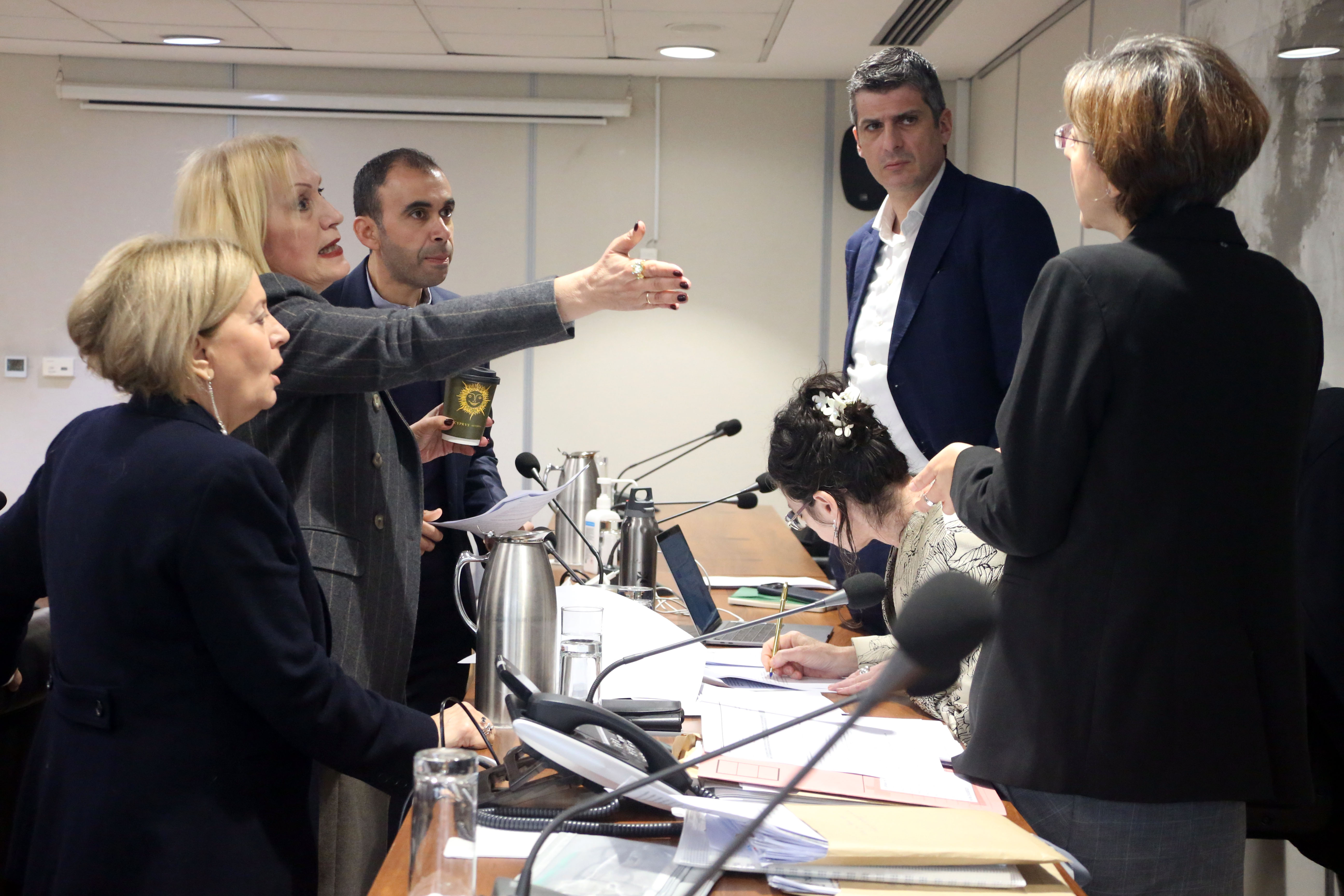
The House institutions committee concluded its review on Wednesday of the framework governing the post service activities of former officials amid criticism over the government’s refusal to disclose donor information.
Committee member Alexandra Attalides said the session focused on strengthening oversight and safeguards against conflicts of interest, following a legal service opinion that blocks the publication of donor names to the social support agency previously chaired by first lady Philippa Karsera.
Speaking to the Cyprus Mail, Attalides said the decision to withhold donor identities on the grounds of personal data protection was “scandalous” and incompatible with European law.
She argued that data protection provisions cannot be used by companies or individuals to shield themselves in cases involving potential criminal conduct or serious public interest concerns.
“We are effectively being gagged,” she said, adding that the current interpretation prevents parliament from naming companies, identifying organised crime links or exercising meaningful oversight.
“This is absurd and dangerous for democracy.”
The committee’s discussion was triggered by the accountant-general’s refusal, on the advice of the legal service, to submit a list of donors to the support agency and donation amounts to parliament.
Authorities warned that disclosure could supposedly lead to administrative sanctions and breaches of EU data protection rules.
MPs have sought the information as part of an investigation into allegations of political patronage and conflicts of interest, following reports that individuals or companies with state contracts, regulatory exposure or pending government decisions made substantial donations to the agency.
Attalides rejected the legal reasoning presented to the committee, saying EU data protection law allows disclosure where there is an overriding public interest, particularly in cases involving corruption, money laundering or abuse of power.
“This state is a kleptocracy”, she denounced.
“They do not serve the public good but the interests of those who reward favours. We will not accept this.”
She said the committee intends to escalate the matter to European institutions, including the European commissioner and, if necessary, the European court, to challenge what she described as “a systematic misuse of data protection law to obstruct transparency”.
The stance was echoed in a formal response issued by the institutions committee following receipt of the accountant-general’s letter.
Committee chairman and Disy MP Demetris Demetriou said the refusal to submit donor details strikes “at the very core of democracy” and amounts to a rejection by the executive branch of parliamentary control as enshrined in the constitution.
He said the committee had requested that the information be submitted in a classified format to allow it to carry out its oversight role, stressing that under the 1985 law governing the submission of information and documents to the House and its committees, refusal to provide evidence is not permitted.
“Persons who refuse to submit evidence are in blatant contempt of parliament,” the statement said, adding that refusal is justified only in exceptional circumstances involving defence, security or foreign affairs.
The committee further rejected the invocation of data protection law, pointing out that the general regulation explicitly permits the processing of personal data where necessary to comply with a legal obligation or to perform a task carried out in the public interest.
Reference was also made to the 2018 national law on personal data protection, which allows processing by parliament within the scope of its constitutional powers.
The same meeting also examined post service employment of former state officials, following the release of a covertly recorded video involving former energy minister George Lakkotrypis and references to suspicious financing and investments.
The review was initiated at the request of MPs Alexandra Attalides, as well as Irene Charalambides of Akel.
Members of the oversight body were summoned to explain how applications by former officials to work in the private sector are assessed and what safeguards exist against incompatibilities.
A file containing applications submitted between 2019 and 2025, along with data on approvals and rejections, was handed to MPs, though several said no substantive answers were provided.
Chair of the commission which oversees the employment of former ministers, Yianna Hadjihanna, said the discussion did not concern any specific former minister, citing the ongoing criminal investigation.
She said revealing further details could expose committee members to criminal liability, carrying penalties of up to one year in prison or a fine of €8,000.
MPs also received a voluminous file on post service employment applications.
Charalambides later said the session failed to clarify how parliamentary oversight is exercised, drawing parallels with past scrutiny failures such as the citizenship by investment scheme.
Data presented showed that between 2019 and 2025, more than 160 applications by former officials were reviewed, with a significant number approved unconditionally.
MPs also raised concerns over legislative gaps where former officials are self-employed, unpaid consultants, areas partially addressed in a forthcoming bill.
Attalides said access to political power “cannot be purchased in a state governed by the rule of law,” adding that the findings of both parliamentary and criminal investigations will be crucial in restoring public trust.
The committee’s conclusions comes amid wider investigations into post ministerial conduct, lobbying and undeclared interests, with MPs calling for legislative reform to close gaps that allow conflicts of interest to go unchecked once officials leave public office.





Click here to change your cookie preferences