
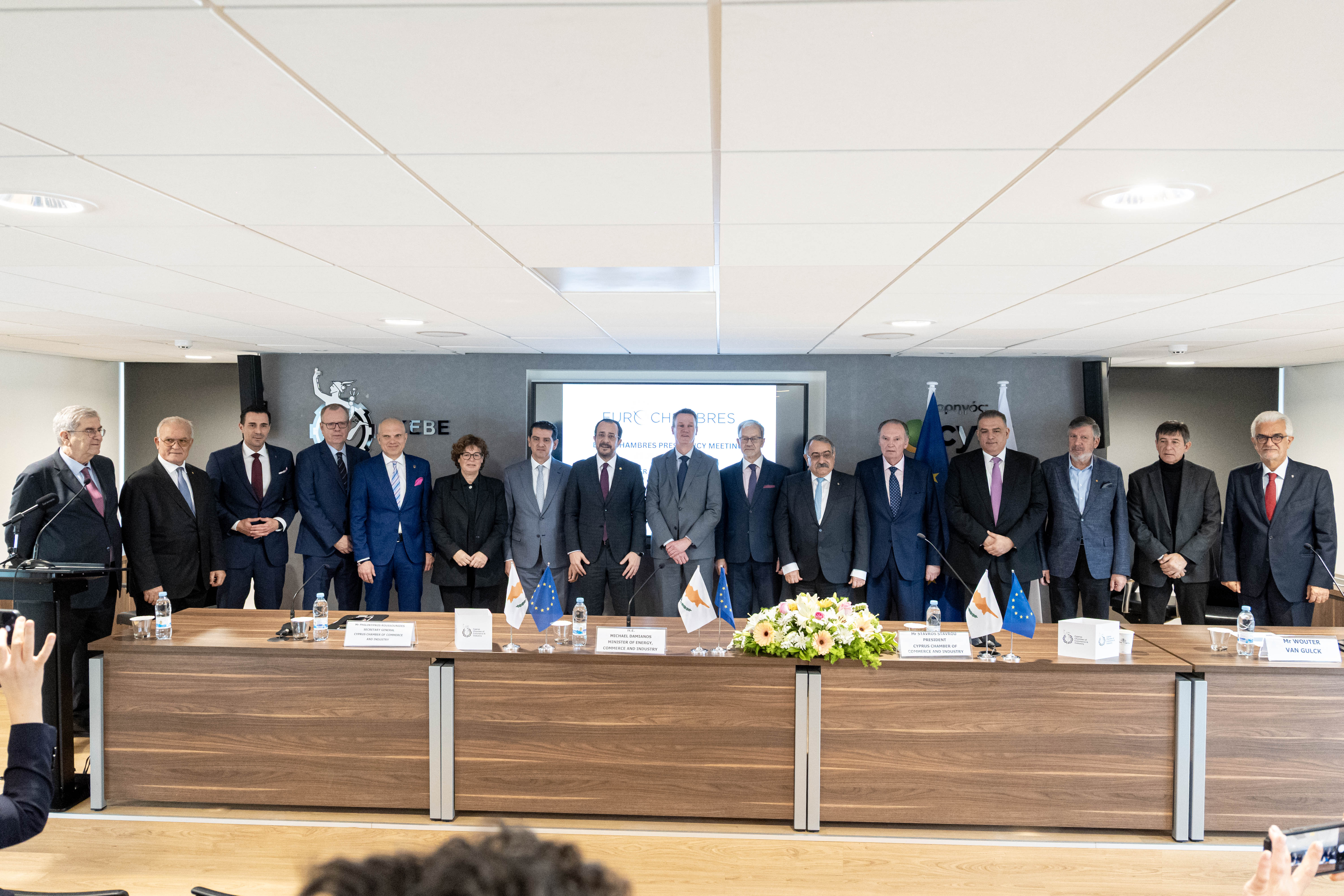
Europe’s drive to strengthen competitiveness and economic resilience came into sharp focus on Thursday during a meeting of the Eurochambres presidency in Nicosia.
The meeting took place at the premises of the Cyprus Chamber of Commerce and Industry (Keve), bringing together senior leaders of the European chambers network and top officials of the Republic of Cyprus.
Held less than a month into the Cyprus Presidency of the Council of the European Union, the gathering built on earlier exchanges between the Cypriot government and Eurochambres and centred on advancing Europe’s competitiveness agenda.
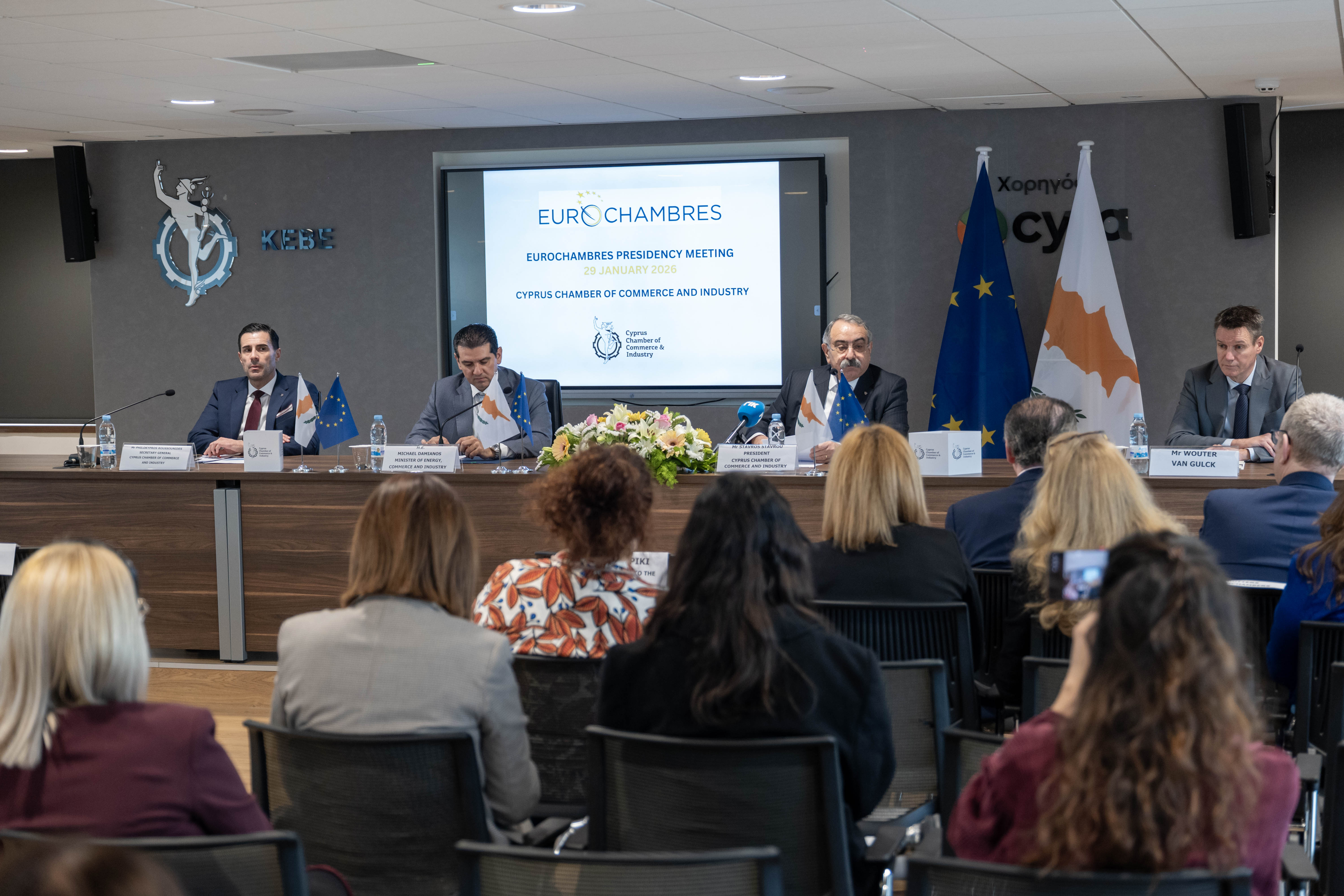
The meeting was opened by President Nikos Christodoulides, who highlighted the role of chambers of commerce and industry in supporting enterprises and strengthening Europe’s economic resilience.
Welcoming participants to Nicosia, Keve president Stavros Stavrou framed the meeting as taking place at a defining moment for Europe’s economic future.
“Global competition is intensifying, driven by large-scale industrial strategies in the United States, long-term state-led policies in China, and fast-moving reforms in many other economies,” Stavrou said.
He warned that Europe can no longer rely on incremental change to remain competitive.
“Competitiveness is about strategic choices,” he stated.
“It is about whether Europe remains a place where companies invest, innovate and grow, whether talent stays, and whether entrepreneurship is encouraged rather than constrained,” he added.
What is more, Stavrou highlighted the strategic role of Eurochambres, which represents more than 20 million businesses across Europe.
“Eurochambres plays a crucial role in translating the daily realities of companies into concrete European policy,” he said.
Responding to the opening remarks, Eurochambres Deputy President Wouter Van Gulck welcomed the emphasis placed on competitiveness during the Cypriot EU Presidency semester.
“The focus on competitiveness during the Cypriot Presidency is welcome,” Van Gulck said.
He called for the agenda to gain real momentum and deliver tangible results for Europe’s business community.
“Single market integration, regulatory burden reduction and international trade facilitation are key elements for economic growth,” he said.
Energy Minister Michael Damianos, meanwhile, presented the priorities of the Competitiveness and Energy Councils of the Council of the European Union.
He outlined Cyprus’ focus on strengthening industrial competitiveness, advancing the green and digital transitions, ensuring energy security and improving the functioning of the single market.
“The priorities under the Cyprus Presidency place strong emphasis on reinforcing Europe’s industrial base and safeguarding energy security,” Damianos said.
“A well-functioning single market, combined with predictable regulation and affordable energy, is essential for enabling European enterprises, particularly SMEs, to grow, innovate and compete at global level,” he added.
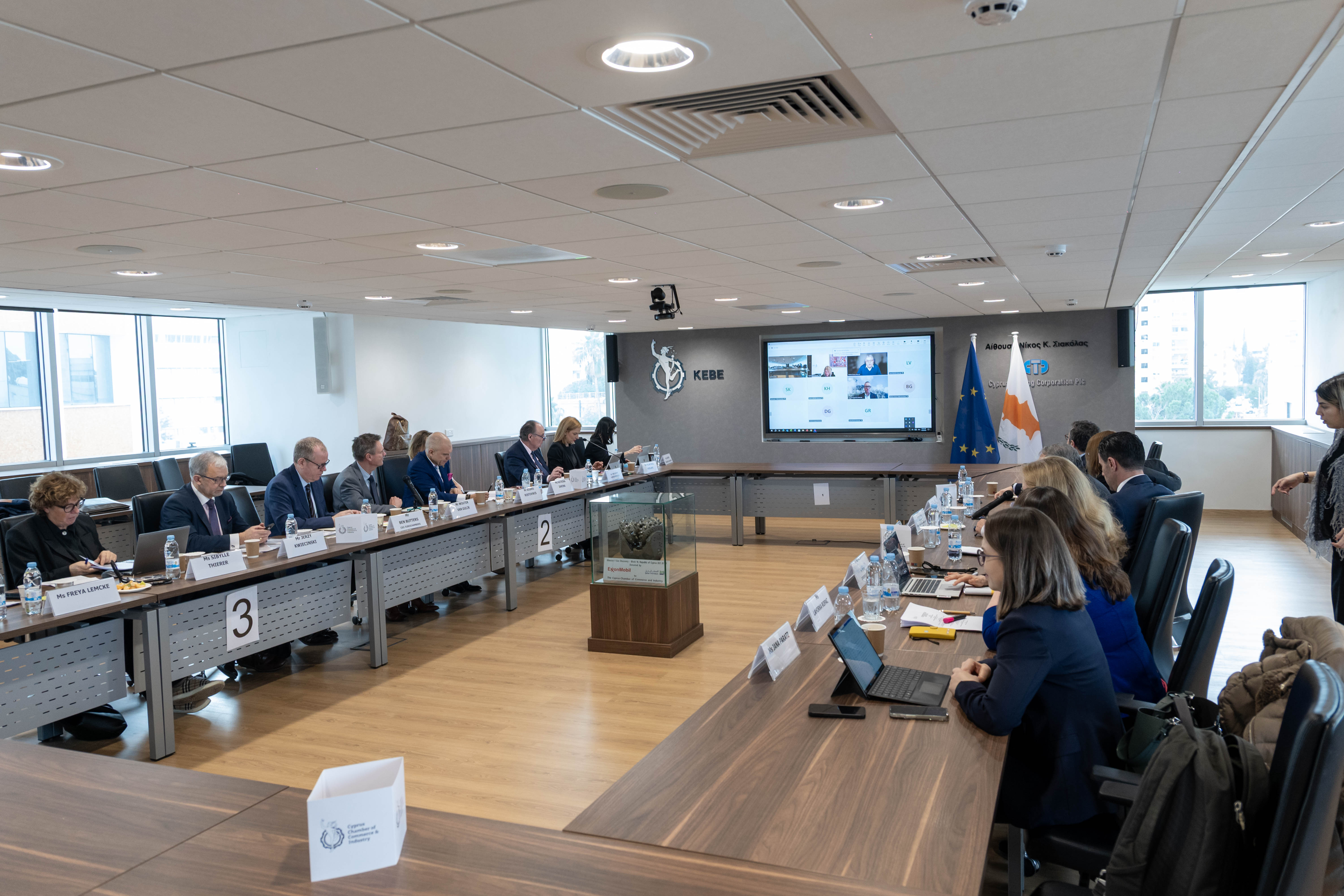
The meeting provided a platform for in-depth exchanges on regulatory simplification, the future of the single market, skills, innovation and the role of chambers in helping European companies compete internationally.
Participants also reviewed Eurochambres’ activities in 2025 and discussed strategic priorities for 2026.
Discussions covered the appointment of committee chairs for the 2026–2027 period, preparations for the Eurochambres Congress 2026 and options for the European Parliament Elections Programme 2027.
The agenda also included a tour de table on current economic trends, regulatory challenges and the outlook for European business.
Finally, Eurochambres said it will continue to work closely with the Cyprus Presidency and European institutions to ensure competitiveness remains at the core of Europe’s policy agenda.





Click here to change your cookie preferences