
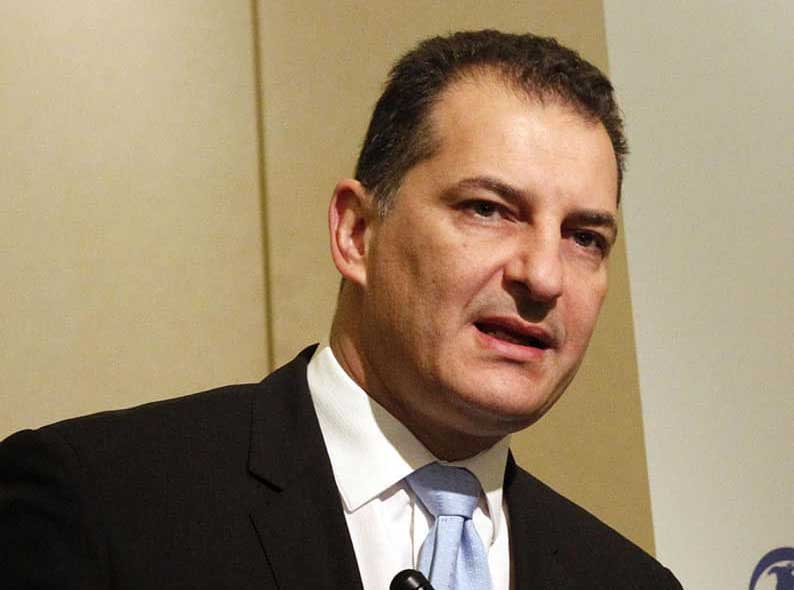
Former energy minister Georgios Lakkotrypis submitted more than ten applications for special permission to work in the private sector during the mandatory two-year hiatus after leaving his ministerial post, sources close to the matter said on Thursday.
The sources told the Cyprus Mail that applications were filed between July 2020, when Lakkotrypis left the energy ministry, and July 2022, during which law requires former ministers to obtain approval from a three-member committee before taking up private sector roles.
The requests related either to participation on company boards or to the provision of consultancy services.
The issue had come under intense parliamentary focus following the publication of a covertly recorded video allegedly showing discussions of influence and investment access to the presidential palace.
In the footage, Lakkotrypis appears as an energy consultant and later acknowledged receiving €15,000 for a three-month consultancy fee with the non-existent company Stratix Wealth, which claimed interest in investing €150 million in Cyprus’ energy sector.
During a meeting of the House institutions committee on Wednesday, Akel MP Irene Charalambides requested that detailed data on post-ministerial employment applications be submitted to parliament.
The sources said that that during the part of the session which was closed to the public, it was revealed that Lakkotrypis had submitted at least eight applications within a nine-month period.
The sources indicated that the total number of applications across the full two-year period was in double digits, with the three-member commission, which oversees applications filed by former public officials who wish to take jobs in the private sector, having sought views from the energy ministry before approving the requests.
The files discussed also referred to two applications submitted by Lakkotrypis to the audit committee.
The first concerned his employment through LMA Advisory Limited, a company providing consulting services to third parties.
Approval was granted on the explicit condition that consulting activity linked in any way to the responsibilities of the energy ministry would require prior authorisation from the committee.
The second application related to Lakkotrypis’ serving as a non-executive member of the board of directors of Ronin Europe Ltd, a registered investment services company headquartered in Limassol.
One of the approvals concerned ElvalHalcor, a Greek aluminium and copper company, which announced in July 2021 that Lakkotrypis had been appointed to its board as a temporary independent member.
MPs said the key issue was whether the companies involved had links to the energy sector and whether the commission exercised due diligence in assessing potential conflicts with Lakkotrypis’ former ministerial responsibilities.
The law governing post-service employment aims to safeguard the public interest and prevent officials from using public office to secure future private benefit.
Breaches can carry penalties of up to €30,000 in fines and prison sentences of up to three years.
Scrutiny of the current composition of the three-member commission proved impossible, as it assumed office in July 2024 and had no involvement in the decisions under review.
Its chair, state attorney Yianna Hadjihanna, told MPs she could not answer substantive questions because of the ongoing criminal investigation linked to the video, warning that disclosure could “contaminate investigative work”.
Separately, the tax office has launched an audit into Lakkotrypis’ consultancy income to determine whether it was properly declared and whether value added tax obligations arose.
Authorities are examining bank transactions and related documentation, following references in the video to payments allegedly made “only in cash”, a claim Lakkotrypis has denied.
The House institutions committee also expressed dissatisfaction after being informed that donor data relating to the social support body could not be submitted to parliament following a legal service opinion.
Committee members said the refusal undermined parliamentary oversight and transparency, particularly in the context of allegations raised by the video.
Legislative changes are now being prepared, with Akel MP Andreas Pasiourtides having announced plans to table a bill to close gaps in the post-service employment framework, while Disy MP Nikos Georgiou is promoting proposals to strengthen transparency of political donations, including mandatory publication of donor names and amounts above €500.
As investigations continue, MPs said restoring public trust would depend on “full accountability” and effective safeguards against conflicts of interest once officials leave public office.





Click here to change your cookie preferences