
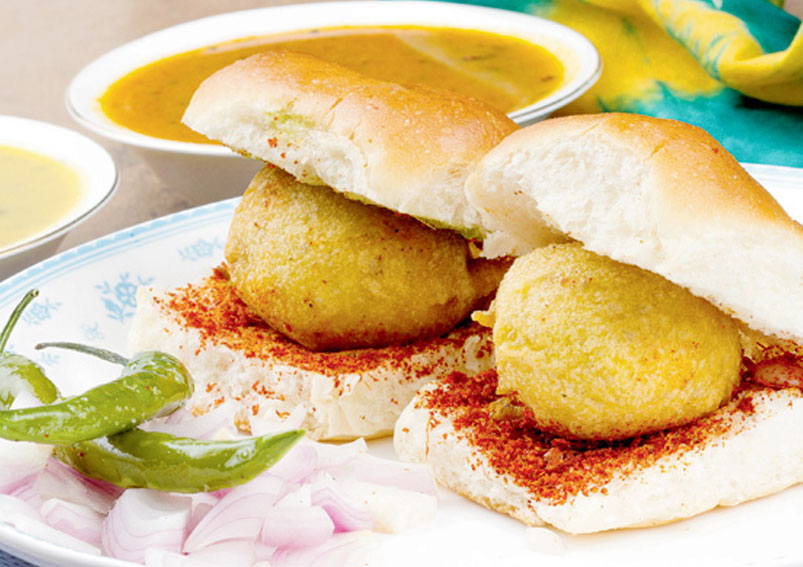
Vada pav is a vegetarian fast-food dish that originated in the Indian state of Maharashtra and is now one of the most widely-consumed street foods in Mumbai.
It consists of a deep-fried potato dumpling placed inside a soft bread roll, or pav, which is sliced almost in half through the middle. The filling is typically accompanied by one or more chutneys and a whole green chilli, creating a simple snack that is highly seasoned.
The basic form of vada pav reflects its function. It is compact, easy to prepare, and easy to eat while standing or travelling. The potato fritter provides substance, while the bread acts as both container and utensil.
The chutneys, often made from garlic, coconut or chilli, add heat and sharpness, balancing the richness of the fried filling. Although recipes and accompaniments vary by vendor and neighbourhood, the essential elements remain consistent.
The most widely-accepted account places the origin of vada pav in the mill districts of central Mumbai during the 1960s. Ashok Vaidya, a street vendor in Dadar, is often identified as the first person to sell the snack outside Dadar railway station in 1966, catering primarily to textile mill workers and daily commuters.
The timing of the snack’s emergence coincided with major economic and political changes in the city. During the 1970s and 1980s, the closure of textile mills in central Mumbai left large numbers of workers unemployed.
Many former mill workers turned to street vending, setting up small vada pav stalls as a source of income.
Over time, vada pav was promoted as a symbol of Marathi identity and regional pride, even though key ingredients such as potatoes, chillies and even the pav itself were historically imported to western India.
The snack also became part of broader cultural conflicts. As South Indian foods such as idli and dosa grew in popularity in Mumbai, the Shiv Sena party used vada pav to assert what it defined as a distinctly ‘Mumbaiyya’ culture.
In 2008, the party launched a chain of vada pav outlets that employed only Marathi workers and framed the project as an employment scheme for the Marathi manoos, or sons of the soil. Today, thousands of such stalls continue to operate across the city, leaving vada pav inseparable from both Mumbai’s street life and its political history.
Vada pav and remains a key source of income for street vendors. Often called the Mumbai burger, it continues to be a popular, affordable snack and a symbol of the city’s culinary identity and working-class culture.





Click here to change your cookie preferences