
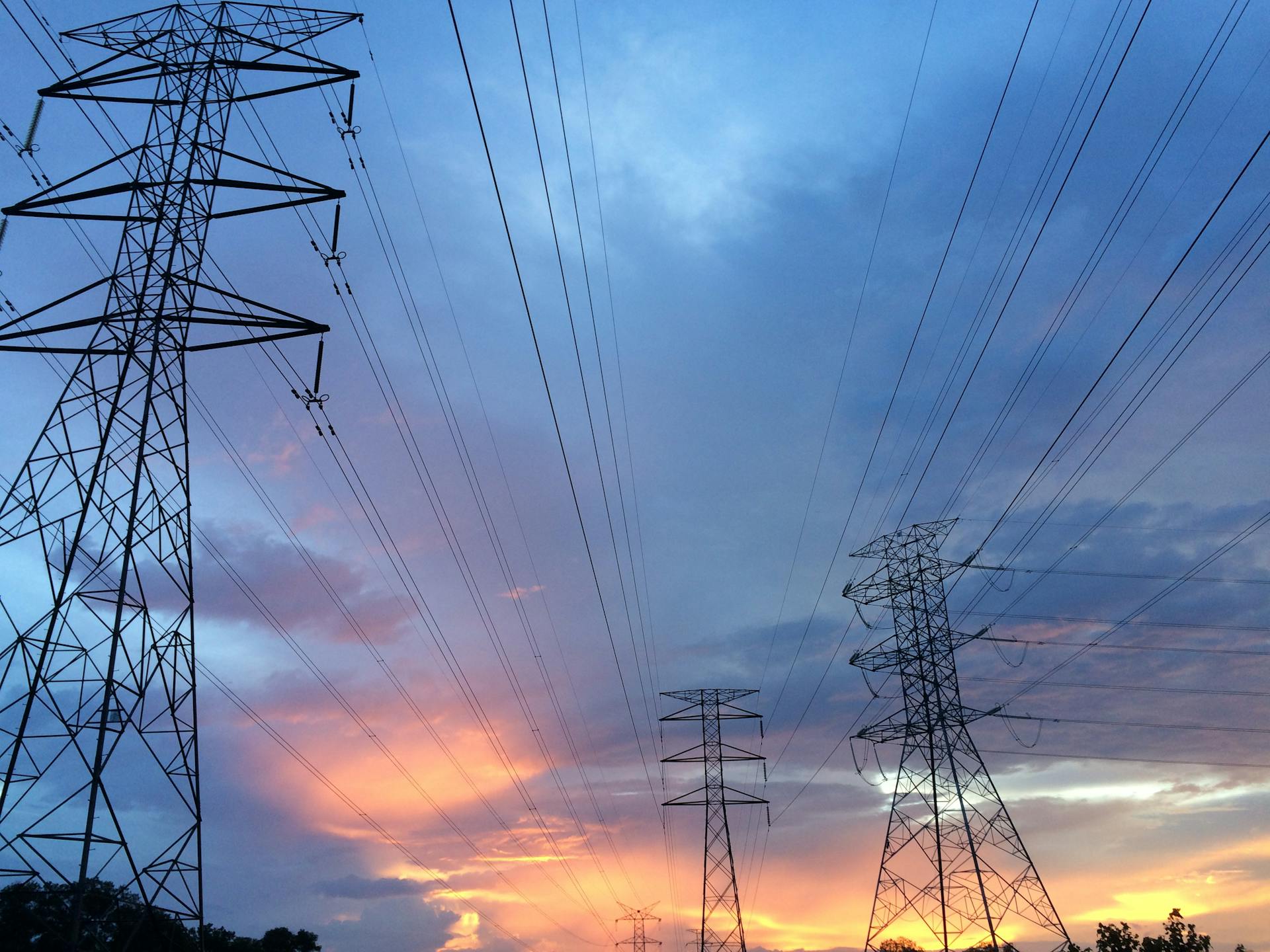
Finance Minister Makis Keravnos on Wednesday announced that the government will extend the application of a reduced value added tax rate for home electricity consumption for another year.
Speaking after the day’s cabinet meeting, he explained that the policy, which had been in place since the end of March last year and was due to expire at the end of March this year, will now be in place until the end of March next year.
He said the decision was made “due to the fact that the price of electricity supply has not decreased compared to the corresponding period last year”.
“This entails a cost of €40 million, and this measure is being promoted in the context of the evaluation of measures to address increased energy prices and ongoing efforts to increase household disposable income,” he said.
The policy sees a VAT rate of nine per cent, rather than the typical 19 per cent, levied on household electricity, and was initially announced during President Nikos Christodoulides’ televised address appraising his second year in office in March last year.
At the time, he said that the policies his government has implemented “reflect our political philosophy – social liberalism – as well as our human-centric approach”.
The extension of the reduced VAT rate comes with Cyprus’ energy market having opened up to private companies for the first time in October last year.
At the time, the energy regulatory authority (Cera) said that the move would “mark a new era in the electricity sector”, with it hoped that in time, the island will have “a fully free competitive market, where all parties, producers, suppliers, and end customers are free to decide among themselves … how to manage and pay for the electricity they produce”.
Questions were raised at the time regarding whether the opening of the energy grid would help to reduce consumers’ bills, but energy minister of the day George Papanastasiou said that he “cannot tell” whether this will be the case.
“I cannot tell you whether the price will go down, because this particular model, namely the ‘target model’, has not been tested in small markets such as in Cyprus,” he said.
“If you ask the minister whether prices will go down, that will depend very much on how the parties compete in a small market in which he decided to apply the ‘target model’.”
The ‘target model’ aims to create a unified electricity market across the European Union, with all 27 member states’ electricity grids open to private companies, with the hope that widespread competition will drive down prices for consumers across the bloc.
Earlier, he had said that he was unsure whether the opening of Cyprus’ electricity grid to private companies will lower people’s electricity bills, adding that in large electricity markets, prices typically remain stable when private first companies are allowed to enter, with them then falling later on “due to competition”.
“In a smaller market, which has not been tested often, we will see along the way,” he said, adding that his ministry can intervene “if we see that things are going in the wrong direction”.
Asked what will change when private companies are allowed to partake, he said energy producers and suppliers will “enter an environment which is essentially a stock market, in which every half hour, quotes will be made, and electricity can be bought”.





Click here to change your cookie preferences