
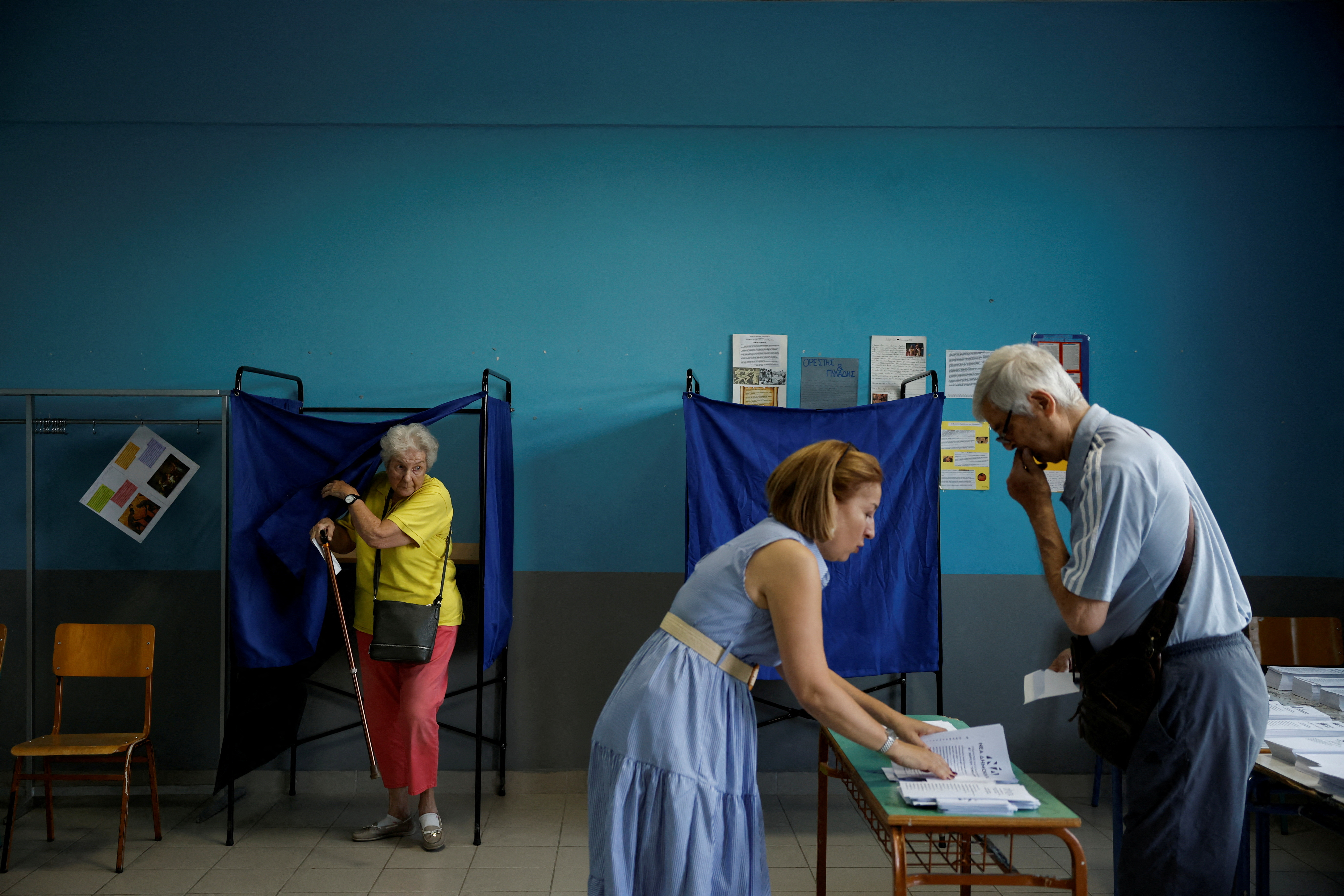
A total of 837 Turkish Cypriots are registered to vote in May’s parliamentary election, interior ministry permanent secretary Elikkos Elia said on Saturday.
That figure is an increase of three voters compared to the 834 who were registered to vote at the European parliament elections of 2024.
Turkish Cypriots who live in territories under government control and who have identity cards issued by the Republic of Cyprus can vote and stand in presidential and parliamentary elections in line with the doctrine of necessity, which outlines the running of the Greek Cypriot-led government in the aftermath of the outbreak of intercommunal violence in 1963.
The Republic of Cyprus’ constitution initially foresaw a parliament with 50 voting members, of whom 35 would be Greek Cypriots and 15 would be Turkish Cypriots, as well as non-voting observers belonging to the Armenian, Latin, and Maronite communities.
Following the breakdown of constitutional order and the outbreak of intercommunal violence in 1963, the Turkish Cypriots were unable to return to their seats in parliament, leaving just 35 voting members.
That figure was raised to 56 Greek Cypriots ahead of the 1985 parliamentary elections after the constitution was altered using the doctrine of necessity. The amendment foresees 24 Turkish Cypriots also being elected, but with the Cyprus problem remaining unsolved, this has not yet happened.
However, with some Turkish Cypriots continuing to live in territories under government control, legislation based on the doctrine of necessity allows them to vote and stand in parliamentary elections on the list of 56, as well as in presidential elections.
One Turkish Cypriot, the Ecologists’ Movement’s Oz Karahan, has announced that he will stand as a candidate in May’s election.
Karahan opposes a federal solution to the Cyprus problem – the model ostensibly favoured by President Nikos Christodoulides and Turkish Cypriot leader Tufan Erhurman – instead supporting a solution by means of a unitary state akin to the Republic of Cyprus initially envisioned by the 1960 constitution. Greece and Turkey are also unitary states.
Aside from Karahan and the 837 Turkish Cypriots registered to vote so far, the vast majority of Turkish Cypriots continue to live in the north and vote in Turkish Cypriot elections.
At the most recent Turkish Cypriot leadership election, which took place in October last year, there were 218,313 registered voters, of whom 141,504 voted.
Only Turkish Cypriots who live in the north were eligible to vote in that election, though the north’s ruling coalition has in the past expressed its intention to change this and enfranchise Turkish Cypriots living elsewhere.


Click here to change your cookie preferences