
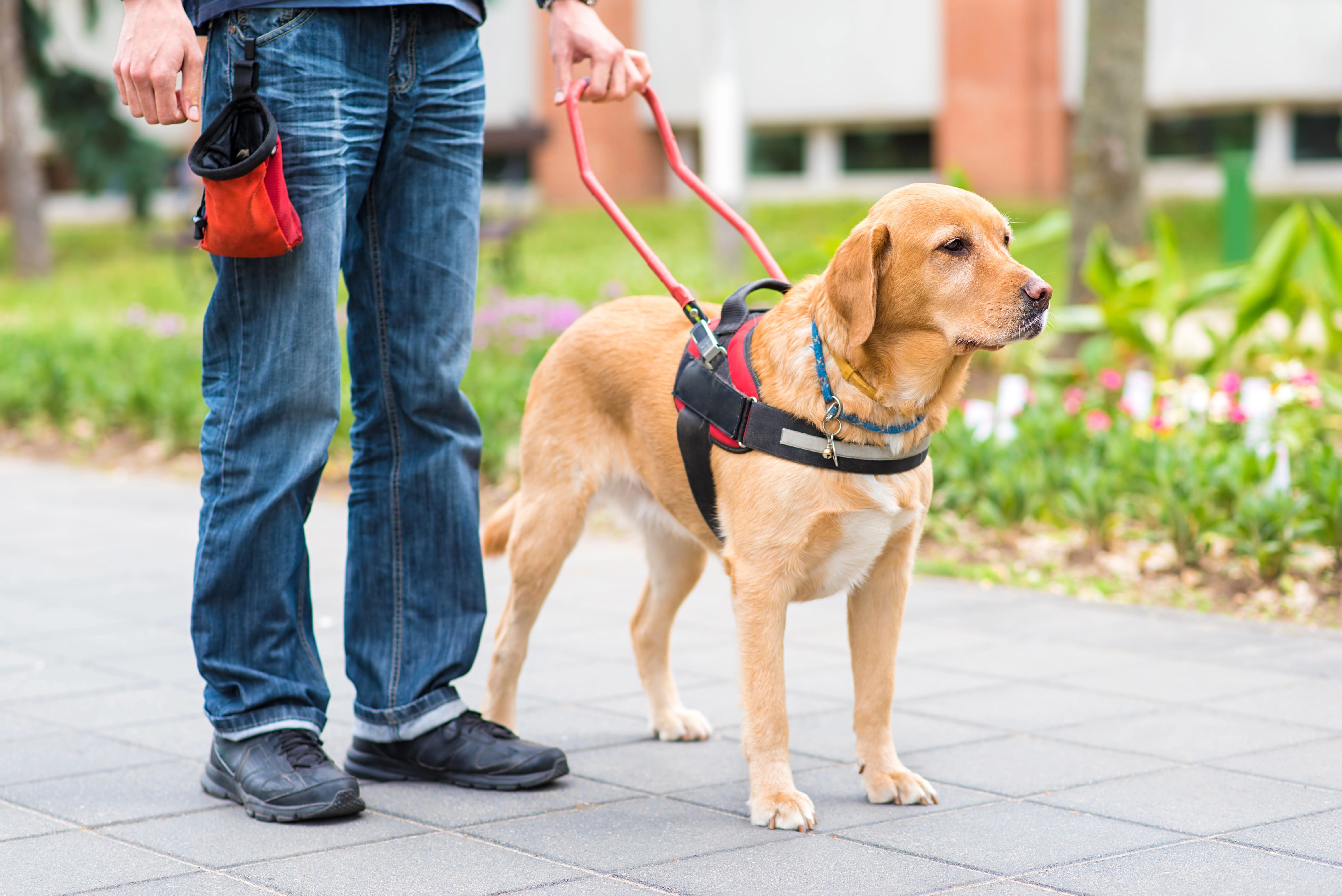
A proposal to grant institutional recognition to guide dogs triggered sharp disagreements on Monday during discussions at the House human rights committee.
The bill, submitted by Ecologist MP Charalambos Theopemptou, seeks to fill what MPs described as a ‘clear legislative gap’, with similar frameworks already in place in at least 20 EU member states.
The proposal was examined alongside a separate draft law on access rights for assistance dogs, expected to go before the House plenum later this week.
While the principle of recognising guide dogs drew near unanimous approval, objections centred on who would act as the competent authority for training, certification and oversight, as well as the administrative and financial burden on the state.
Veterinary services director, Christodoulos Pipis, said responsibility under existing legislation lies with the interior ministry and local authorities, stressing that veterinary services “will not have responsibilities for companion dogs either”.
His remarks drew criticism from the bill’s sponsor, who later expressed disappointment at what he described as a ‘reluctance to assume responsibility’.
Concerns were further raised over capacity, as the blind school director questioned whether local authorities had “sufficient and appropriate personnel” to evaluate trainers and monitor the living conditions of guide dogs.
From the legal service, lawyer Alexis Antoniades warned that the issue of competence must be clarified before the bill advances.
He also cautioned that increased administrative costs could raise constitutional concerns.
In response, Theopemptou argued that the state had long failed to address the issue.
“Since an effort is being made to fill this gap with a proposed law, the government should help to meet the needs,” he insisted.
Human rights committee chair and Akel MP Irene Charalambides echoed that view, saying the matter “should have already been regulated by the government” and that it should now support the initiative.
“When we try to modernise society, we must focus on how to achieve the goal, not only on the changes each side is asked to make,” she said after the meeting.
Charalambides added that insurance for the animal itself should be examined, suggesting that insurance services be consulted during further deliberations.
Animal welfare issues were raised by health ministry official Stalo Panayides, who said legislation abroad regulates the working lifespan of guide dogs, their living conditions and retirement.
She also called for clearer definitions of guide dog categories “so that the legislation covers all cases of disability”.
The transport ministry expressed general agreement but flagged potential restrictions on guide dogs entering tourist buses and taxis.
Road transport deputy director Eleni Pipi suggested examining the use of muzzles in such cases, a proposal rejected by disability organisations and committee members.
Paola Frandji of Kysoa welcomed the bill but stressed that the definition of disability should align with the UN convention on the rights of persons with disabilities.
She underlined the high cost of training guide dogs, saying it makes access “prohibitive for the vast majority”.
“We all have the right to free access,” she said, rejecting suggestions that access could be voluntary for some venues.
Despite more than 2,000 visually impaired people living in Cyprus, only five assistance dogs are currently registered on the island.
Training a guide dog takes around two years and costs about €25,000, MPs were told.
Pancyprian organisation for the blind president Christakis Nikolaides said similar regulations exist across Europe, while Andreas Fotiades of the blind welfare association questioned whether society was ready to accept such legislation and who would bear ongoing care and health costs.
Reservations were also voiced by Pasika president Fanos Leventis, who opposed mandatory entry of guide dogs into all recreational areas and called for criteria allowing venues to opt in voluntarily.
Frandji dismissed the idea as incompatible with independent living.
Alongside Theopemptou’s proposal, a separate bill by Diko MP Christos Senekis, establishing access rights for assistance dogs in public buildings and transport, is heading to the plenum.
Charalambides said the two bills are complementary, with one enabling prosecutions for denial of access and the other defining state responsibilities.





Click here to change your cookie preferences