
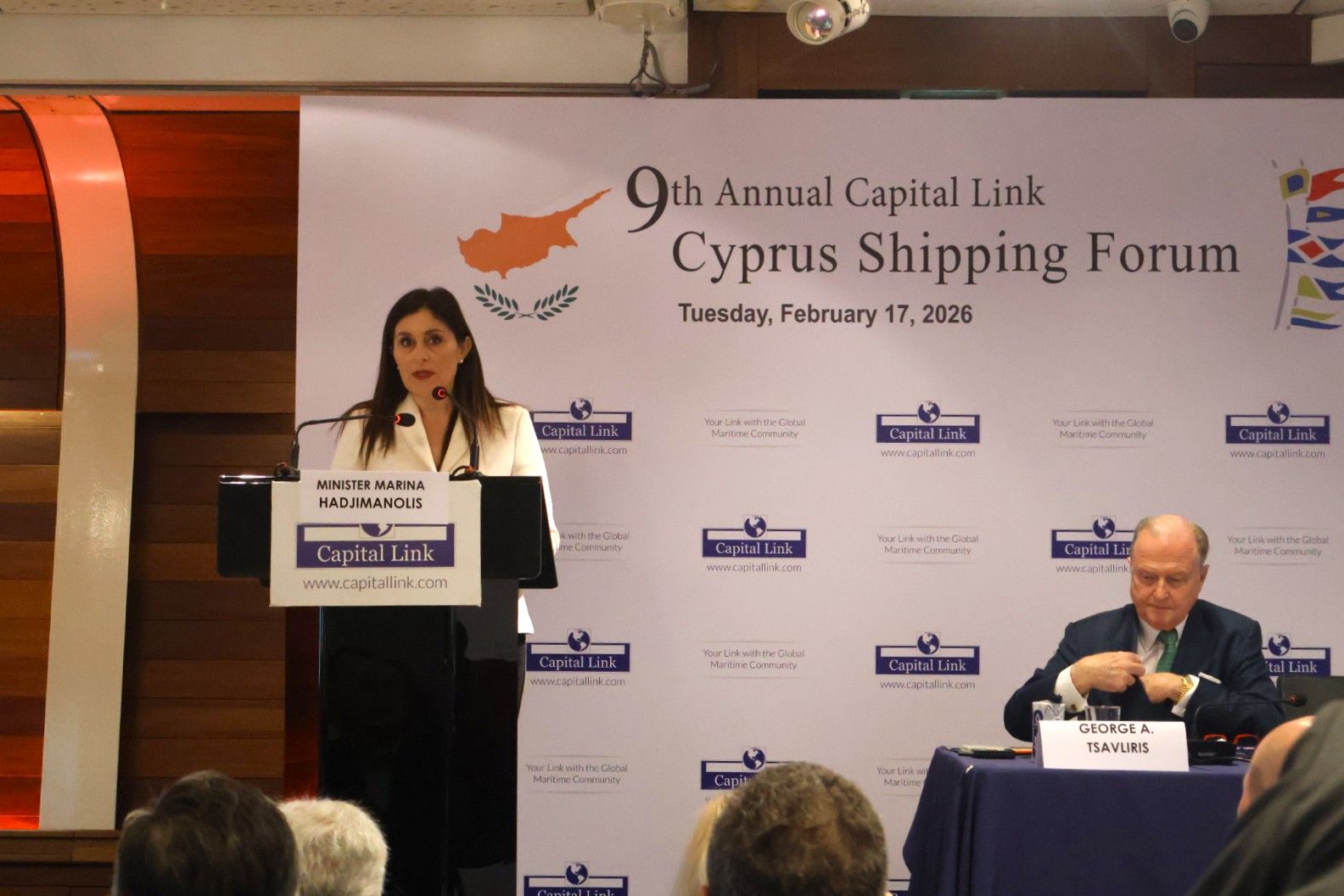
Shipping minister calls for realistic and coordinated green solutions
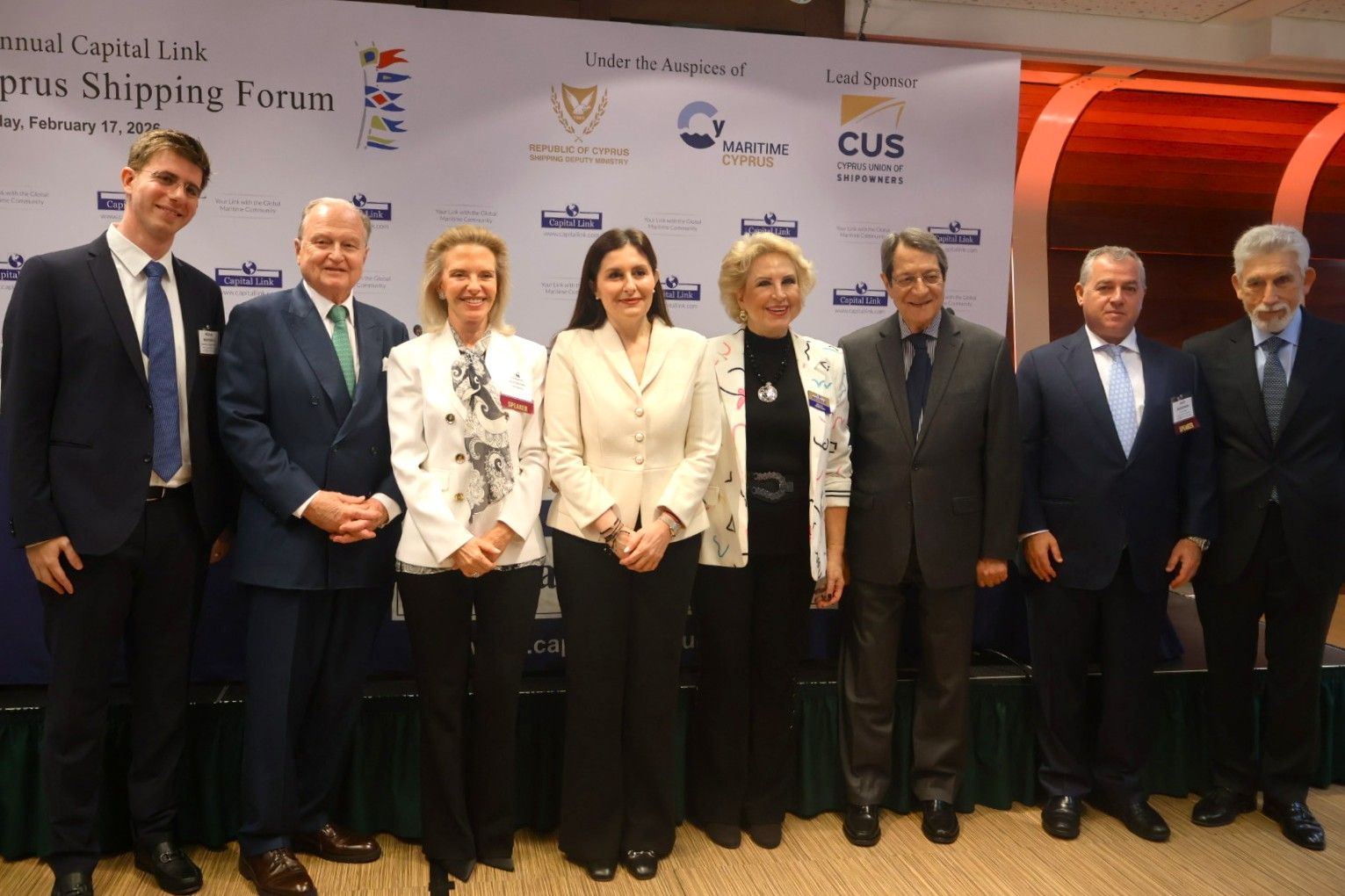
Cyprus aims to balance decarbonisation with competitiveness during its EU Council Presidency, Shipping Deputy Minister Marina Hadjimanolis said at the 9th Capital Link Cyprus Shipping Forum in Limassol, citing registry growth and rising shipmanagement activity as evidence of sector resilience.
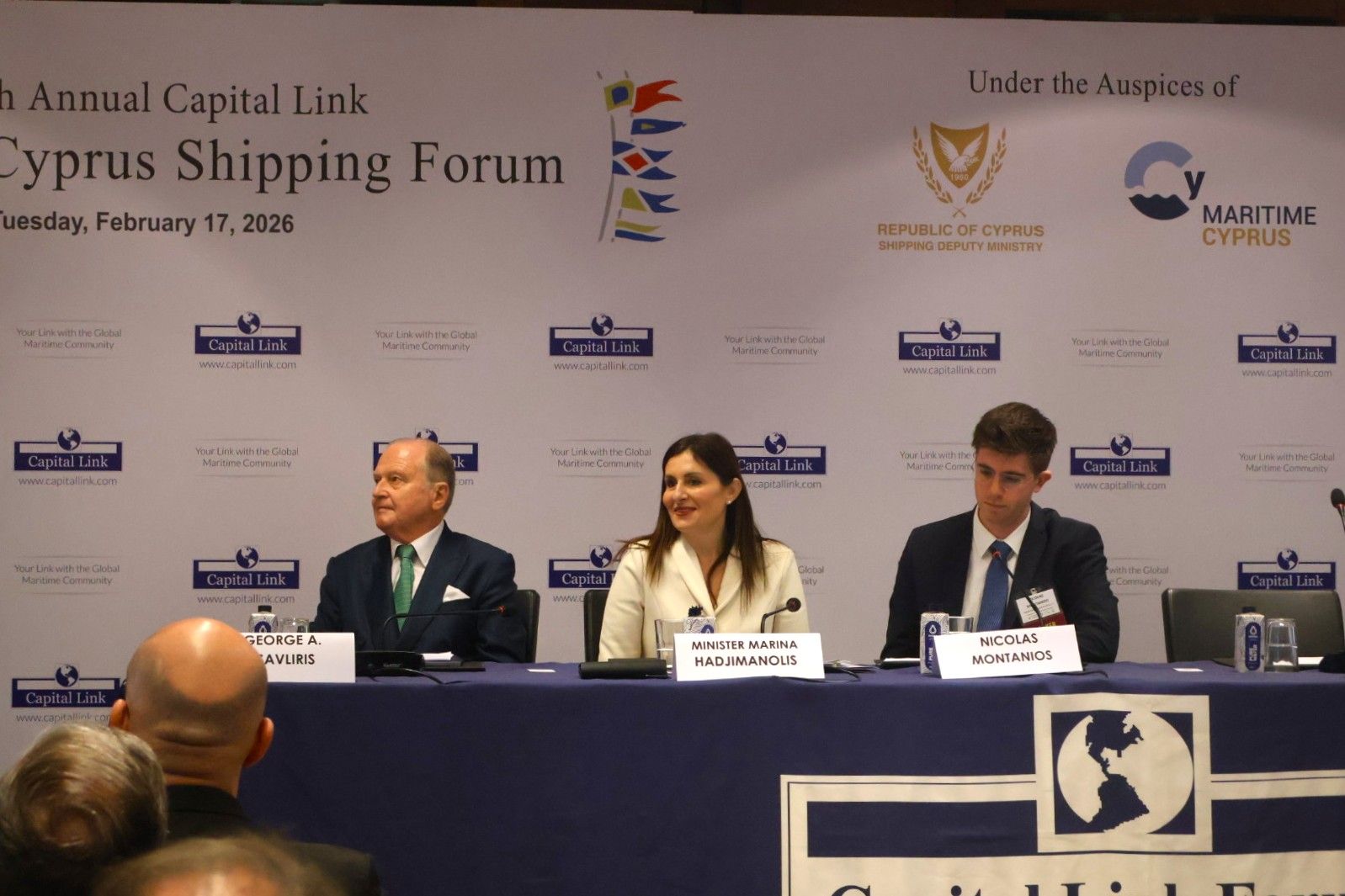
Hadjimanolis delivered a keynote presentation followed by a discussion titled “Cyprus Maritime Cluster in the Spotlight – Strength, Resilience & Growth” with Nicolas Montanios.
She said global shipping remains under pressure, noting that “geopolitical instability, market volatility and the accelerating green and digital transition continue to test the resilience of the shipping sector.”
At the same time, she added that shipping has proven its ability not only to adapt but also to lead, while Cyprus shipping has delivered “tangible results”.
According to the Deputy Minister, measurable progress has been recorded in recent years, as the Cyprus registry increased total tonnage by 23 per cent, reaching its highest level in 25 years.
She attributed the performance to regulatory predictability, high safety and compliance standards and continuous service improvement, alongside targeted incentives supporting the green and digital transition without undermining competitiveness.
Particular emphasis was placed on shipmanagement, a core pillar of the maritime cluster.
Between the first half of 2024 and the first half of 2025, the sector’s contribution to GDP rose by 17 per cent, confirming Cyprus as one of the leading global shipmanagement centres and supporting thousands of highly skilled jobs.
Referring to policy priorities ahead of Cyprus’ Presidency of the Council of the European Union, she said flagship initiatives will include the Lefkosia Declaration, a high-level stakeholders conference and an informal meeting of EU maritime ministers.
On decarbonisation, Hadjimanolis said realistic and globally coordinated solutions are required, stressing that Cyprus participates actively in discussions at both the International Maritime Organisation and the EU.
The country supports harmonised measures, technologically neutral approaches and a clear framework for shipowners, she explained.
At the same time, she referred to the digital upgrade of the Deputy Ministry’s services through the CYSh1p platform.
Regarding the Presidency agenda, she said Nicosia will pursue balanced policies that preserve competitiveness, avoid market fragmentation and support the transition in a feasible manner.
She added that the sector’s future will depend on cooperation, innovation and trust between the public and private sectors, while the government remains committed to strengthening the maritime cluster and reinforcing the Cyprus flag as a reliable international hub.
European Parliament Transport Committee chair Elisabeth Vosenberg Vryonidis said the Presidency presents an opportunity to achieve concrete results and bring European shipping “to the top”.
She added policymakers will support the sector through targeted incentives and a stable regulatory framework at both EU and international level.
Vosenberg Vryonidis identified connectivity, competitiveness and climate neutrality as the three main challenges for European shipping, noting that, if approached with ambition and dedication, they represent an opportunity for the industry to continue leading globally.





Click here to change your cookie preferences