
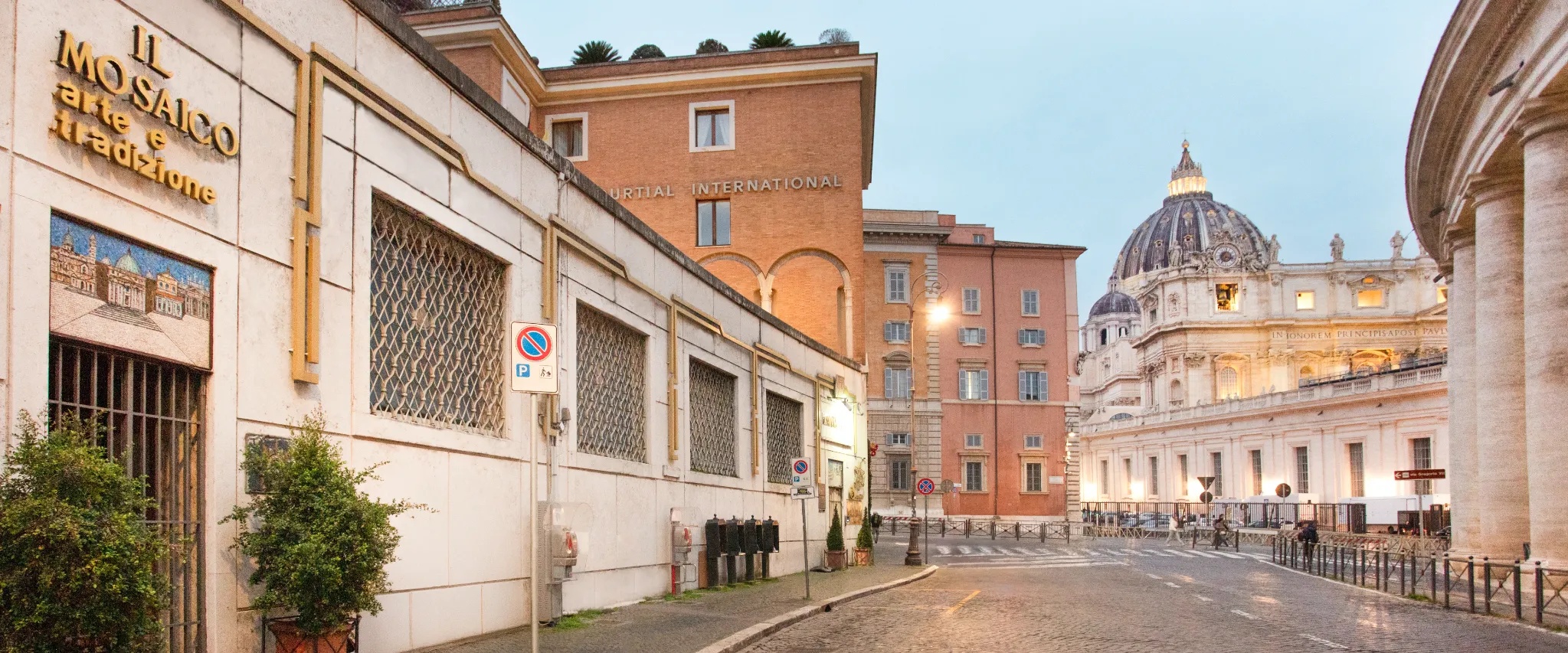
In an era where much of our lives unfold online, even the Vatican has quietly adapted to the realities of a scattered, global community. Among the many requests that reach Rome each day, one has become increasingly common: the papal blessing, a gesture that carries both symbolic and spiritual weight.
Often requested for weddings, anniversaries, baptisms or moments of illness, this solemn document issued on parchment represents far more than a ceremonial gesture. For many believers, it is a symbol of spiritual closeness, even when oceans and borders keep them far from St. Peter’s Square. It is a way to feel remembered, even from thousands of miles away.
From small villages in the Philippines to nursing homes in Canada, Catholics are discovering new ways to stay connected with the Catholic Church. The papal blessing, once accessible only to those present in Rome, now arrives in mailboxes around the world. It is no longer just a tradition from the past but a living expression of pastoral care in an age of distance and digital connection.
A gesture rooted in history, alive in the present
The papal blessing — formally known as the Benedictio Apostolica — isn’t new. It dates back to early Christianity, when the Bishop of Rome began extending prayers and protection over those far beyond the city’s walls. What’s changed isn’t the gesture, but the geography.
Once reserved for those visiting Rome, the Papal Blessing is now accessible globally via post or online request. This tradition has expanded beyond formal liturgies to offer comfort and hope to cancer patients, students, and newlyweds everywhere, bridging the distance between the Vatican and the faithful seeking a connection to the eternal.
“It’s not about superstition,” explains Father Luca Romano, a diocesan priest who assists with requests in Italy’s Abruzzo region. “It’s about feeling remembered. When the Pope blesses you, even symbolically, you remember that the Church walks with you.”
Blessings in the time of distance
The idea of spiritual connection has taken on a new urgency. A deepening sense of individualism left many craving rituals that felt tangible. For Catholics, the papal blessing became just that: a moment of rootedness in something bigger.
In 2023 alone, the Vatican reported a sharp rise in international requests for blessings. Many came from countries with small Catholic populations — Vietnam, Ghana, Norway. The demand was especially high around family milestones, health crises, or anniversaries.
But receiving a papal blessing isn’t simply about printing a certificate. The process, still managed through the Elemosineria Apostolica office in the Vatican, involves tradition and trust. Names are inscribed by hand. Dates are confirmed. Intentions are noted. And somewhere, behind the sealed gates of the Vatican, a prayer is offered.
“It’s not magic,” Father Luca insists. “It’s ministry.”
Where the sacred meets the modern
While the Elemosineria Apostolica remains the official office responsible for issuing papal blessing parchments, some faithful seek a more direct spiritual experience tied to the living voice of the Pope. This is where Savelli Religious, a Vatican gift shop in St. Peter’s Square, plays a unique role.
Founded in 1898 and now led by Alessandra Savelli, the shop offers the faithful an additional way to receive a papal blessing—specifically, by purchasing religious articles that are then brought into St. Peter’s Square during the Sunday Angelus to be blessed by the Pope in real time.
This service offers individuals around the world the opportunity to participate in a moment of blessing that is both intimate and liturgically meaningful. By purchasing a religious article through Savelli Religious, the item is brought to St. Peter’s Square during the Sunday Angelus, where it is blessed as the Pope prays and addresses the faithful.
It’s not a substitute for the parchment issued by the Elemosineria Apostolica, but a complementary gesture that adds a tangible, devotional element to the experience. The two forms of blessing serve different purposes but share the same intention: to offer spiritual closeness and support. For many, knowing that the religious object in their hands was blessed during the Angelus creates a lasting spiritual bond with Rome and with the Church itself. It becomes a personal reminder of faith, rooted in a specific place and moment, yet carried into daily life.
The power of being seen
For many, the real strength of the papal blessing is not found in doctrine, but in timing. It often arrives when it’s needed most. In moments of uncertainty, illness, or silence. In the middle of everyday life, when faith feels far away or the world seems disjointed, the blessing becomes a quiet reassurance.
It doesn’t make news. It doesn’t change the course of global events. But for the person who receives it, it can mean everything. A reminder that they are not invisible. That the Church, despite its scale and structure, still makes space for individuals and their stories.
The spiritual, in this context, isn’t reserved for the steps of a basilica. It reaches into homes. It rests on a nightstand. It’s kept in a wallet, hung above a bed, or passed down through generations. A small object or a sheet of paper becomes the evidence of a relationship that spans beyond geography.
Whether it’s a parchment from the Apostolic Almoner or a rosary brought to the Angelus, the value is the same. The believer knows someone in Rome prayed for them. The act is simple, but its meaning lasts.
From large cities to rural towns, the message that comes with a papal blessing is quiet but clear. You are remembered. And sometimes, that’s exactly what people need to hear.





Click here to change your cookie preferences