
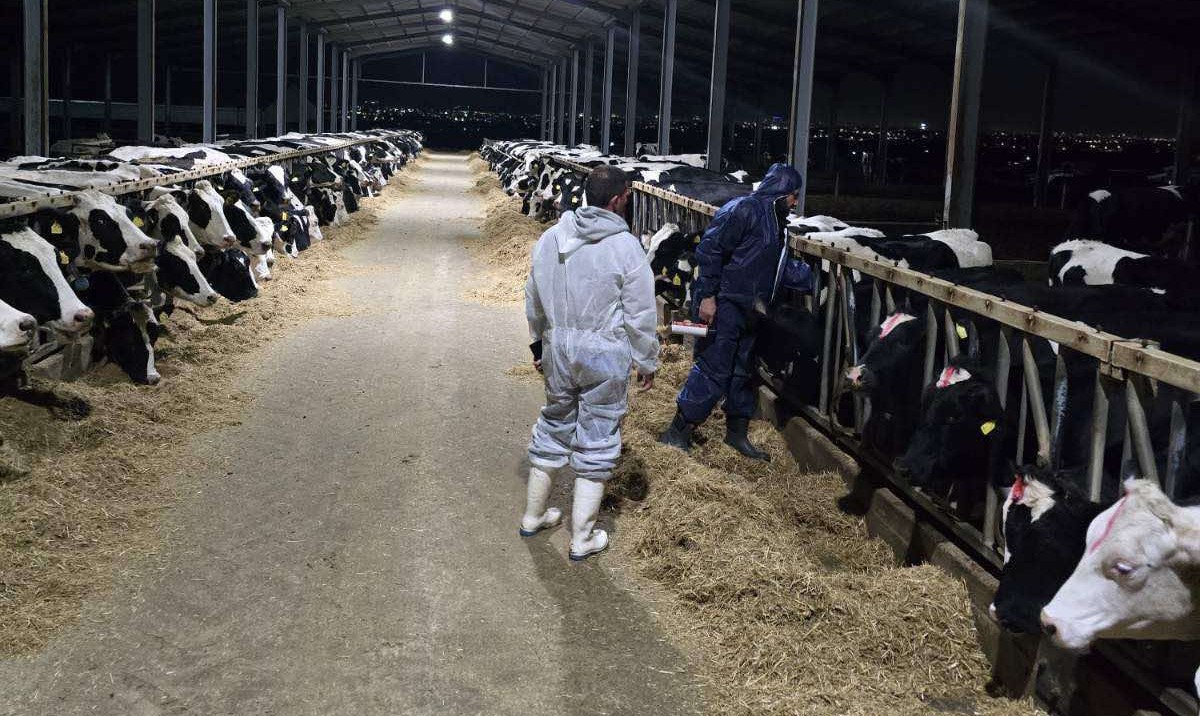
Cyprus is “still at the beginning” of its fight against an ongoing outbreak of foot and mouth disease, veterinary services department spokeswoman Sotiria Georgiadou said on Thursday, stressing that the fight will not be considered over until there are no active cases detected on the island.
She told the Cyprus News Agency that this process may take up to six months, and that it “depends on the evolution of the disease and the vaccinations”.
Additionally, she stressed the need to take action to battle the disease, saying, “if we were to let it go, in a month, Cyprus would be full of the virus due to the movement of animals, the buying and selling of animals, the movements of livestock and vehicles”.
This, she said, would predicate a “dramatic reduction in milk production”, which could see as much as half of the island’s dairy output wiped out.
She also addressed the issue of countries suspending the import of Cypriot dairy products, saying that this will negatively impact Cyprus’ economy, but that halloumi remains unaffected, as it is pasteurised as part of its production, thus killing off the virus.
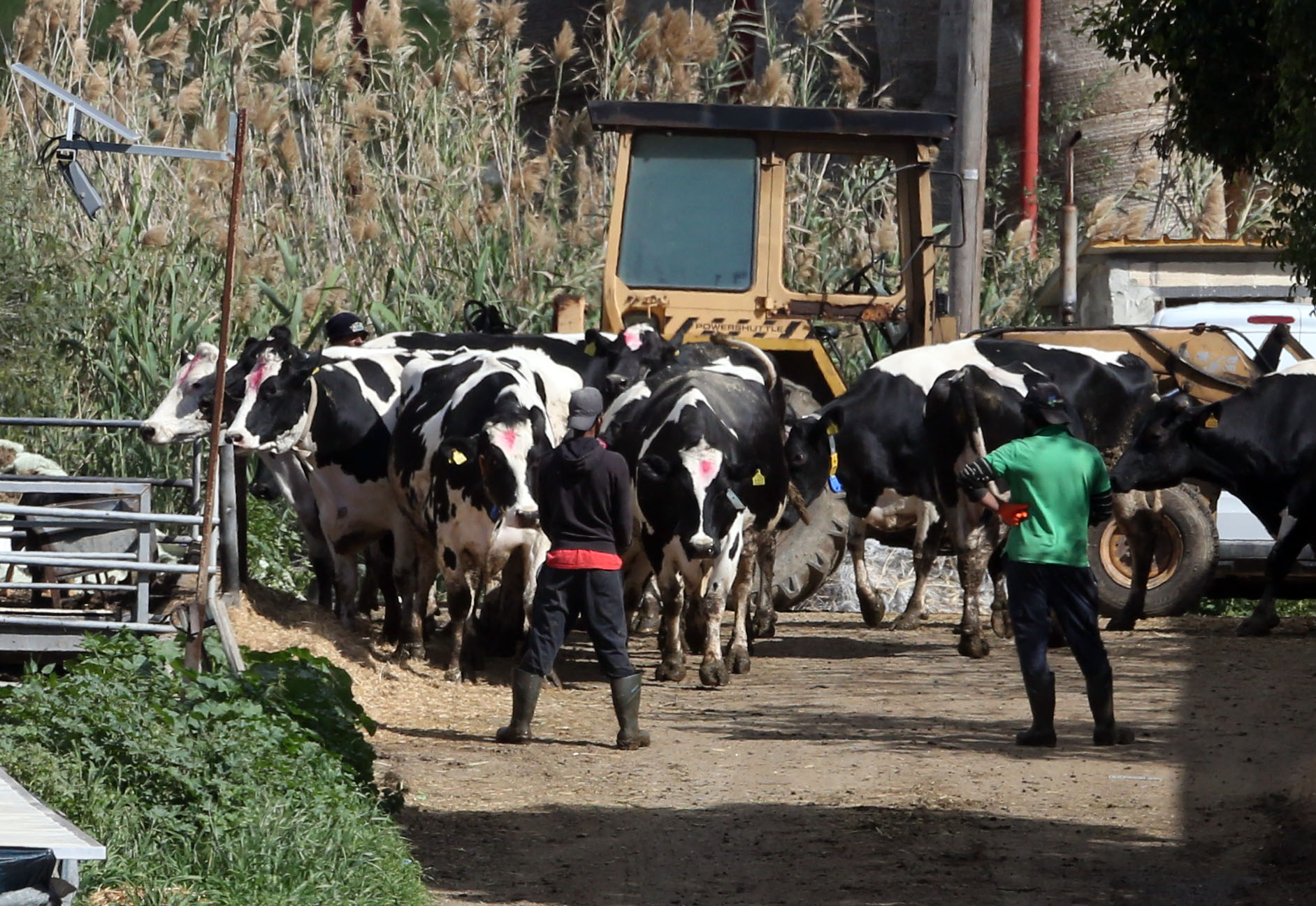
Earlier, she had said that a total of 8,000 animals had been vaccinated against foot and mouth disease by the end of Thursday morning, veterinary services department spokeswoman Sotiria Georgiadou said on Thursday, with 50,000 doses of the vaccine expected to be received from the Turkish Cypriot authorities by the end of the day.
Speaking at the joint rescue coordination centre (JRCC) in Larnaca, she said that more doses are expected to be received from the European Union on Saturday.
“Yesterday morning, the first 10,000 doses of the vaccine were received, and after a long meeting with EU experts, the veterinary services department, and private veterinarians, where more extensive information was provided, vaccinations of cattle in the Aradippou area began last night,” she said.
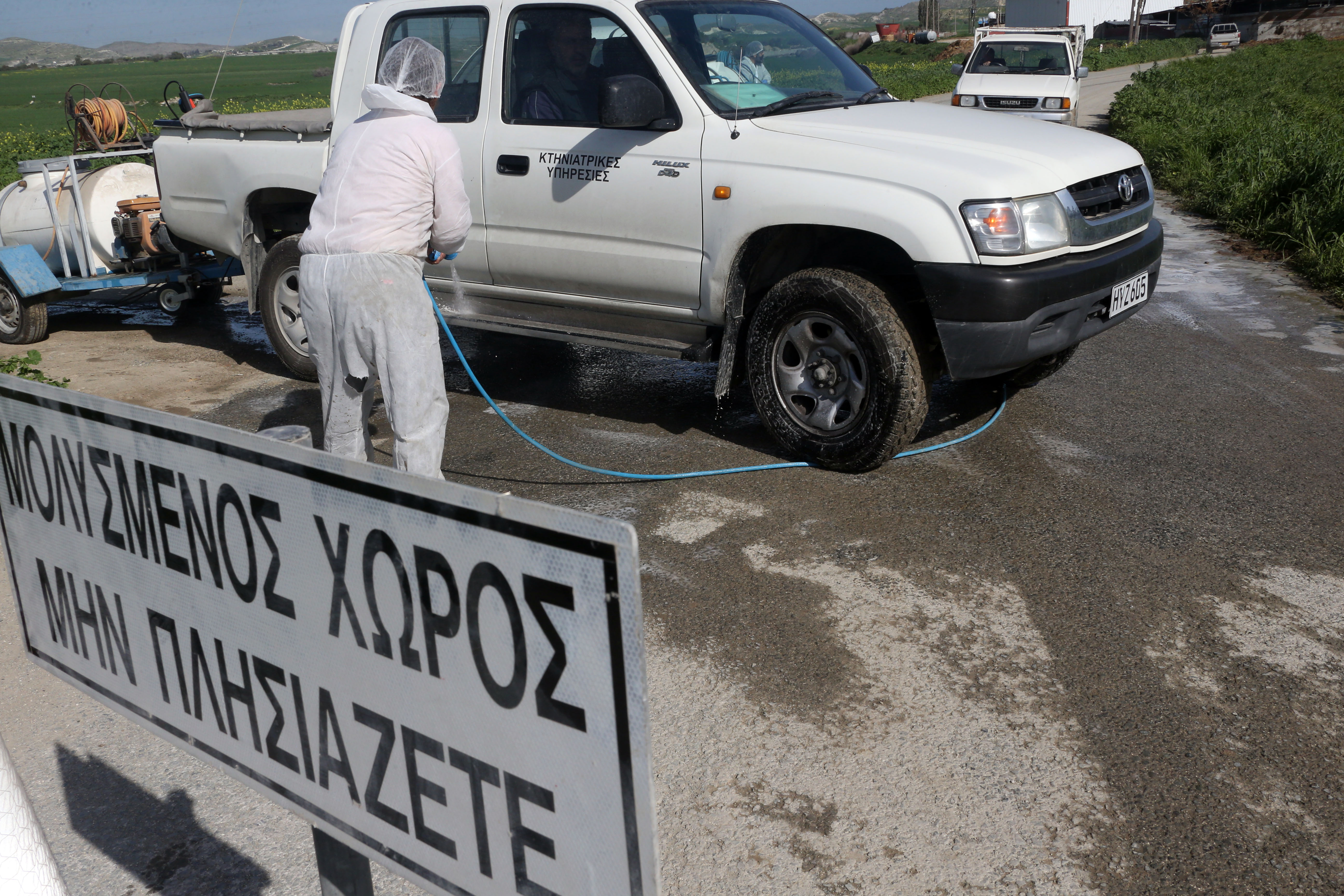
Away from the matter of vaccinations, she said that no further cases of the disease have been identified, and that 21 “spraying points” to disinfect vehicles have been set up in the Larnaca area.
She was then asked whether animals outside of the Larnaca district are being tested for the disease, and answered in the affirmative, but insisted that “the most important thing is the Larnaca district”.
“Samples are taken from neighbouring farms, but we cannot be omnipresent,” she said.
Later, she was asked about a case in which a livestock farmer is demanding a second opinion regarding whether his animals have the disease, as they have exhibited no symptoms, and because they are to be killed if it is maintained that they have the disease.
“The results from the laboratory will be given by the Larnaca district laboratory. That particular facility tested positive, and the fact that the animals were asymptomatic does not mean anything. Different animals have different symptoms, some more intense and others milder,” she said.
She then stressed that “from the moment there is a positive result, that means the unit is positive”.
“The reason animals are killed is because the virus is very contagious and is transmitted and spread regardless of whether there are symptoms or not. No. There will be no second opinion. The results are valid. The laboratory is … accredited … Spreading doubts and wanting a second opinion and another one is not right,” she said.
Asked if it is “worrying” that a second test could produce a negative result, she said that “the issue is a waste of resources of time”.
“It was not just one analysis, but three different ones, and it has to do with the point of entry of the virus. In this particular case, the virus was present in the blood. Even if it is one animal out of a million, they are all killed,” she said.
Earlier, the veterinary services department had said that the first animals, cattle in the Larnaca district village of Aradippou, were vaccinated on Wednesday, with a total of 10,000 doses of the vaccine having been donated by the Turkish Cypriot authorities.
As well as vaccinations, the department said that it is continuing to test livestock in the region for the disease, and that “the burial and killing of animals in the units where positive cases have been identified is continuing”.
On the matter of the burial of animals, it said that sites for this purpose have been found following consultation with various other government services, including the water development department and the agriculture department.
These sites, it said, were determined “based on specific specifications”.
It also said that instructions have been given by Agriculture Minister Maria Panayiotou for a compensation and support package to be drawn up for stakeholders whose livelihoods have been impacted by the outbreak.
On this front, the government had confirmed on Wednesday that a total of €4.5 million had been allocated to help impacted farmers.
Panayiotou, meanwhile, said that “no one will be left behind” as the government attempts to combat the disease, adding, “the government stands absolutely alongside producers, alongside the people of the countryside”.
To this end, she said she is in “continuous and direct” contact with stakeholders, and in “constant collaboration with scientific experts and European institutions”, so as to ensure that “both the vaccination process and the other measures are based on scientific documentation and the best European practices”.
She also made reference to the existence of the coordination centre and the control and disinfection points which are now scattered around the Larnaca district, and said that a meeting has been held “with the aim of determining the strategy to be followed” for the vaccination of livestock.




Click here to change your cookie preferences