
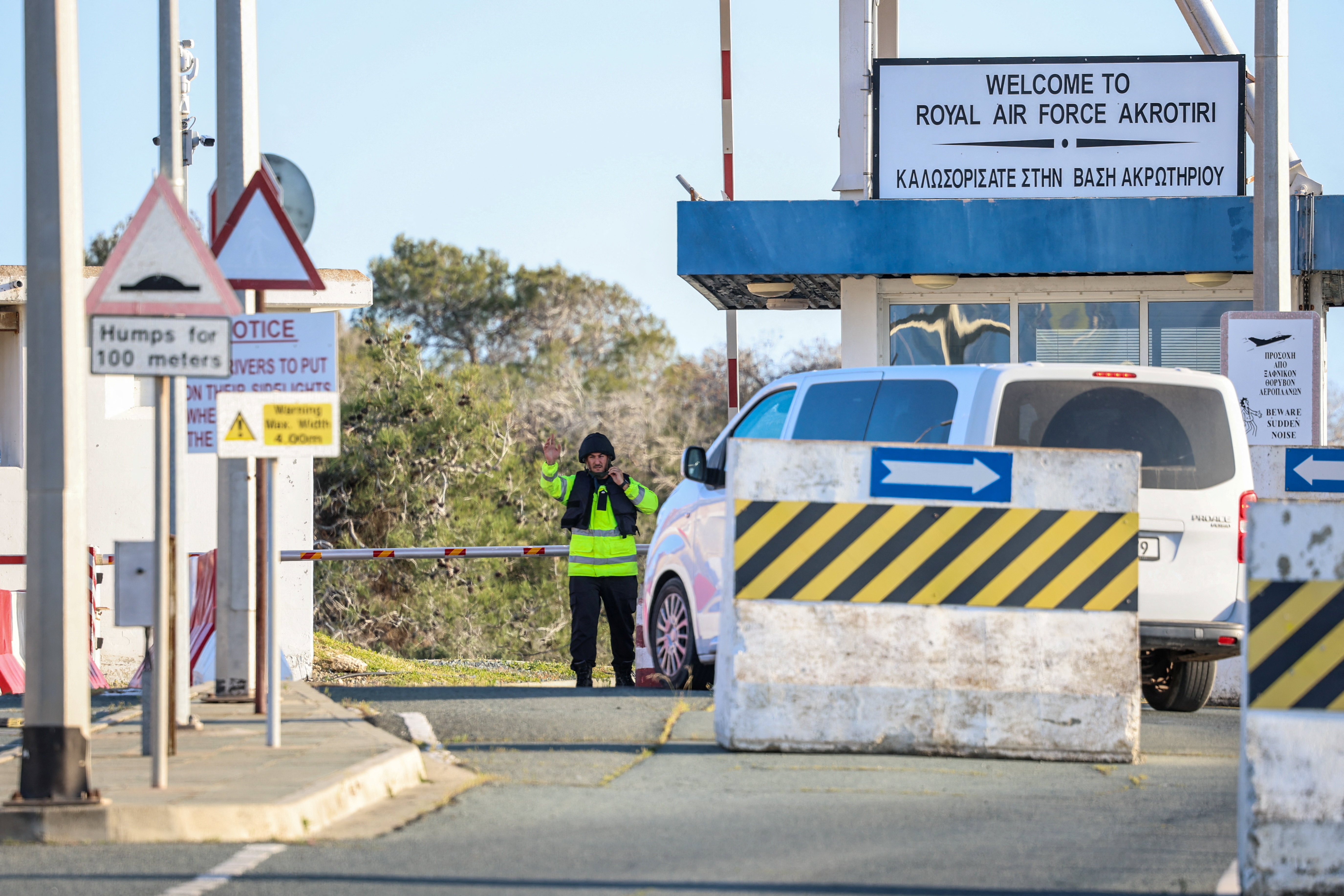
Cyprus has long played an important role in Britain’s military presence in the Eastern Mediterranean. For decades the island has hosted British Royal Air Force facilities that support operations across the Middle East.
However, the current war involving Iran has renewed debate about whether having such bases nearby could make Cyprus more vulnerable to security threats.
Recent events have brought the issue into sharper focus. A suspected drone attack linked to pro-Iranian forces struck the British RAF base at Akrotiri in early March 2026, causing minor damage but no casualties.
The incident has raised concerns among residents and officials about whether Cyprus could be drawn closer to regional conflicts because of its strategic importance.
A longstanding British military presence
Britain has maintained a military presence in Cyprus for many decades. The RAF base at Akrotiri was first established in the mid-1950s and has remained one of the UK’s most important overseas air stations ever since.
The base sits within the British Sovereign Base Areas of Akrotiri and Dhekelia, which remained under British control after Cyprus gained independence in 1960. These territories allow the UK to maintain a permanent military footprint in the eastern Mediterranean.
Over the years, RAF Akrotiri has been used to support a wide range of operations. These include missions during the Suez Crisis in the 1950s, NATO operations in Libya in 2011, and air campaigns against extremist groups in Iraq and Syria.
Because of its location close to the Middle East, the base has often been described as a strategic “launch pad” for military and humanitarian operations in the region.
Why Cyprus matters strategically
Cyprus sits at the crossroads of Europe, the Middle East and North Africa. This geographic position makes it highly valuable for military planning and surveillance.
RAF Akrotiri serves as a forward operating base that can support aircraft, intelligence gathering and logistics across the region. It is also home to thousands of British personnel and their families and regularly hosts fighter jets and surveillance aircraft.
In recent months the UK has strengthened its presence there, deploying F-35 stealth fighter jets to the island amid rising tensions with Iran and fears of wider conflict.
For military planners this location provides flexibility and quick access to multiple regions. However, it also means the island can become part of the wider geopolitical picture when conflicts escalate.
The Iran conflict and growing concerns
The ongoing war involving Iran has increased tensions across the Middle East and neighbouring regions. In such situations military bases linked to Western powers can sometimes become symbolic or strategic targets.
The drone strike on RAF Akrotiri earlier this month demonstrated that the conflict can have direct implications for Cyprus. Although the attack caused limited damage, it was reportedly the first strike on a British installation on the island in decades.
Security experts note that cyber attacks, drones and missile technology have made it easier for hostile actors to target distant military facilities. Even when a country is not directly involved in fighting, its infrastructure can still be affected.
Local communities in Cyprus have also raised concerns about being close to military installations that play a role in regional security operations.
Balancing security and stability
Despite these concerns, both the British and Cypriot governments emphasise that the bases serve defensive and strategic purposes rather than offensive ones. Cyprus itself has stated that it is not directly involved in military operations related to the Iran conflict.
For Gavin Cooper, a British army veteran and now the founder of military consumer site, Claims Bible, he argues that the base also provides security benefits. The presence of allied forces can help stabilise the region, support humanitarian missions and respond quickly to crises such as evacuations or disaster relief.
At the same time, the recent drone incident highlights how geopolitical tensions can spill beyond traditional battlefields. As conflicts increasingly involve cyber warfare, drones and long-range weapons, even countries that host allied infrastructure may find themselves closer to the front lines than before.
A strategic asset with strategic risks
Cyprus has hosted British RAF facilities for over seventy years and they remain central to the UK’s defence strategy in the eastern Mediterranean. However, the current conflict involving Iran has shown that such strategic assets can also attract unwanted attention.
While the island itself is not a participant in the war, its proximity to important military infrastructure means it cannot be completely insulated from regional tensions. For Cyprus, the challenge moving forward will be balancing the benefits of hosting strategic allies with the potential risks that come with being close to major military operations.
DISCLAIMER – “Views Expressed Disclaimer – The information provided in this content is intended for general informational purposes only and should not be considered financial, investment, legal, tax, or health advice, nor relied upon as a substitute for professional guidance tailored to your personal circumstances. The opinions expressed are solely those of the author and do not necessarily represent the views of any other individual, organization, agency, employer, or company, including NEO CYMED PUBLISHING LIMITED (operating under the name Cyprus-Mail).




Click here to change your cookie preferences