
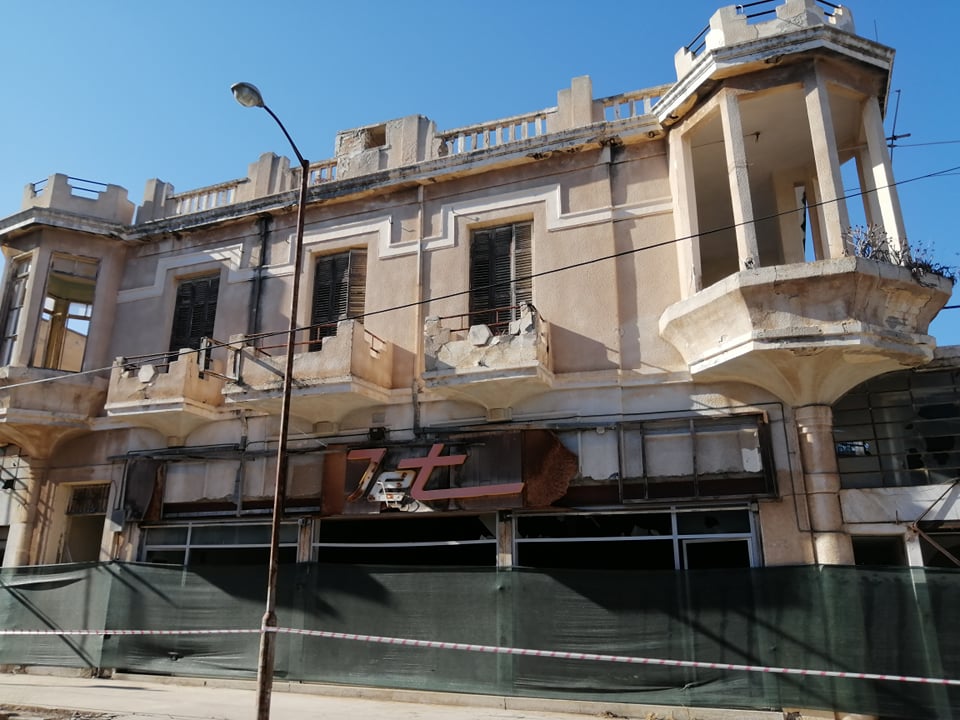
Surprising results from new study which questioned both Greek Cypriots and Turkish Cypriots
A study conducted into public opinion on the Cyprus problem and what needs to be done to resolve it found what the British high commission’s political section’s head Rich Calver described as “more overlap than expected” in Turkish Cypriots’ and Greek Cypriots’ positions, with focus groups on both sides broadly accepting each other’s demands for initiatives to improve one another’s lives.
The study, which was titled “alleviating the daily negative effects of the conditions of the non-settlement in Cyprus: demands and expectations from the other side”, was carried out by Maria Hadjipavlou and Yucel Vural and asked focus groups on both sides of the island what the “other side” should do to make life easier for people on their own side.
In total, six meetings were held, of which two were held in Nicosia and one apiece was held in Famagusta, Lefka, Paralimni and Astromeritis, a Greek Cypriot village located south of Morphou and a stone’s throw away from the buffer zone.
After those meetings were completed, two bicommunal meetings were held, one in Nicosia and one in Famagusta, to evaluate the suggestions put forward by the initial focus groups.
Those suggestions were divided into eight categories, which were named as “economy, labour, and working life”, “peacebuilding and intercommunal cooperation”, “language, education, and culture”, “crossings and mobile communication”, “bureaucratic processes”, “restoration of human rights and constitutional rights”, “art and sports” and “security”.
The study’s Turkish Cypriot participants made a total of 70 suggestions, with the plurality of those suggestions falling into the “economy, labour, and working life” category.
Examples of suggestions made by Turkish Cypriot participants included that Turkish Cypriots living in the north be allowed to open bank accounts in the Republic of Cyprus, the establishment of a truly bicommunal Cyprus broadcasting cooperation, a joint rewriting of school history textbooks, and for Turkish Cypriot motorists to be able to acquire road tax certificates and vehicle insurance online, rather than only at crossing points.
The study’s Greek Cypriot participants, meanwhile, made only 40 suggestions, the plurality of which fell into the “peacebuilding and intercommunal cooperation” category.
Among the suggestions made by Greek Cypriot participants were the resumption of substantive negotiations to solve the Cyprus problem, the placement of Greek-speaking staff in public services in the north, the establishment of bicommunal businesses with mixed employment, and the resettlement of the buffer zone with the legal owners of houses therein.
Participants then decided whether the suggestions made by the opposite community were wholly acceptable, conditionally acceptable, or unacceptable.
It was found that the “vast majority” of Turkish Cypriot participants considered almost all of the Greek Cypriot participants’ suggestions to be wholly or conditionally acceptable, with an example of a conditionally accepted suggestion being that Varosha be opened to resettlement by its original owners under the United Nations’ administration.
The majority of Turkish Cypriot participants said they would accept such a suggestion unconditionally, while some said they would accept it on the condition that Turkish Cypriots’ fundamental rights, as prescribed by the Republic of Cyprus’ constitution, be restored.
Turkish Cypriot participants did not find any of the Greek Cypriot participants’ suggestions to be unacceptable.
In a similar vein, the study’s Greek Cypriot participants found almost all suggestions made by the Turkish Cypriot participants to be either conditionally or wholly acceptable.
An example of a conditionally accepted Turkish Cypriot suggestion was that properties in the island’s southern two thirds in and after 1974 which were abandoned by Turkish Cypriots be returned to Turkish Cypriots who did not receive equivalent property upon their arrival in the north.
The study’s Greek Cypriot participants accepted the suggestion on the condition that the same principle be applied to Greek Cypriots who abandoned property in the north.
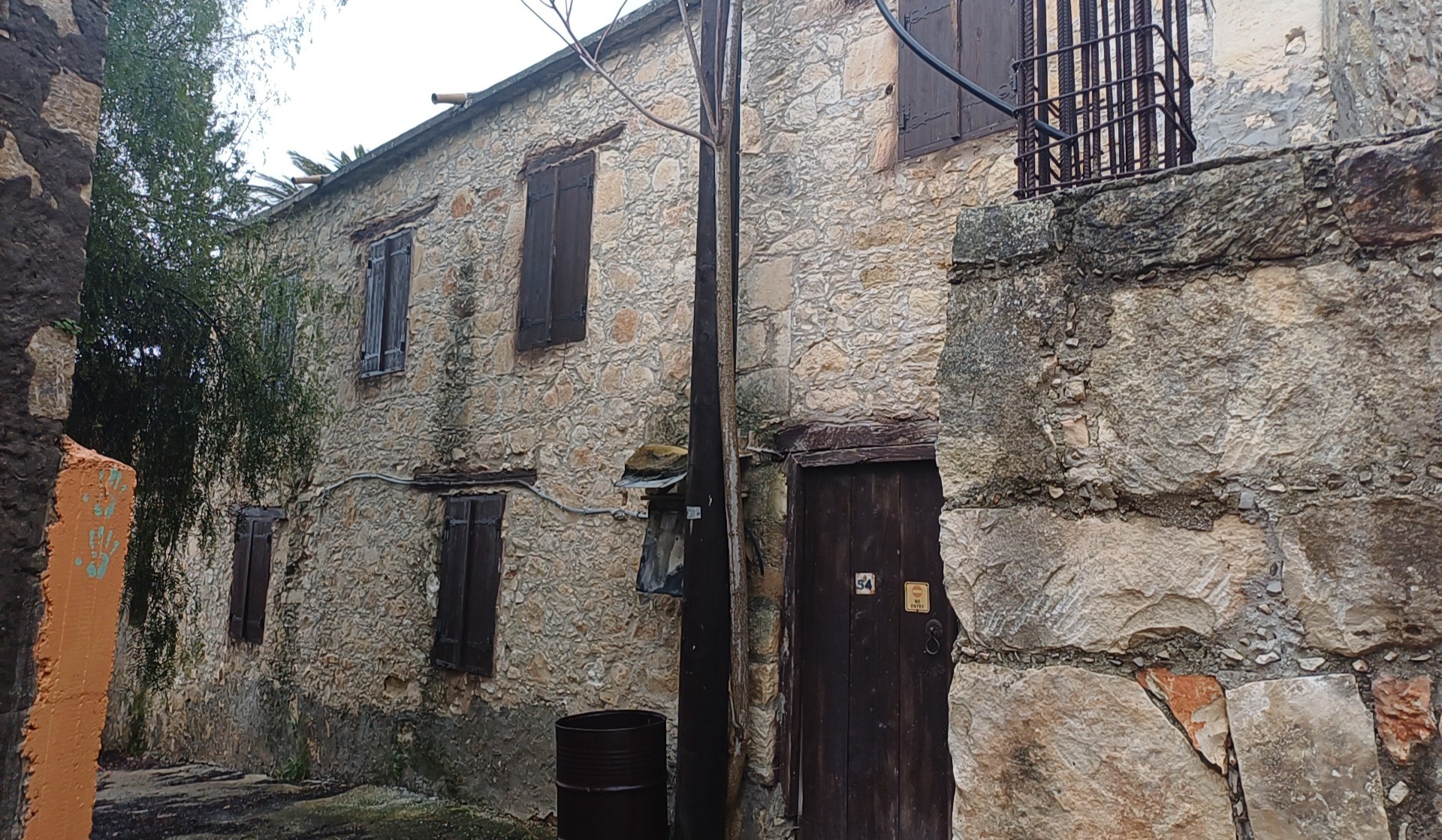
The Turkish Cypriots suggested that Turkish Cypriots living in the island’s southern two thirds be given priority in the lease of abandoned Turkish Cypriot property
Some Turkish Cypriot suggestions were considered wholly unacceptable by all or a sizeable majority of the study’s Greek Cypriot participants, however, with one example being that Turkish Cypriots living in the island’s southern two thirds be given priority in the lease of abandoned Turkish Cypriot property.
The study’s Greek Cypriot participants concluded that instead, priority should be given to Greek Cypriot displaced persons.
Additionally, the study found a “high level of engagement” in both communities with the sociopolitical life and issues facing the other community.
Greek Cypriot participants, for example suggested that the Turkish Cypriot community protect the “Turkish Cypriot identity” and shared cultural values, while Turkish Cypriot participants suggested that the Greek Cypriot community amend its conscription laws to allow people to serve in the military after having completed higher education.
Following on from the study, Hadjipavlou and Vural offered suggestions to decision makers in Cyprus, calling firstly for “cross-communal dialogue” between political actors from one side of the island and the general public of the other.
They also called for resolutions to longstanding issues such as embargoes on Tymbou (Ercan) airport and the port of Famagusta, as well as the status of Varosha, to be found prior to a solution, and for information signs in public spaces to be written in both Turkish and Greek.
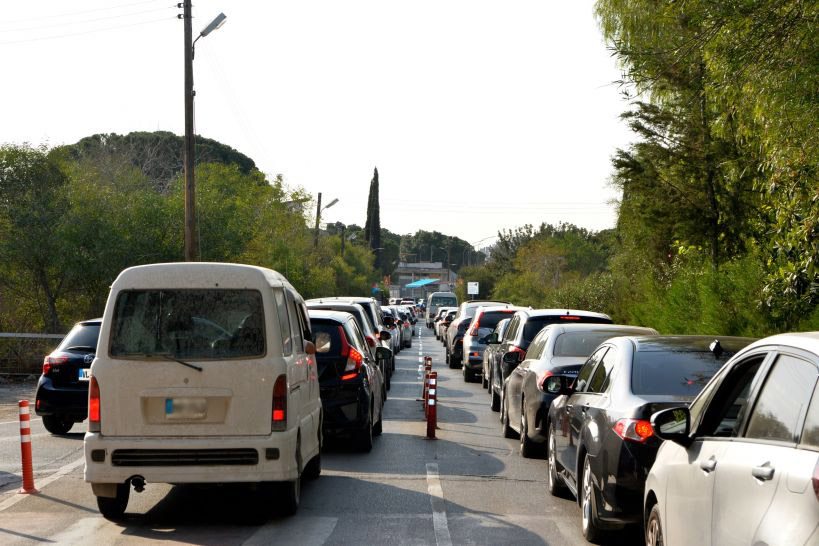
Turkish Cypriots suggested their motorists should be able to acquire road tax certificates and vehicle insurance online, rather than only at crossing points
In addition, they called for both sides’ security forces to withdraw further from the ceasefire line, and for both sides to teach the other’s language in public schools, while also calling for two of Cyprus’ six seats in the European Parliament to be directly elected by citizens of the Republic of Cyprus living in the island’s northern third.
On this front, it was also pointed out that Turkish Cypriot participants had suggested that Turkish Cypriots living in the north be allowed to elect the constitutionally foreseen 24 Turkish Cypriot members of the Republic of Cyprus’ parliament.
Hadjipavlou and Vural also called for the opening of new crossing points to link the island’s two sides, for both sides to be “ready” to facilitate crossings from new crossing points “without delay”, and for the Greek Cypriot community to “review its policies regarding services provided to Turkish Cypriots” – in short, to ensure that in public-facing government offices, there be a “sufficient number” of Turkish-speaking staff.
The report, in full, will be published on Monday.



Click here to change your cookie preferences