
Beyond killer Metaxas, new series focuses on the victims and the island’s systemic failures
Raw and unrelenting, the documentary series Pleiades: Victims of the Serial Killer is a long-form investigative dive into the crimes of Nikos Metaxas, the first recorded serial killer in the history of Cyprus.
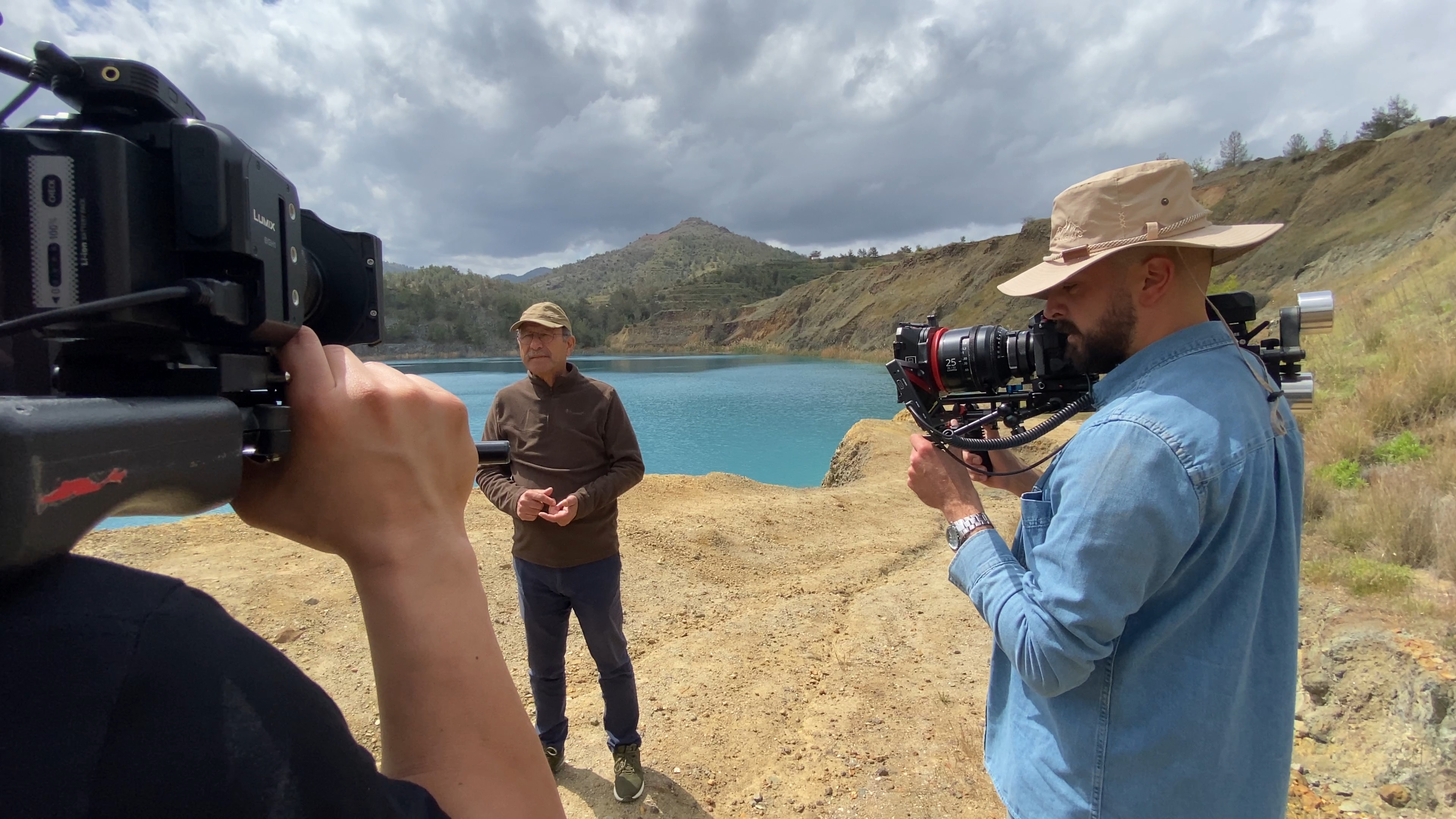
Directed by Andreas Sheittanis and Paris Prokopiou, the true crime project explores a dark chapter of the island. The idea originated after Prokopiou spent several months quietly gathering files on the Mitsero murders before discussing the concept with Sheittanis.
“We are both film directors,” Sheittanis notes. “We met when I came back from my studies in the UK and the first job I got was to be his assistant. Since then we have been friends. And the timing was perfect since both of us were out of a job when one day we were just talking and he said ‘look, I have been researching this case for about two months now and I’m thinking of doing something with it.’ I looked and because I love true crime stories I got hooked immediately. So this is how we began, from a conversation we had in 2022.”
The series tackles the horrifying case of Metaxas, a 35-year-old former National Guard oficer who, between September 2016 and July 2018, targeted, abducted and murdered five migrant women and two young children.
When Prokopiou approached Sheittanis with the project, the two filmakers were faced with a choice – either adapt it into a Hollywood-style drama or produce a remorseless documentary series. And even though the ultimate dream for most independent filmmakers is to write and direct that massive, big-budget feature, the two were fully aware that the medium must always serve the narrative and that in this case, this was what they should aim for.
“Fictionalising this story wouldn’t be as impactful,” Sheitanis explains. “Approaching it as a documentary, and having the actual people who went through this experience speak and tell their stories, is more true, more emotional, and more real. That’s why we decided to do it this way.”
Pleiades, the documentary’s title, is itself a somber tribute to the victims. In Greek mythology, the Pleiades were the seven daughters of the Titan Atlas, transformed into a cluster of stars. In the context of the series, the name represents the seven lives extinguished by Metaxas in the shadows of an indifferent system. The documentary unfolds its story in linear fashion, each of its six episodes named after a victim (one episode has two names as a title) whose body was found at the exact point of the investigation that episode covers. It is not until the final episode the story breaks away from the narrative’s rule. The conclusion, titled Orion, invokes another constellation named after the supernaturally strong hunter from Greek mythology who claimed he would kill every animal on Earth, and focuses more on the serial killer himself.
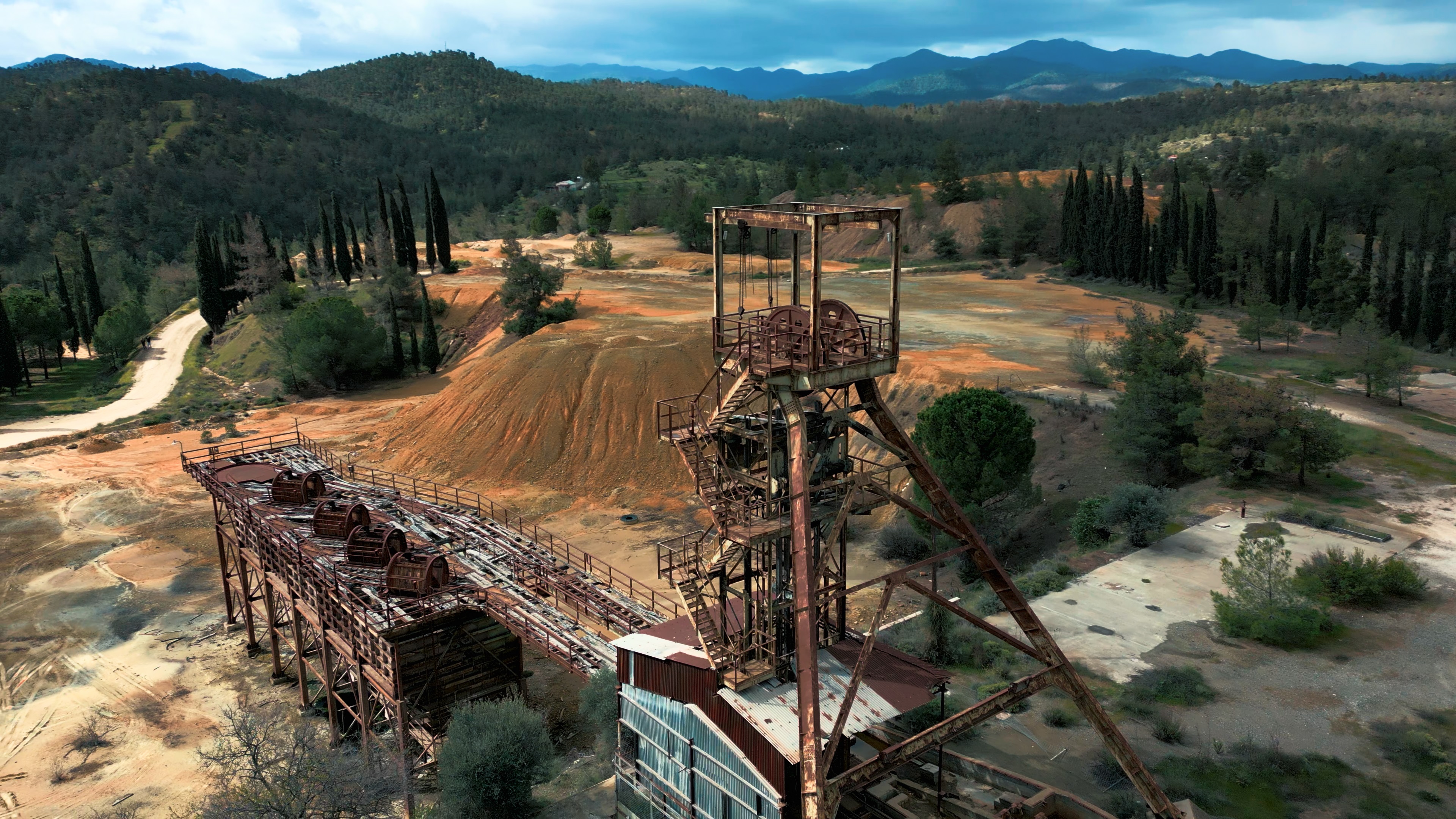
To fully grasp the weight of Sheittanis and Prokopiou’s documentary an analysis of the true timeline of the Mitsero murders is needed. The case came to light entirely by accident on April 14, 2019 after a period of exceptionally heavy rainfall. Water levels rose in a disused, flooded mine shaft near the village of Mitsero when a group of Cypriots and Germans photographing the historic site spotted a naked, bound body floating near the surface of the shaft. The recovered remains were quickly identified as those of Mary Rose Tiburcio, a 38-year-old domestic worker from the Philippines. Tiburcio and her six-year-old daughter, Sierra Grace, had been officially reported missing by her roommate nearly a year earlier, on May 5, 2018.
When the mother first vanished, her friends actively petitioned police to track her phone data and investigate her sudden absence. However, they were largely dismissed, with officials operating under the institutional assumption that foreign domestic workers frequently break their employment contracts and migrate to the north.
The discovery of Tiburcio’s body initiated a massive homicide investigation that quickly centred on a digital profile. Investigators discovered that Tiburcio had been communicating via the online dating platform Badoo with a user using the pseudonym Orestes35. The digital trail led straight to Metaxas. Following his arrest in mid-April 2019, Metaxas initially refused to cooperate. However, once digital forensics linked his personal electronic devices to the victim’s accounts, his defence collapsed.
He eventually submitted a comprehensive, 10-page handwritten confession detailing a two-year campaign of abduction and premeditated murders. All in all, he confessed to killing five foreign women – women he initially met online – and two children.
The nightmare began in September 2016 with the murder of Livia Florentina Bunea, a 36-year-old mother from Romania, and her 8-year-old daughter, Elena Natalia. The deadly rampage continued throughout 2017 and 2018, with the killing of four Filipinas: Maricar Valtez Arquiola, Arian Palanas Lozano, Tiburcio and her daughter, as well as a Nepalese woman.
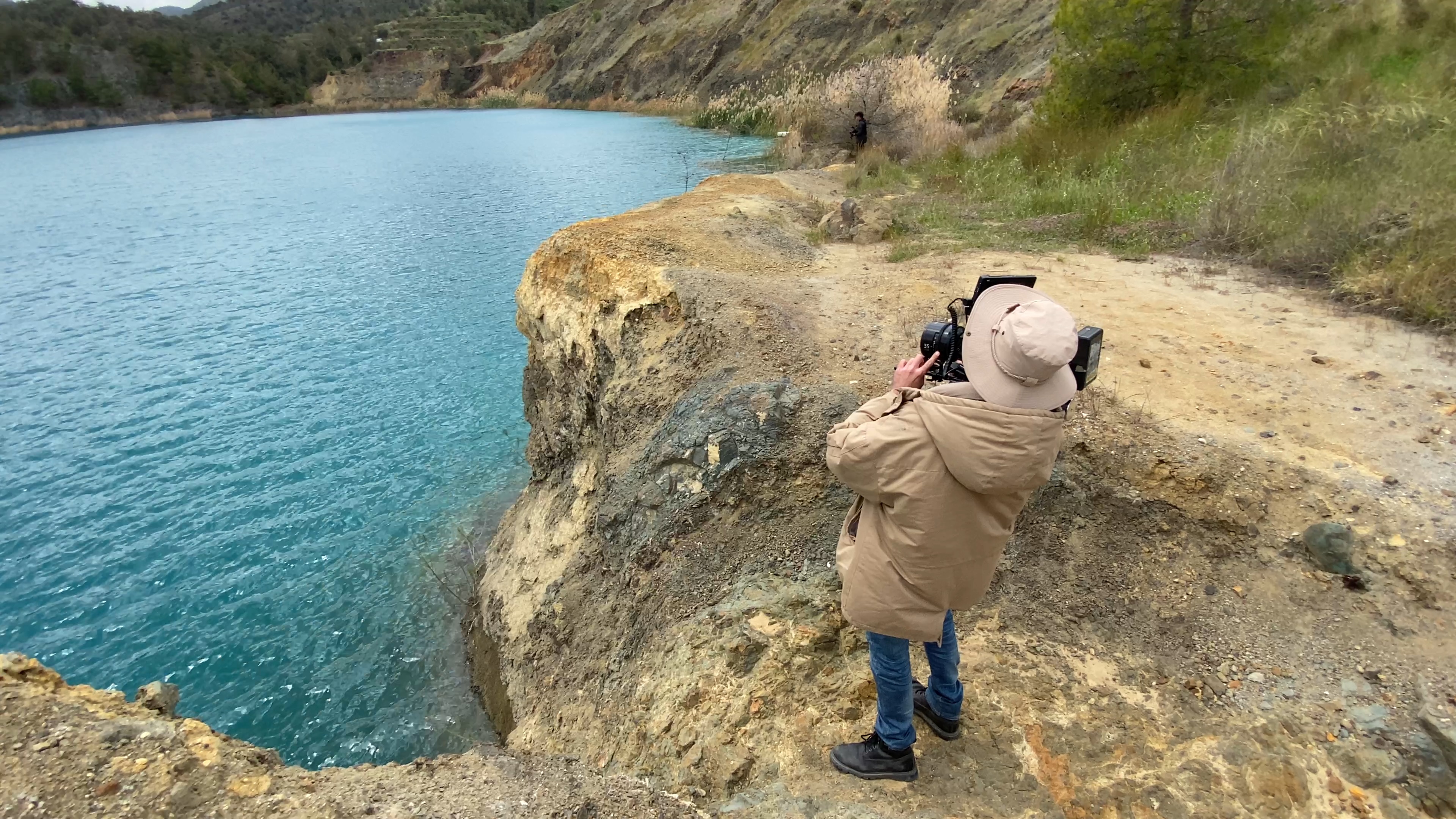
Over a period of three agonising months in 2019, emergency crews systematically combed the rust-colored waters of the Red Lake near Mitsero as well as Lake Memi near Xyliatos. The notoriously toxic Red Lake, a remnant of historic copper mining operations, presented unprecedented challenges for local recovery teams and international forensic experts, among them specialised divers deployed from Scotland Yard. Five bodies were found in the lakes and one buried at a military firing range, in addition to the initial body found in the mine.
Metaxas chillingly justified his killing of the young children to a shocked three-judge panel during his trial as a necessity. He claimed he had to strangle the young girls because he suspected their mothers were planning to exploit them. He said he wanted to “punish” the women and “free” the children. The court flatly rejected any notions of psychological mitigation, labeling his actions a cold, calculated campaign. In June 2019 he was sentenced to an unprecedented seven consecutive life sentences (each 25 years).
Pleiades does not merely rehash the grim mechanics of Metaxas’ crimes; it directly interrogates the structural complacency that permitted them to happen. The documentary highlights how immigrant rights activists and foreign community leaders had spent years warning that cases of missing migrant women were being entirely ignored by the Cyprus police.
When Bunea and her young daughter vanished in September 2016, friends provided concrete leads, but the reports were filed away without active follow-up. Had police accessed phone records, geolocated IP addresses, or cross-referenced dating app profiles back in 2016, the lives of the subsequent five victims could have been saved.
“From the very beginning, we decided that even though we’re huge true crime fans, we didn’t want to sensationalise the crimes or the serial killer or the case in general. We wanted to have a more humane approach to the story. So we never said that we were doing a documentary about ‘Orestis’ i.e. Nikos Metaxas. It was always going to be a documentary about the victims and related important topics.
“About how we see the domestic workers that work in our homes. Most of them live with us as if they were our family members but we know nothing about them. We know nothing about their families, husbands, kids, financial situation… Sometimes, we don’t even know their real names,” Sheittanis says.
From the very beginning, he points out, the killer was targeting this one very specific social group, knowing full well that it would give him an almost 100 per cent chance of literally getting away with a murder.
“So how much responsibility do we, as a society, have for this? If there was more support for these women would he have had the space and the ability to kill so many without anyone looking? Did we, as a society, create this target group for him? Because I can’t imagine that had those women been Cypriots, it would have taken so long for someone to look for them. You know and I know, the moment a Cypriot is missing, everybody is looking.”
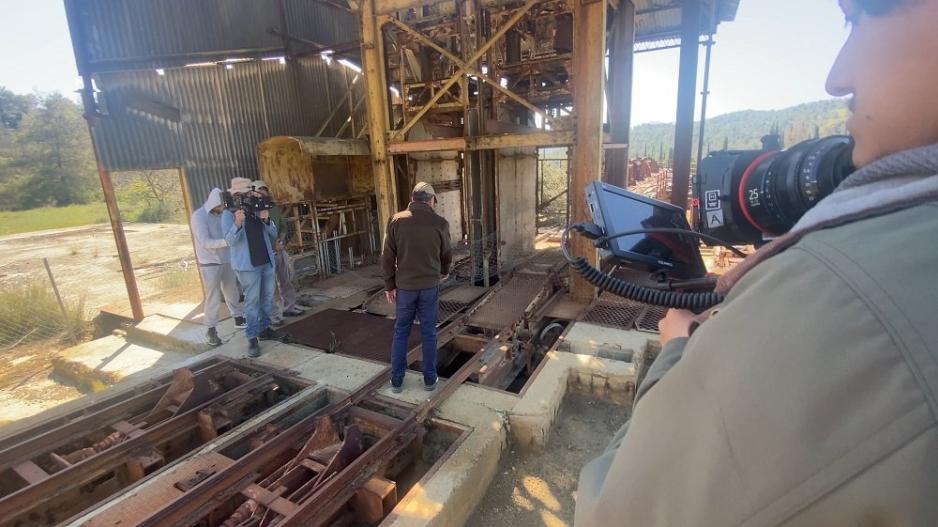
The series is packed with interviews. The film makers gained unprecedented access to the police staff involved in the investigation, the crime scene videos and photos and individual testimonies. They met with one of the Cypriot men who discovered the first corpse and members of the fire services and divers who recovered the bodies. They travelled to the Phillipines, Nepal and Romania to talk to the families of the victims to better understand who they were and why they came to Cyprus.
They interviewed forensic experts, anthropologists, psychologists, psychiatrists, criminologists and lawyers. They even managed to persuade some members of the Metaxas family and his friends to share with them some details of his childhood and later life (Metaxas himself, Sheittanis says, was not interested in meeting them). They reached out to the foreign domestic workers community in Cyprus and experts and activists in the fields of gender equality and violence against women.
“Had we known how big this project was going to be, we probably wouldn’t have started,” Sheittanis admits. “We thought it would maybe take about a year and maybe we would make a feature film or a two-to-three episode series. But then as more doors were opening and one person led to another, it was growing and growing.”
The project was self-funded which meant the film makers spent all their savings on it, They acknowledge how very lucky and grateful they were to have so many friends and colleagues who trusted them and agreed to help them out.
“Most of them worked on this project with the agreement that they will get paid once they project gets sold. So I have a big Excel sheet. With all the names and all the times and everything. And next to it are the numbers that make me stay up all night,” he laughs.
The series, with English subtitles, premiered at Nicosia’s Pantheon Cinema on May 16 and 17 and was bought by two TV channels, ERT Greece and one in Poland. Those who watched it applauded. Unfortunatelly, at least until now, no Cypriot TV channel has indicated interest in showing it.
“We approached all our broadcasters as soon as we had the pilot ready but up to now to no avail. If nothing changes we will try to find a way to self-distribute online.But I think once it is shown in Greece the situation will change because it’s going to create more pressure for broadcasters here. Once it’s been shown there, people are bound to start asking questions like, ‘Why is it there but not here?’. Word of mouth will also make a difference.”
So what are the positive take aways for these two film makers who spent so much money and devoted years of their lives to making this series and have yet to find a commercial release that covers their outlay and rewards their dedication?
Sheittanis does not hesitate: “It was an unforgettable, life-changing experience. I’m glad I went through it and came out on the other side. We finished the project, regardless of whether we sell it. As an artist, I believe we all have this need to leave a legacy behind us, to create something that’s gonna have some significance. And I feel that with this documentary I’ve done my part.”



Click here to change your cookie preferences