
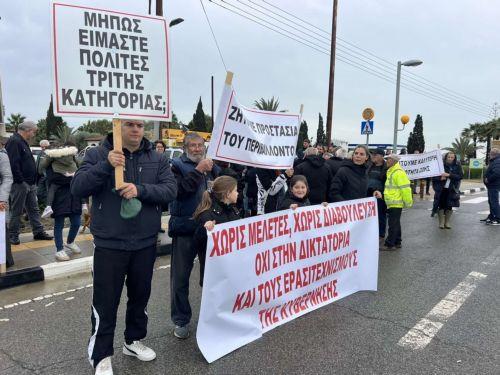
The Mazotos community council has called on President Nikos Christodoulides to intervene and order the cancellation and review of plans for a mobile desalination unit in the area, citing environmental and archaeological concerns.
In a letter addressed to the president, the council expressed its “strong concern, disappointment and opposition” to the decision to install the desalination plant on the community’s coastline and called for the project to be reassessed.
The community council argued that improved water reserves following increased rainfall in recent months had created the necessary time to revisit decisions taken under pressure and to consider alternative solutions with lower environmental and financial costs.
It also referred to a preliminary scientific assessment of the project’s environmental documentation, completed in May 2026, which it said identified “substantial deficiencies and inconsistencies” in the licensing and site selection process.
According to the letter, a strategic environmental assessment should have preceded the decision to proceed with a state desalination programme, in order to establish a national framework for the development and siting of such facilities.
The absence of such a study, the council said, had limited the ability to evaluate alternative options and assess cumulative impacts, including effects on marine ecosystems, brine disposal and energy requirements.
It added that several key technical parameters had yet to be finalised, making it impossible to carry out a comprehensive environmental assessment before decisions were taken.
Particular concern was raised over findings by independent marine scientists from MER Lab, who reportedly concluded that the area should not have been promoted without much stricter scrutiny due to the presence of sensitive marine habitats.
The council pointed to Posidonia oceanica seagrass meadows and other vulnerable seabed ecosystems, arguing that these should have constituted a major restriction in the selection of the site rather than being treated as a manageable risk afterwards.
It maintained that the project should have undergone a full environmental impact assessment before moving forward, noting that the construction of underwater pipelines and associated coastal and marine works in an environmentally and archaeologically sensitive area was inconsistent with the notion of a temporary or easily movable installation.
“Instead, it is a project that should be assessed holistically as a single set of land, coastal and marine interventions,” the letter said.
The community also highlighted concerns over possible impacts on Posidonia meadows and referred to a public meeting held on June 15, attended by Agriculture Minister Maria Panayiotou, officials from the departments of fisheries, environment and water development, and members of the public.
According to the letter, participants strongly questioned the description of the project as a “mobile desalination unit”.
It said scientific assessments showed that a facility with a capacity of 20,000 cubic metres of water per day, expandable to 40,000 cubic metres, could not reasonably be considered temporary or easily relocatable.
“Despite the insistence of the competent authorities on this characterisation, the data presented point to a large-scale project involving significant and potentially long-term interventions in the coastal and marine area,” the council said.
It also warned that documented archaeological finds and indications of archaeological interest in the area strengthened the need for an immediate review of the plans.
It argued that excavation works and interventions in the coastal zone raised “reasonable and serious concerns” not only for the natural environment but also for the cultural heritage of the area.
It stressed that opposition to the project extended beyond local residents, saying the community council’s stance reflected the will of the local population and demonstrated that resistance to the project was “universal, organised and institutionally expressed”.
The council said it considered the current location “environmentally unacceptable” and called on Christodoulides to intervene so that the decision could be cancelled and substantially reconsidered.
It also requested a meeting with the president “as soon as possible”.


Click here to change your cookie preferences