
Agricultural organisations on Tuesday urged the government to allocate more irrigation water to seasonal crops, arguing that current supplies are inadequate despite significantly higher dam levels than last year.
Head of agricultural association Panagrotikos, Tassos Giapanis, said all farming organisations had requested a meeting with Agriculture Minister Maria Panayiotou to discuss water distribution.
He said the Water Development Department’s three-year water allocation plan does not meet farmers’ needs, particularly given that dam levels currently stand at 47 per cent, compared with around 20 per cent at the same time last year.
Giapanis stressed that permanent crops, including fruit trees and greenhouse produce, remain the sector’s priority after years of drought.
However, he said seasonal crops such as watermelons and melons also require additional irrigation if production levels are to be maintained.
“If the minimum quantities of water needed are not provided, there will be shortages and prices will increase,” he said.

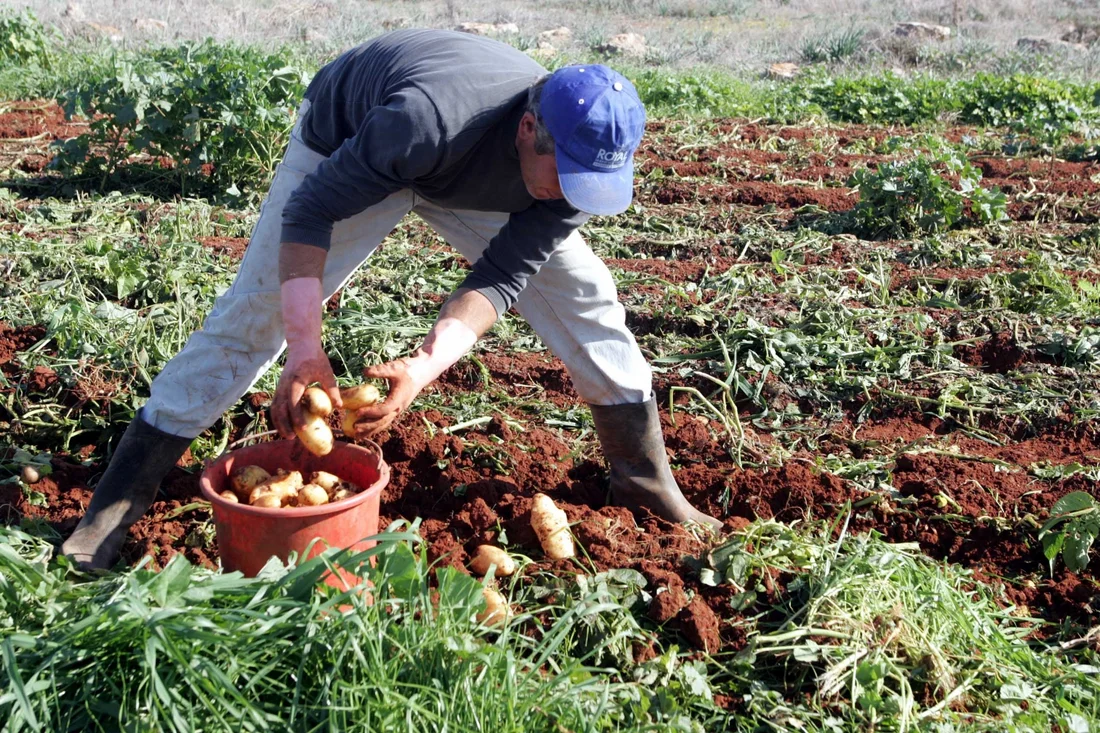
He identified melon and watermelon growers in the Larnaca district and potato producers in the Famagusta district among those most affected.
Farmers have requested additional supplies from the southern conveyor project, which distributes irrigation water to coastal districts from Paphos to Famagusta. According to Giapanis, no water has yet been delivered through the system this year.
The issue is particularly pressing for potato growers, he added, as planting for the next export season begins in late August and early September.
Cyprus potatoes are the country’s second-largest agricultural export after halloumi, and Giapanis warned that insufficient irrigation could jeopardise contracts with overseas buyers and lead to the loss of valuable export markets.
“If contracts are lost, it could take years for Cypriot potatoes to regain their place on supermarket shelves abroad,” he said.
Giapanis also raised concerns about farmers participating in European Union support programmes administered through the Cyprus Agricultural Payments Organisation (CAPO).
Many growers have committed to cultivating specific crops and achieving agreed production targets under these schemes. Failure to meet those obligations could result in penalties, exclusion from future programmes and the recovery of funding received in previous years.
He argued that farmers should not be penalised if they are unable to meet those targets because the state failed to provide the necessary water allocations.
Agricultural organisations have therefore asked the government and CAPO to take a political decision ensuring affected farmers are not punished.
“We consider it inconceivable that, with more than double the water available in dams compared with last year, the necessary quantities are not being provided,” he said.
Asked whether desalinated or recycled water could help ease the situation, Giapanis said some additional quantities could be utilised, though infrastructure limitations remained a challenge.
While several desalination projects are planned, he said most are medium-term solutions unlikely to provide significant additional supplies before 2027.
He also warned that legal action against plans for a mobile desalination unit in Mazotos could delay the project by several years.
Giapanis said farmers had not ruled out taking dynamic measures if their concerns over irrigation water were not addressed.





Click here to change your cookie preferences