
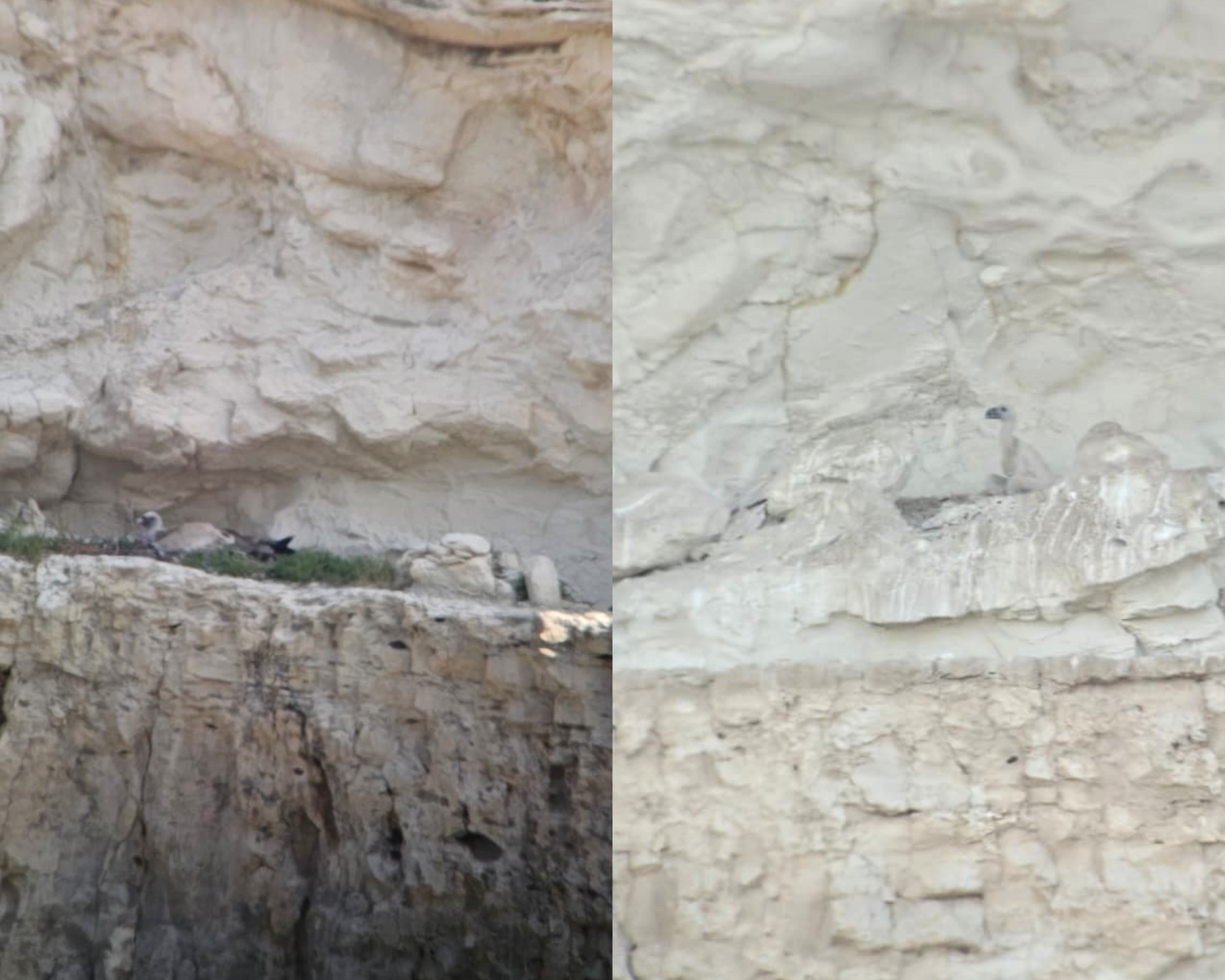
The Griffon vulture has successfully bred in Cyprus for the first time since 2021, with conservationists describing the development as a major milestone in efforts to save one of the island’s most endangered bird species.
BirdLife Cyprus and the Game and Fauna Service said on Thursday that five breeding pairs have nested in different parts of the island this year, producing three confirmed chicks.
The breakthrough comes after years of conservation work and follows a period in which the species suffered major setbacks, including the loss of the last breeding pairs to poisoning incidents in 2022 and 2023.
“This year marks a historic turning point for the species,” the organisations said in a joint statement.
They added that the five breeding pairs are expected to make a significant contribution to the recovery of the population, which remains critically low in Cyprus.
Particularly encouraging for conservationists is that four of the five breeding pairs include birds brought from Spain under the EU-funded Life with Vultures project.
The birds were released in Cyprus in 2022 and 2023 and have now reached breeding age.
“The presence of five breeding pairs now creates the conditions for natural population growth through the production of young individuals in Cyprus,” the statement said.
The three chicks confirmed so far will be fitted with rings and GPS transmitters to allow researchers to track their movements and monitor their survival after leaving the nest.
Officials also highlighted the return of vultures to traditional nesting grounds. One of the nesting sites had not been used for around 15 years.
“This development underscores the importance of protecting the species’ historic breeding grounds, as they can be recolonised as the population gradually stabilises and recovers,” the statement said.
One breeding pair has particular significance.
It consists of a 13-year-old female of Cretan origin , transferred to Cyprus under an earlier conservation programme and released in 2015, and a male bird born on the island in 2021.
According to BirdLife, the pair “essentially connects the successive conservation efforts that have been implemented for more than a decade to save the species.”
To protect nesting birds, authorities introduced special measures around two nests located within the British bases.
In cooperation with the bases, protection zones were established to reduce disturbance during the breeding season.
Despite the positive developments, conservationists warned that the Griffon vulture remains under threat.
“The illegal use of poison baits and electrocution from electricity infrastructure continue to pose the most serious threats to its survival,” the statement said.
They added that safeguarding nesting areas and maintaining suitable habitats remain essential for the species’ long-term recovery.
“The recording of five breeding pairs and the confirmation of three chicks demonstrate that coordinated and long-term conservation efforts can yield meaningful results,” the organisations said.
“After years of uncertainty, this year offers a valid reason for optimism about the future of the Griffon vulture in Cyprus.”




Click here to change your cookie preferences