
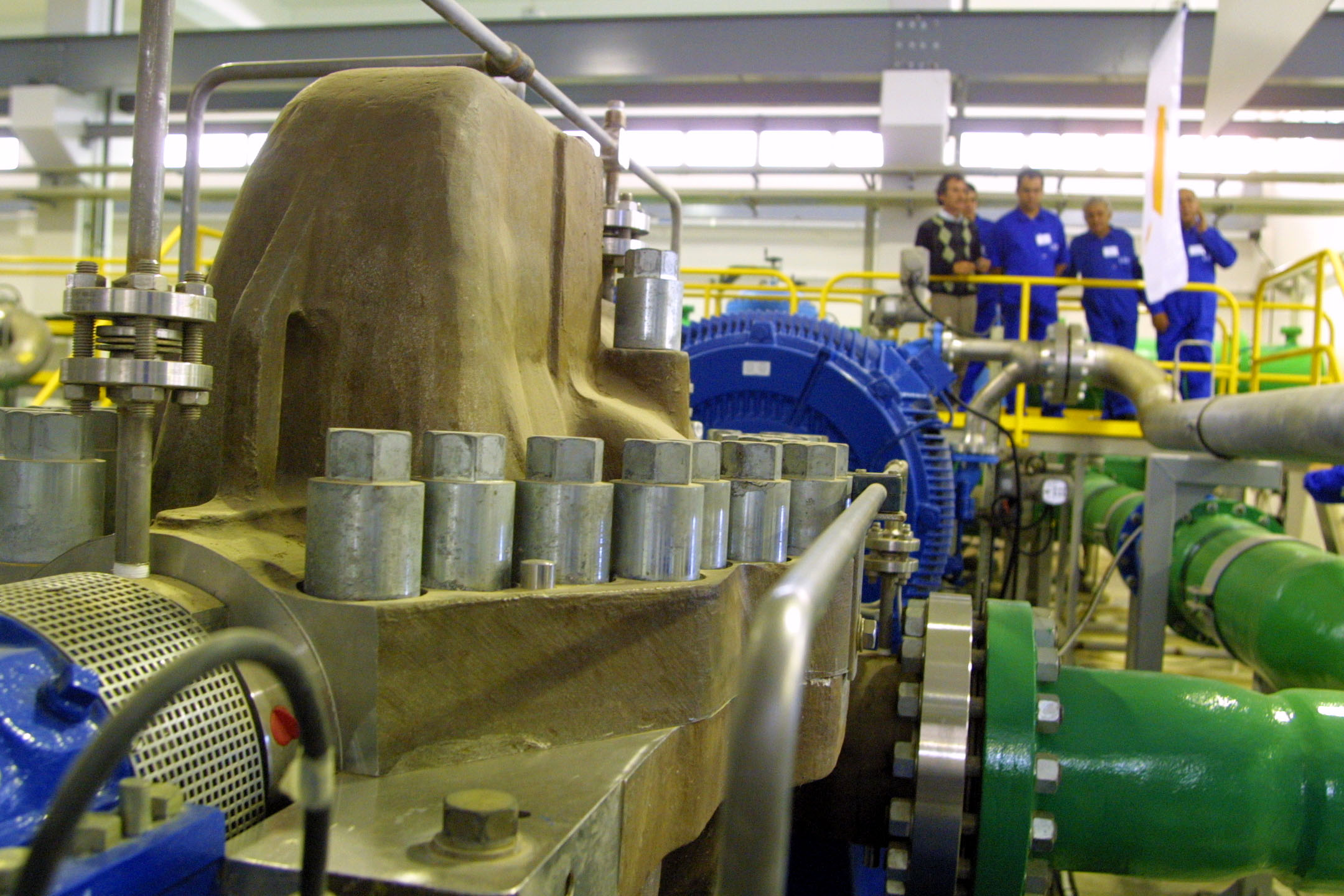
Five permanent plants, three mobile units and more on the way
Barring this year’s heavy rainfall, coming in the nick of time as the reservoirs were about to empty out, droughts in Cyprus are becoming increasingly frequent, making reliance on desalination all but a fait accompli. Desalination facilities have sprung up all over the place, with plans for even more. Inevitably, there’s been some pushback from local communities.
Earlier in the week, the community council of Mazotos called on the president to step in and order a rethink of plans for a mobile desalination unit in the area, citing environmental and archaeological concerns.
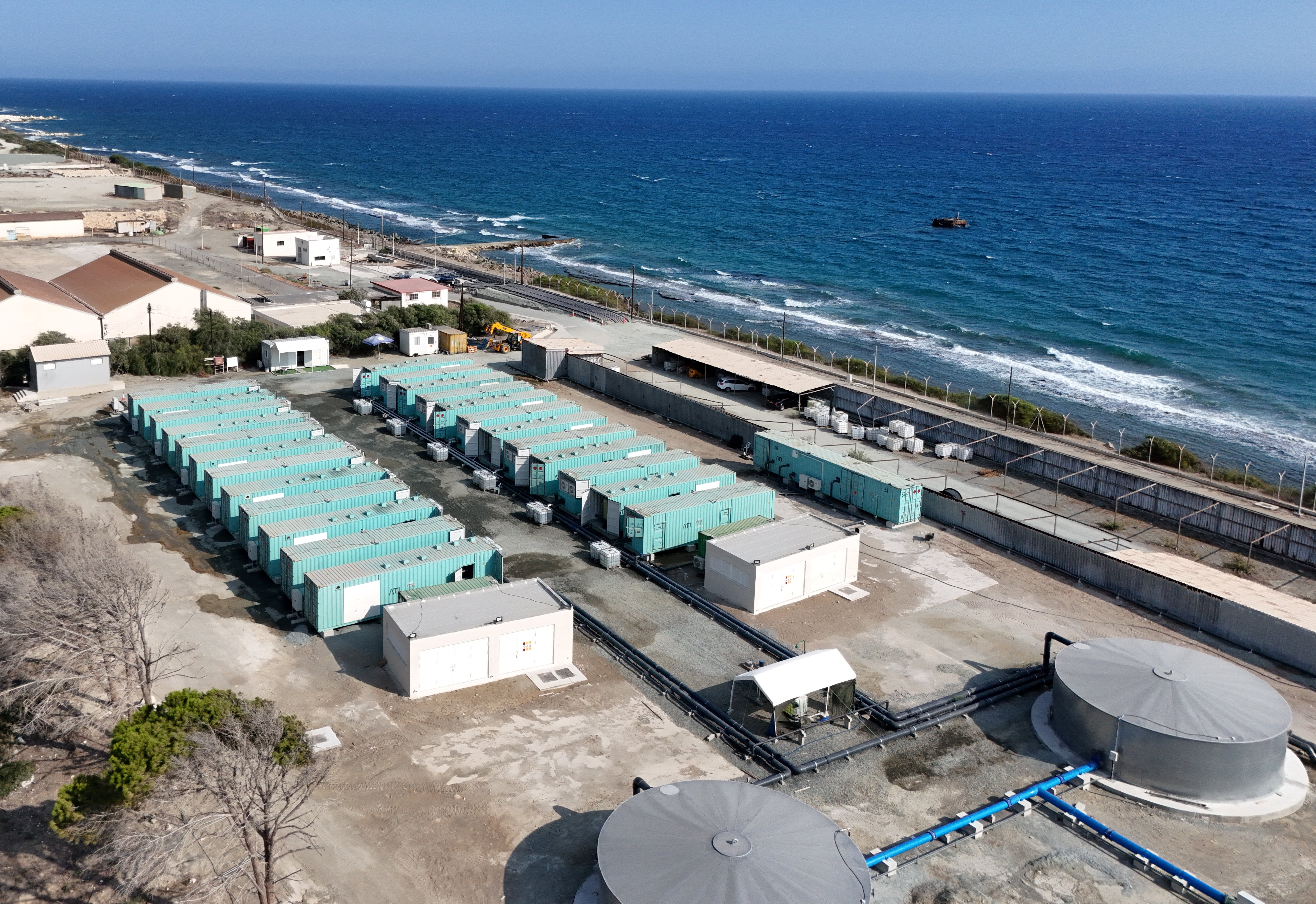
The planned unit at Mazotos will be a mobile/temporary one, with a capacity of 20,000 cubic metres of water a day – expandable to 40,000 m3.
Residents say the size speaks to a facility that can’t be described as temporary or easily relocatable. Here they may have a point, given that the biggest desalination plants in Cyprus – the permanent ones – have an output of 60,000 m3 a day.
Wary they’ll get stuck with the plant for the foreseeable future, they’re mobilising to nip the project in the bud.
What’s the difference between a permanent and a mobile/temporary desalination unit? According to the working definition of the Water Development Department (WDD), permanent means “a large, fixed facility built to provide a long-term, reliable water supply for cities or regions, with high output and infrastructure designed to operate for decades.
“By contrast, a mobile or temporary desalination unit is a smaller, portable system that can be quickly deployed to address short-term needs – such as droughts, emergencies, or remote locations – offering flexibility and speed but at a lower capacity and higher cost per unit of water.”
For Mazotos, the government has got its ducks in a row – securing the environmental studies, requesting expropriations, such as for the access roads leading to the facility, and initiating the tenders’ process. Officially, the aim is to have the facility up and running by the summer of 2027.
But the local community council has challenged the cabinet’s decision. The matter will be decided at the administrative court.
The Cyprus Mail reached out to the WDD for an overview of the use of desalination. It turns out that authorities are going for it full-steam ahead.
Cyprus has five permanent desalination plants: Dhekelia (60,000 m3/day), Larnaca (60,000 m3/day), Vasilikos (60,000 m3/day), Limassol (40,000 m3/day) and Paphos (15,000 m3/day) – with a nominal capacity of 235,000 m3/day.
In addition, three mobile units are currently in operation: Moni (15,000 m3/day), Kissonerga (12,000 m3/day) and Limassol port (10,000 m3/day). These give an additional capacity of 37,000 m3/day.
We asked how much of our water needs get covered by desalination. The WDD said it varies from year to year: for 2024 and 2025 it clocked in at 67 per cent and 64 per cent of the water consumed, respectively.
In “extreme drought years” it can go up 76 per cent.
As to the financial cost of the plants, again this varies year to year, depending on the amount of water ordered from the operators. In 2024 the cost was €118 million.
The annual average of power consumption of the permanent plants comes to around 187 gigawatt-hours – corresponding to 4.2 per cent of the country’s produced electricity.
We also queried the WDD as to whether any of the facilities use energy generated from renewables. They do not.
“However, there are efforts to install photovoltaics for the needs of the Larnaca plant as well establishing agreements with energy producers from renewable sources to power the plants in the future. Additionally, the four new permanent plants planned for operation in 2029 in east Limassol, Ayia Napa, Chrysochous and the New Dhekelia plant, will make use of renewables,” the WDD said.
Beyond the three mobile plants in Kissonerga, Moni and Limassol port, and the one planned for Mazotos, another facility at Garyllis (Limassol district) will soon be coming online.
Michalis Michael, senior executive engineer at the WDD, earlier told media that the Garyllis unit is currently in its testing/commissioning phase.
Unlike the other units which draw from the sea, the 10,000 m3 facility at Garyllis will tap brackish water from an underground aquifer. This requires a different process, and once authorities are satisfied with the quality of the water, they’ll give the green light for commercial operation.
Incidentally, regarding the mobile desalination units donated by the United Arab Emirates last year, these have been incorporated into the facility at Moni.
Irrigation gets taken care of from water from the reservoirs, plus some treated wastewater. Desalination is for domestic use; however, most people don’t drink from the house tap.
But will all these projects be enough to tackle what’s been dubbed the ‘water stress’ – a situation where the demand for safe, usable water exceeds the available supply during a specific period?
The government says it’s taking steps to always ensure adequate supply, given the unpredictable weather: in 2017 the reservoirs ran low; in 2019 the rains returned; in 2021 the dams overflowed; 2023 saw the return of the drought; and 2025 marked the eighth worst hydrological year since 1901.
In a recent article of hers published in the media, Agriculture Minister Maria Panayiotou asserted that they aim to cover “100 per cent of our water needs by the year 2050”. It’s a bold statement.
But hydrologist Giorgos Christodoulou strongly contests the notion that desalination alone is a permanent solution.
“We’re a small country with limited natural resources,” he said. “It’s not just climate change and less rainfall; the population is growing at a logarithmic rate, particularly in Limassol and Paphos, while big construction developments – with swimming pools, jacuzzi etc – take up a great deal of water.”
What’s needed, the expert stressed, is a recalibration of the economic model at large, making it more sustainable.
Moreover, there’s the impact on marine environments: desalination produces brine which, among others, wreaks havoc on sea weed. Transitioning from conventional fuel-powered facilities to ones using solar energy would still cause pollution.





Click here to change your cookie preferences