
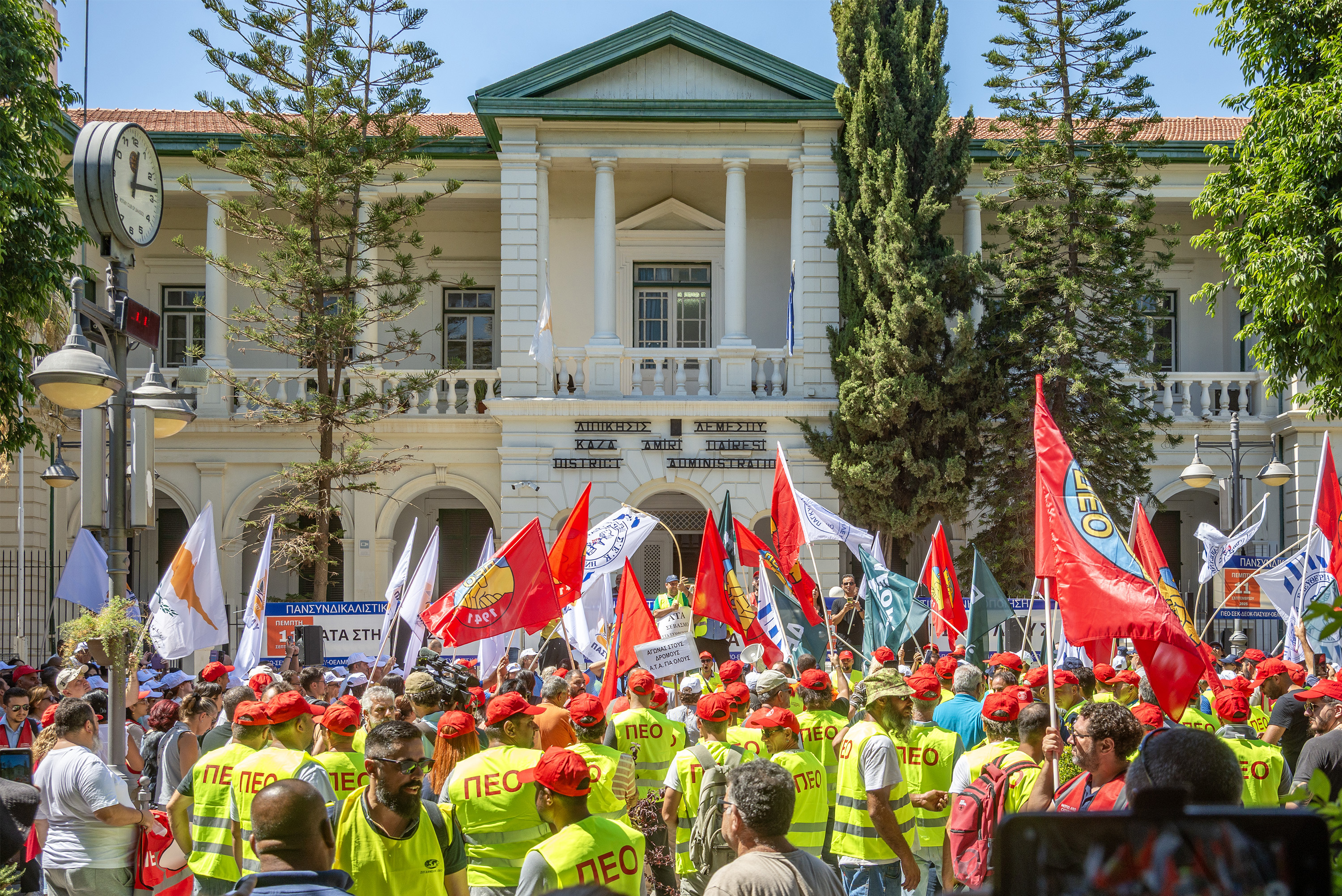
In the last few weeks, we have been witnessing some long-overdue resistance by ministers to the mighty unions that have been calling the shots for decades, with governments and political parties terrified of opposing even the most unreasonable demands. This had resulted in teaching unions running public education, doctors and nurses behaving like they owned public hospitals and public servants being granted privileges that were unheard of for the rest of the workers.
It appeared that this appalling state of affairs would continue under the presidency of Nikos Christodoulides, who had made big promises to the unions before his election. He had pledged to increase the minimum wage and to gradually restore CoLA to 100 per cent and he kept these promises. It was a pleasant surprise, however, to see that the government drew the line here and has decided to confront the unions on several issues.
Education Minister Athena Michaelidou set an example by taking on the militant teaching unions over the evaluation of the teachers. For years, these unions opposed the evaluations and weak education ministers gave in, but Michaelidou refused to be bullied. And when the unions, as a compromise, demanded to dictate what would be evaluated and by whom, again she refused to bow to them. There is more trouble brewing now over the scandalous ‘waiting list appointment system’ which comes to an end by law in 2027, but again Michaelidou, who had been publicly pilloried by teaching union bosses, will not hear of extending it.
Health Minister Neophytos Charalambides, meanwhile, has not given up on the idea of hiring third country nurses to tackle the acute nursing shortage experienced by private hospitals. A bill to make this happen was opposed by the nursing unions which pressured the political parties to shelve the bill. This was just before the parliamentary elections, so the parties did as they had been asked, but Charalambides to his credit brought up the matter again at the House health committee on Thursday, explaining the patients were suffering as a result of the nursing shortage being safeguarded by nursing unions.
Charalambides explained that although the law had been passed for the establishment of rehabilitation centres, not a single application had been received because none of these centres can meet the nursing requirement to open as part of Gesy. The result is that patients who do find a hospital bed for rehabilitation purposes end up paying thousands of euros a month. All this because unions believe the nursing shortage is in the interest of their members. Like their comrades in the teaching unions, which put the interests of the teachers ahead of the students, nursing unions relegate patients’ interests to secondary importance.
Labour Minister Marinos Mousiouttas has also refused to be intimidated by the two big union federations, Sek and Peo, which have been labouring under the illusion that they should dictate the form that pension reform should take. While paying lip service to the need for consensus, Mousioutas has rejected all their main demands – making the minimum pension equal to the minimum wage, reducing or scrapping the 12 per cent penalty for retirement at 63, and making pension funds compulsory at all companies.
These are positive signals and the president deserves praise for backing the ministers that will not allow the unions to run the show. If the political parties acted responsibly instead of pandering to the unions, it would have made things easier for the government. In the case of the teacher evaluation, the parties held back the relevant bills and subsequently did the same for the bills that would have allowed the employment of third country nurses.
We hope the government will stick to its guns and ignore the small political cost of standing up to the arrogant unions by putting the interest of society above that of self-serving groups. It is time that union bosses were made to understand that they have no moral, political or constitutional right to dictate national policy.




Click here to change your cookie preferences