
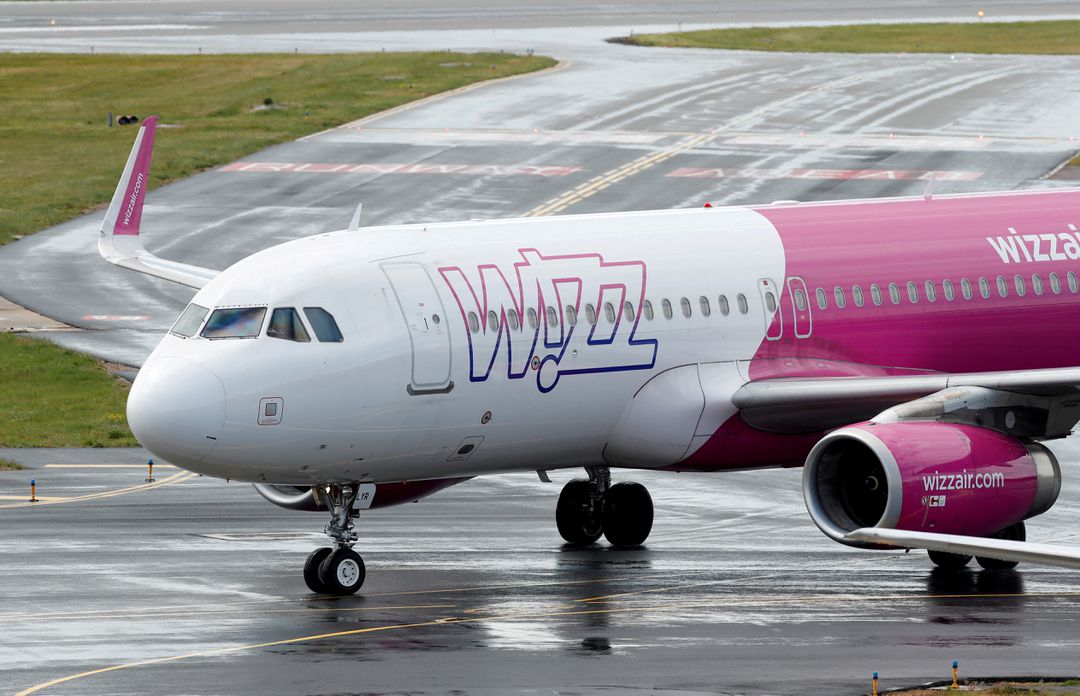
Budget airline Wizz Air on Monday highlighted the key findings of its financial year 2026 sustainability report, saying its efficiency-driven operating model enabled the airline to achieve its lowest-ever carbon emissions intensity while supporting long-term competitiveness and continued expansion.
The sustainability update follows the publication of the airline’s annual report and outlines progress in emissions reduction, fleet renewal, workforce growth and the use of Sustainable Aviation Fuel (SAF).
During the financial year, Wizz Air reduced its carbon emissions intensity to 50.6 grams of CO₂ per revenue passenger kilometre (CO₂/RPK), representing a 3 per cent year-on-year improvement and the best performance in the airline’s history.
The company attributed the result to continued investment in one of the youngest and most fuel-efficient fleets in the aviation industry.
As of March 31, 2026, Wizz Air’s fleet had expanded to 262 aircraft, with an average aircraft age of 4.57 years.
The airline said 75 per cent of its fleet now consists of new-generation Airbus A320neo family aircraft, helping to reduce emissions while maintaining a structural cost advantage.
Beyond environmental performance, the company said it remains committed to its workforce and inclusive culture.
Wizz Air stated that it employs people from more than 100 nationalities and expanded its workforce by 2,775 employees during FY26 to support continued growth across Europe and deliver reliable, affordable air travel.
As part of its decarbonisation strategy, the airline used more than 27,000 tonnes of Sustainable Aviation Fuel during the financial year in line with the European Union’s ReFuelEU Aviation requirements.
Looking ahead, Wizz Air said it intends to further increase its use of Sustainable Aviation Fuel while investing in innovative technologies capable of supporting long-term emissions reductions.
However, the company also acknowledged that the limited availability and higher cost of Sustainable Aviation Fuel continue to constrain the pace of aviation decarbonisation, making operational efficiency an essential part of its environmental strategy.
Head of Government Affairs and Sustainability Dorottya Durucsko said the airline’s environmental performance is rooted in operational discipline and efficiency.
“At Wizz Air, sustainability is driven by efficiency, through the way we operate every day with disciplined execution, continuous fleet renewal and an engaged workforce,” she said.
“This allows us to reduce emissions intensity while maintaining a resilient and cost-efficient model,” she added.
Durucsko said further progress will depend on wider developments across the aviation industry, particularly in increasing Sustainable Aviation Fuel production and improving system-wide efficiency.
“Our focus is to remain optimised for today, while contributing pragmatically to the long-term decarbonisation of aviation,” she said.





Click here to change your cookie preferences