
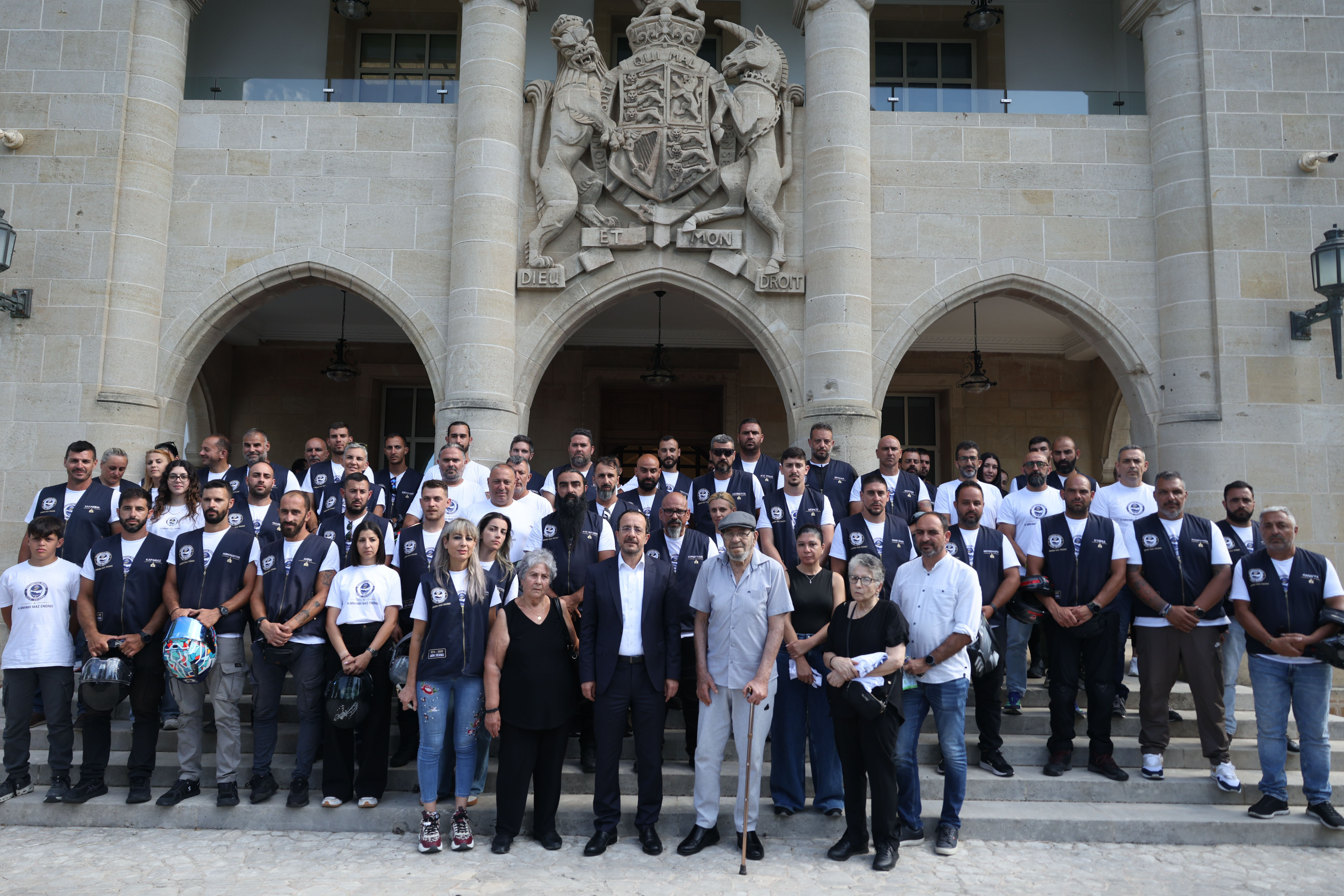
President Nikos Christodoulides on Friday said there have been “developments” regarding the case of Tasos Isaac and Solomos Solomou, who were both killed during two separate demonstrations in the buffer zone near Dherynia during August 1996.
“I want to say that for us, for our government, what happened in August 1996, the murders which took place, because they are murders and nothing else, we must say things as they are, we all saw them, it is neither an assessment nor an impression, but we saw them, two murderous actions, the matter is not closed,” he said.
He added that “there are developments on this issue about which the right and proper thing is not to speak publicly”, before adding that he can “inform the families”, but only “away from the spotlight”.
“We are doing what we have to do for those responsible for the murders,” he said.
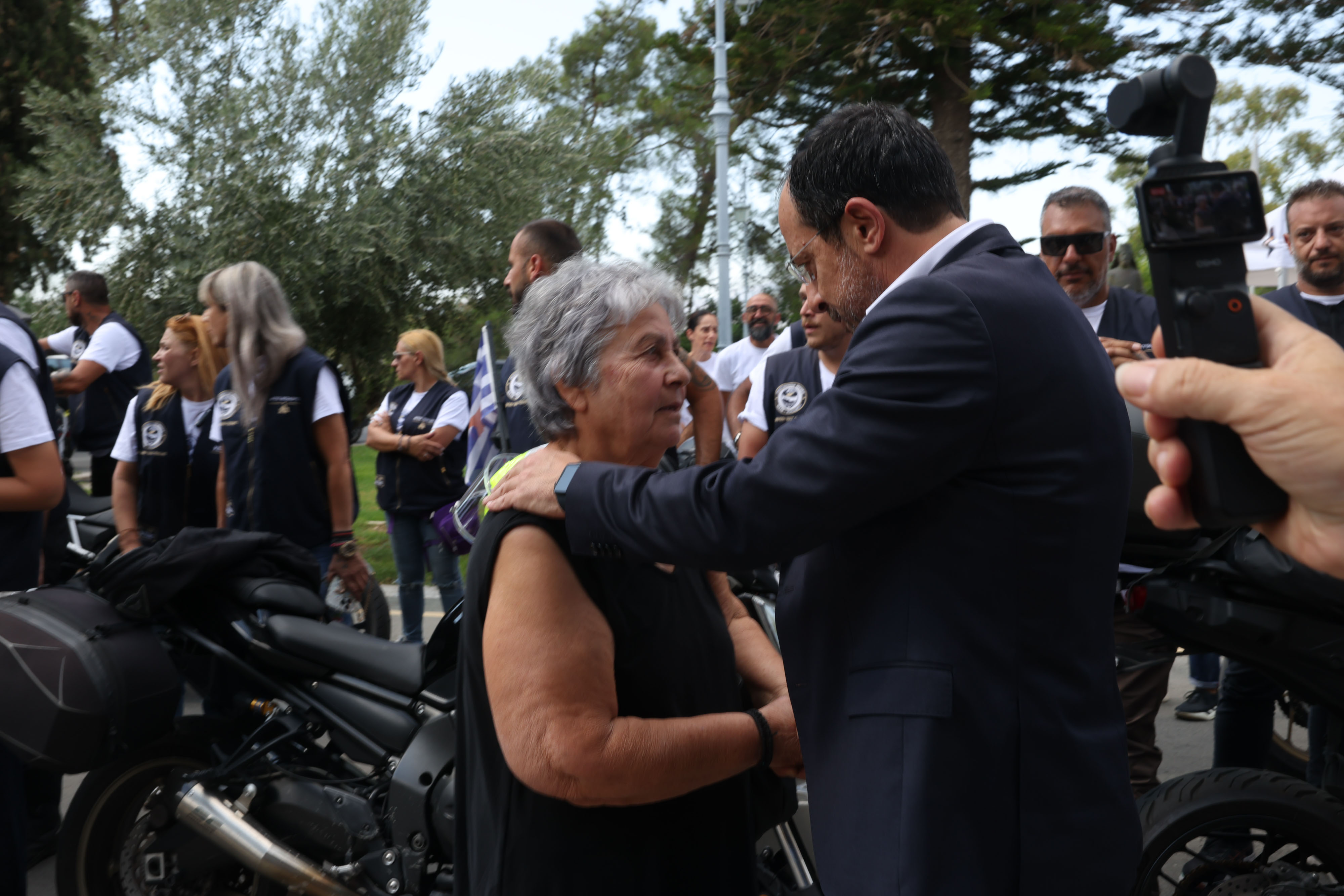
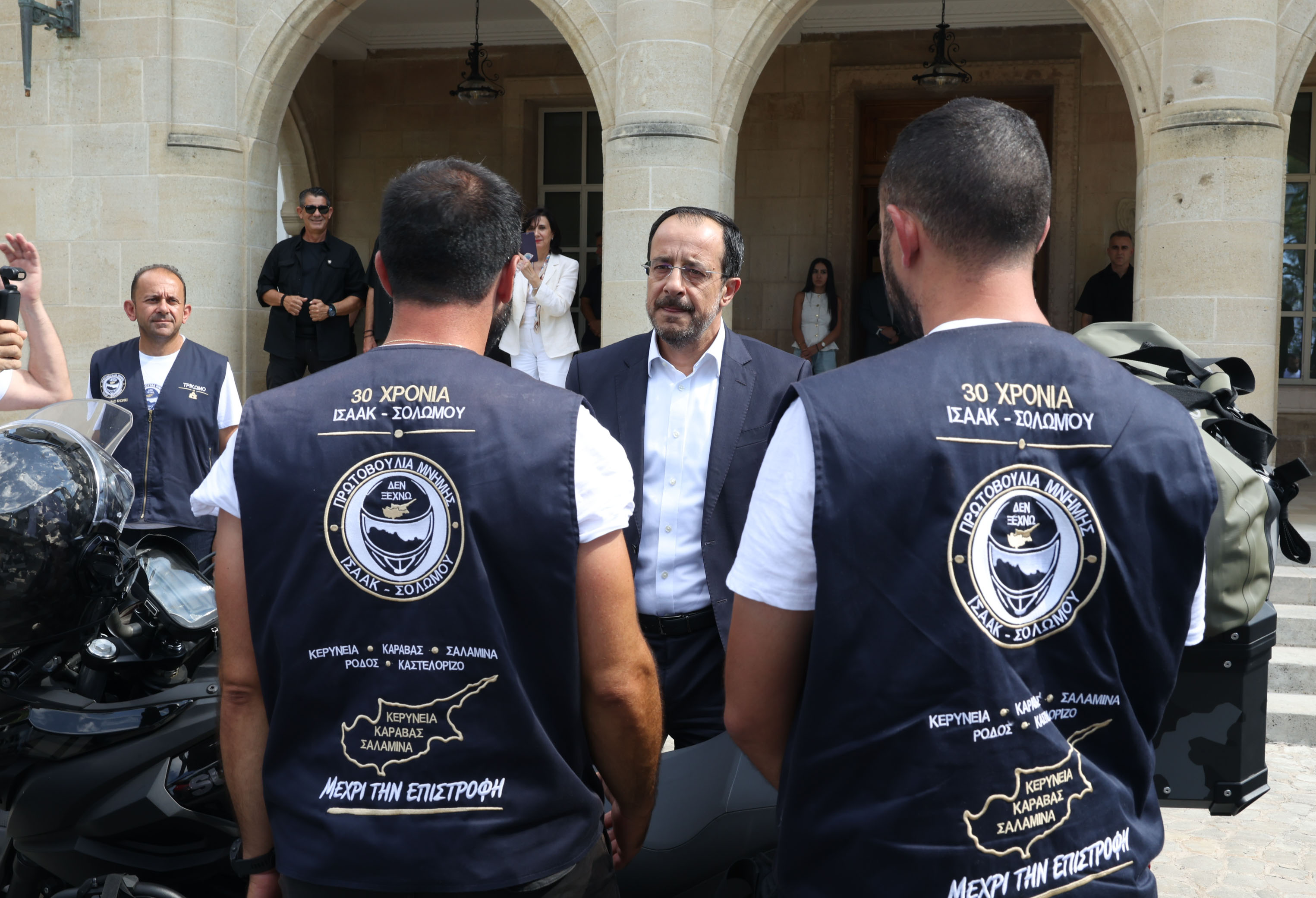
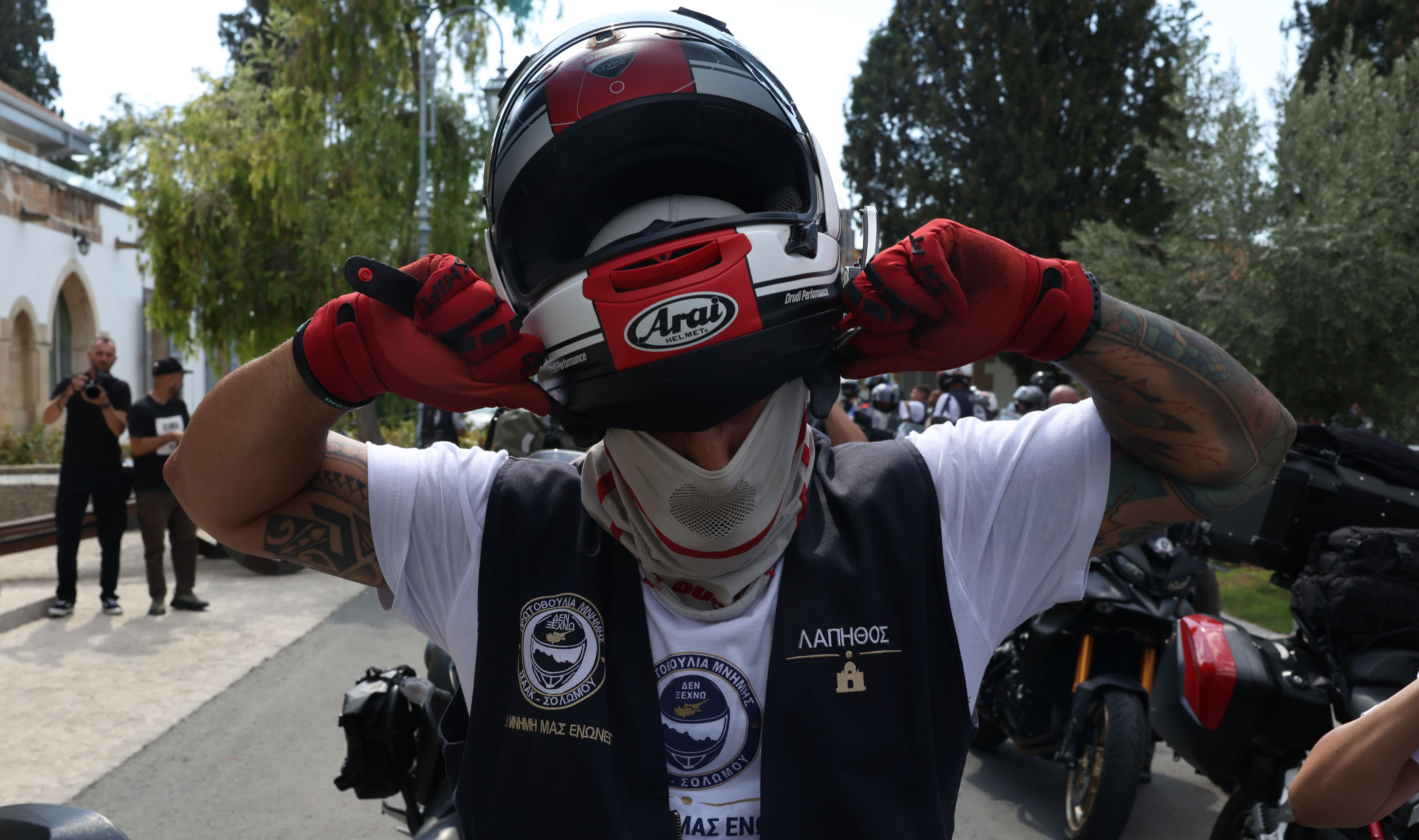
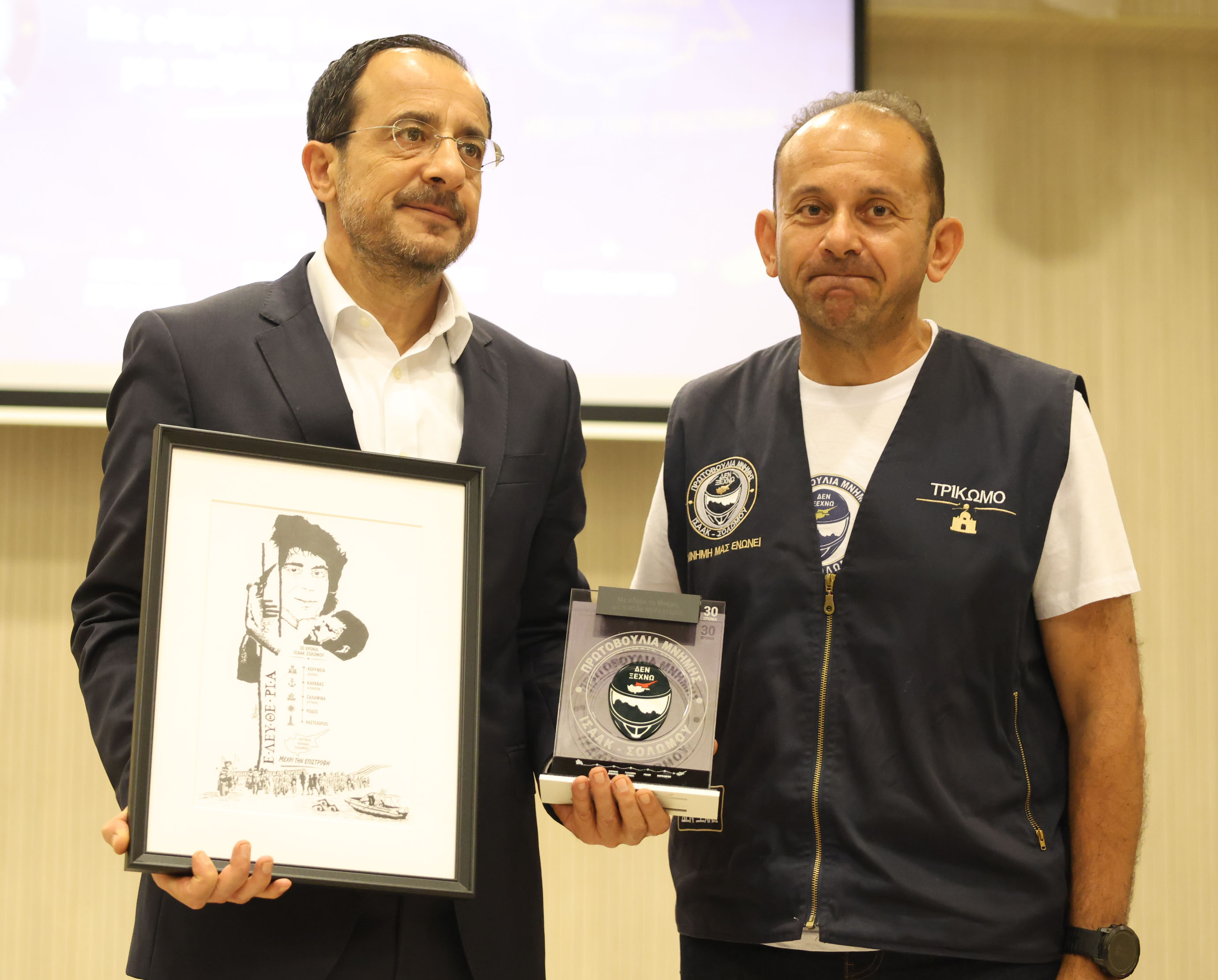
He was speaking upon the arrival of a group of motorcyclists who have in recent weeks toured Greece to mark the 30th anniversary of both men’s deaths, and told the group that he “followed” their trip through the media and through social media.
“I was following this journey, and the first thing I thought was that what you were doing was like that trip which Evangelos Pallikarides took while at school, after which he described the most beautiful trip of his life, when he went to Greece with his classmates,” he said.
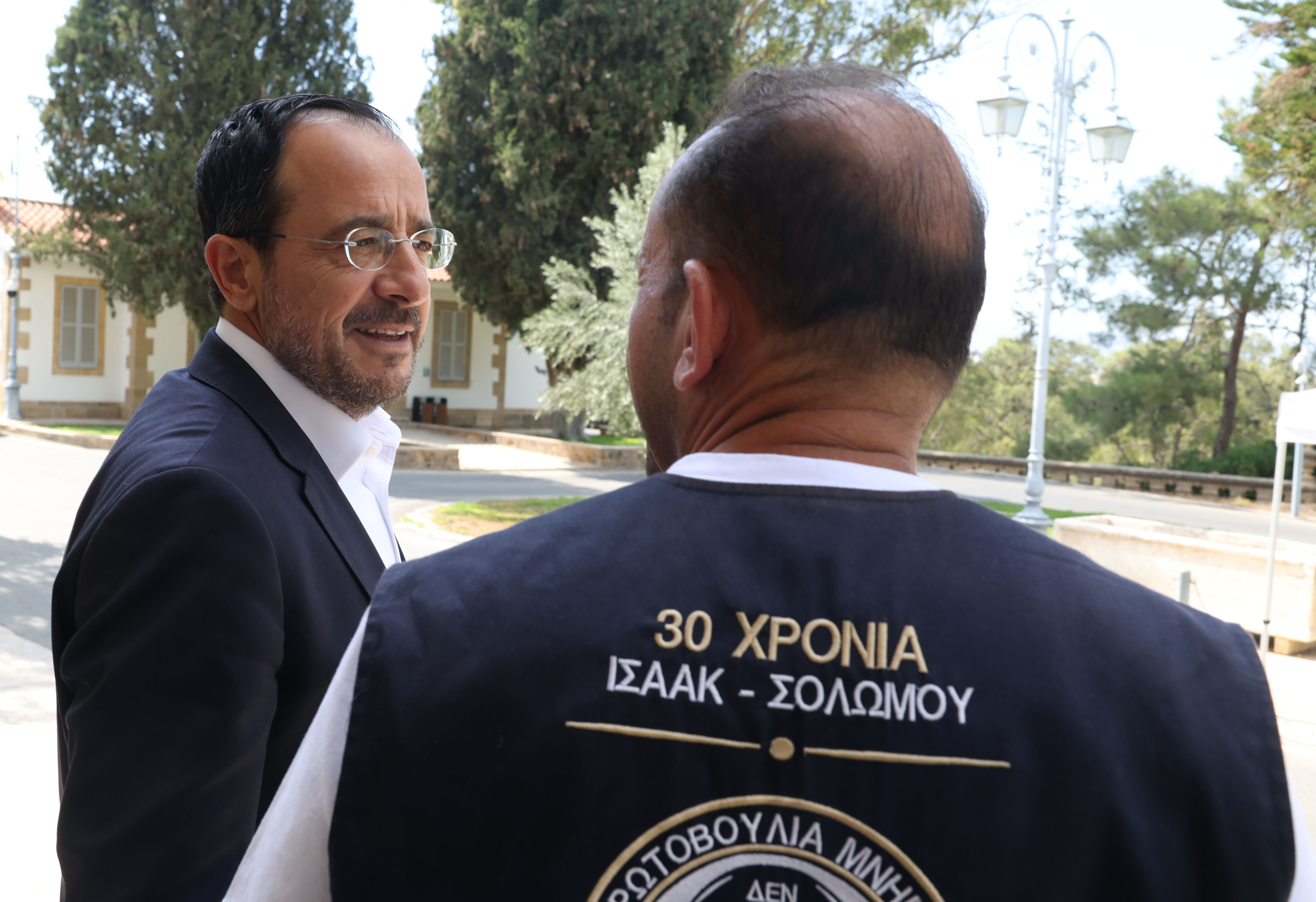
He said that his own father had accompanied Pallikarides on the school trip to Greece, and that “he often talked to me about this trip and what they felt”. Pallikarides was an Eoka fighter who hailed from Paphos. He was executed by the British authorities in 1957 after being convicted of illegal firearms possession.
Christodoulides on Friday said that “the second thing which particularly impressed me while following your journey was the route you followed”, and added that “the route you followed was very targeted”.
The motorcyclists had visited the village of Karavas, on the island of Kythera, in the village of Keryneia, which is located in the Achaea regional unit, and on the island of Salamis, just off the coast of Piraeus. All three locations share the names of locations in the north, namely the Kyrenia district village of Karavas, Kyrenia itself, and ancient Salamis.
Christodoulides also pointed out that the motorcyclists have “been doing this since 2008”, and that “we have an obligation to honour the memory of Isaac and Solomou”.
“It is the least we have to do, which we as a society and as a state have an obligation to do, to honour their memory,” he said, before adding that “we will truly honour their memory if we follow their example”.
Of Isaac and Solomou themselves, he said that “they sacrificed themselves for some specific purposes and some specific ideals”, and added that “what they were demanding was no more than being able to move freely in their country, as every citizen moves in a European state”.
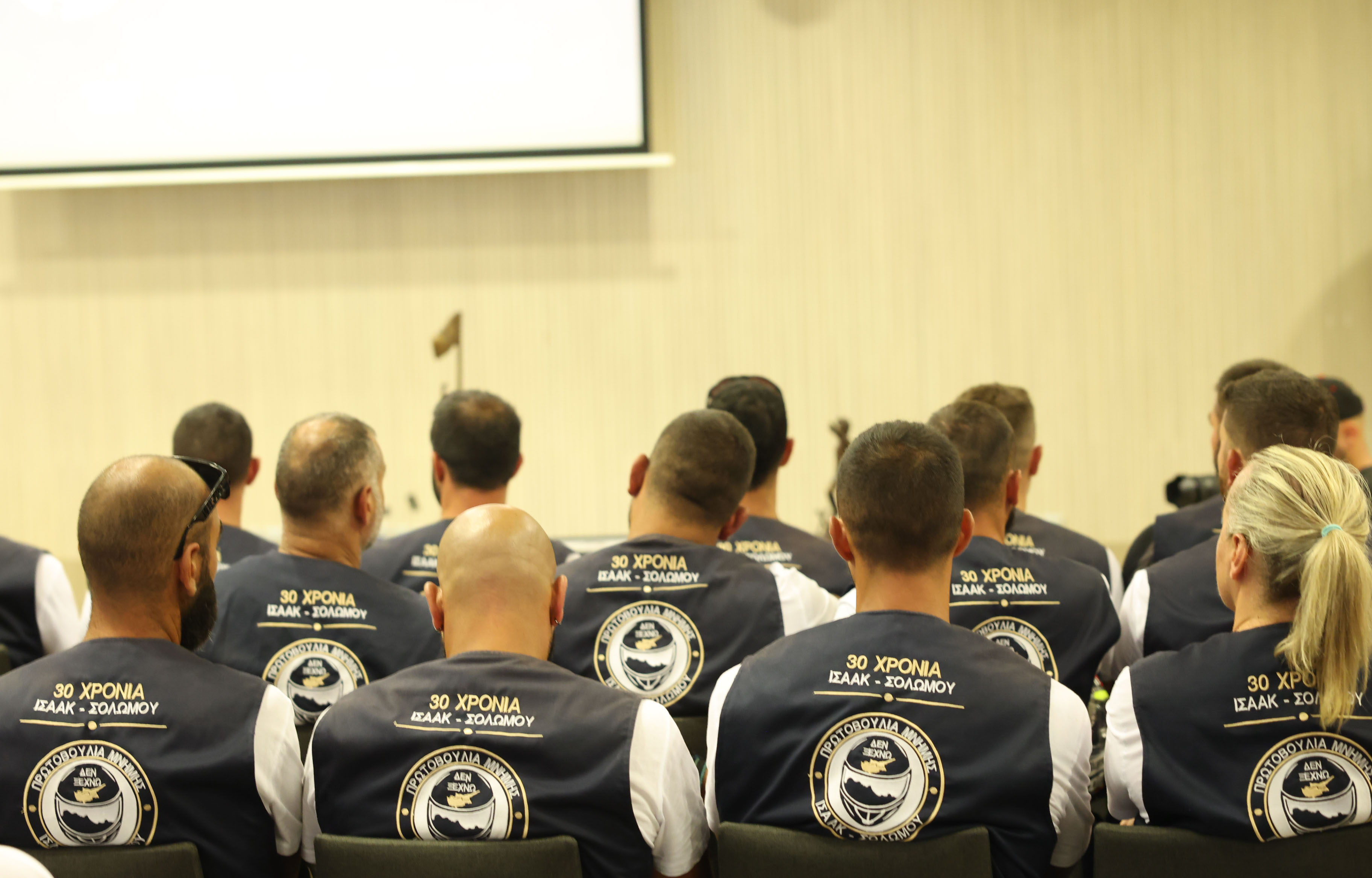
“They fought for the liberation of this country and the end of the occupation. These ideals, the principles and values which led them to these specific actions are what define our fight to this day. If we truly want to honour their memory, we must continue their fight,” he said.
He went on to say that he will travel to Dherynia with the motorcyclists on August 8 to mark the anniversary of both men’s deaths, and stressed that this is “a minimum obligation, but also … my personal desire as the president of the Republic of Cyprus”.
In addition, he said that the government is “here to do whatever you consider useful to further strengthen your effort”.
“Previously, I was a diplomat, and many say that Greece does not need enlightenment on the Cyprus issue, but I think that enlightenment on the Cyprus issue must always start from Greece,” he said.
To this end, he added that “what you did and what you achieved through this trip … requires years of diplomatic work or work at a governmental level to have the results which your own effort brought”.
Isaac was killed on August 11, 1996, when Greek Cypriot motorcyclist protesters were met in the buffer zone by Turkish Cypriot counter-protesters who, according to the United Nations report on the incident, were “joined by members of the Grey Wolves who had come from Turkey”.
As demonstrators from both sides broke into the buffer zone, the incident became violent. Isaac found himself entangled in barbed wire in the buffer zone and was beaten to death by Turkish Cypriots and Turks who had also entered the buffer zone.
Solomou was killed three days later when, following Isaac’s funeral, Greek Cypriot demonstrators once again travelled to Dherynia.
He distanced himself from his fellow protesters and walked towards a Turkish military post, attempting to climb a flagpole to remove a Turkish flag, before being shot dead by a Turkish soldier.
Given Solomou’s cause of death, Christodoulides’ mention of Pallikarides may have been a move to link the pair’s actions, given that on April 1, 1953, Pallikarides had climbed a flagpole in Paphos and removed a British flag which had been raised ahead of the coronation of Queen Elizabeth II.



Click here to change your cookie preferences