
India and the United States are the world’s two biggest democracies, and both of them seem to be in danger. In each of them populist federal governments are deliberately polarising the population, radicalising the politics, and seeking to undermine the impartial rule of law. In other places, such an approach has often ended in tyranny or civil war.
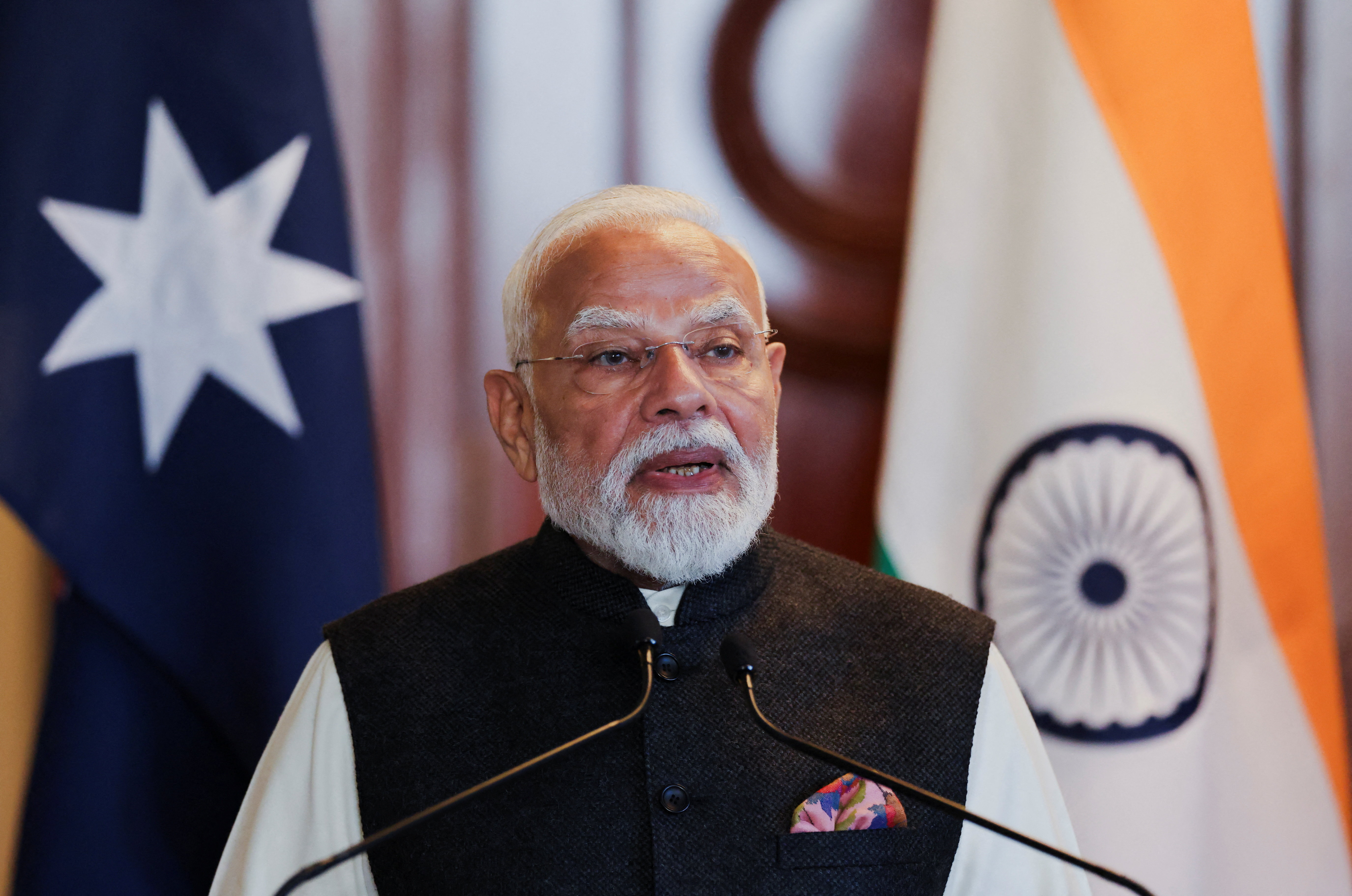
India’s Prime Minister Narendra Modi is a classic populist leader, although he prefers an austere and religious style to the more florid approach favoured by Donald Trump. Both men control their political parties with an iron hand, both flaunt their religions in public (although only Modi really has one), and both try to eliminate or coopt all rival centres of power.
Both men also have a complete disregard for the truth. Their rhetoric about helping the poor while actually serving the purposes of the rich is the same. Above all, their scapegoating of minorities is the same. For Modi it’s Muslims, for Trump it’s practically anybody non-white. Yet neither man is really preparing to stage a violent takeover.
Muslims, Modi’s target minority in India, account for about one-seventh of Indian’s 1.4 billion people. They are not immigrants. For the most part they are the locally born descendants of families who converted from Hinduism to Islam during the long centuries when most Indian states had Muslim rulers. But Modi treats them as alien and even hostile.
He leaves the real gutter talk to the street-level troopers of his Bharatiya Janata Party while he takes the higher road – but not all that high. In the last federal election (2024), speaking to a Hindu audience, he referred to India’s Muslims as “infiltrators” and “those who have more children.” He meant that the wicked Muslims are trying to outbreed the innocent Hindus.
Nasty stuff, but it doesn’t always work. Take cows, for example, which are seen as a potential food source by most non-Hindu Indians but are ‘sacred cows’ for devout Hindus. So Muslim merchants moving cattle around the country work mostly by night, while Hindu fanatics try to hunt them down.
Four years ago a truck transporting cattle was stopped in Madhya Pradesh by 14 ‘cow vigilantes’. Three Muslim men were dragged out of the vehicle by the Hindu mob and severely beaten. One of them, Nazir Ahmed, was killed.
Justice moves slowly in India, but last month the case ended up in the court of District and Sessions judge Tabassum Khan, who happens to be Muslim. She saw it as a clear case of mob lynching and found the 14 men guilty of murder. She was immediately buried under an avalanche of media and online threats and hatred, but India’s judges stuck by her.
She now has police protection, but the murderers are serving life sentences. Narendra Modi has not come to her defence (perhaps he was too busy), but her legal colleagues in courts all over the country spoke up, noting that she had acted as an impartial judge, not as a sectarian activist for one religion or another.
Many of India’s politicians have defected to the populists, but enough of the lawyers are still faithful to their oaths. Indian democracy survived Indira Gandhi’s 21-month ‘Emergency’ in 1975-77, when she suspended most civil rights and arrested thousands. It can probably survive Modi too.
And the same logic applies to the United States. Those who have watched the US Supreme Court’s six conservatives outvote the three liberals on one issue after another may despair, but they don’t realise that Supreme Court justices may follow their political loyalties on domestic or culture war questions while taking a different stance on constitutional matters.
That actually happens in the higher courts of both countries, not always but often enough to make a difference. The courts still have the final say in both countries, and it would take a political upheaval of great violence to set them aside.
It’s not the best of times, but it’s not the worst of times either. Not yet, and maybe never.
Gwynne Dyer’s new book is Intervention Earth: Life-Saving Ideas from the World’s Climate Engineers. The previous book The Shortest History of War is also still available




Click here to change your cookie preferences