
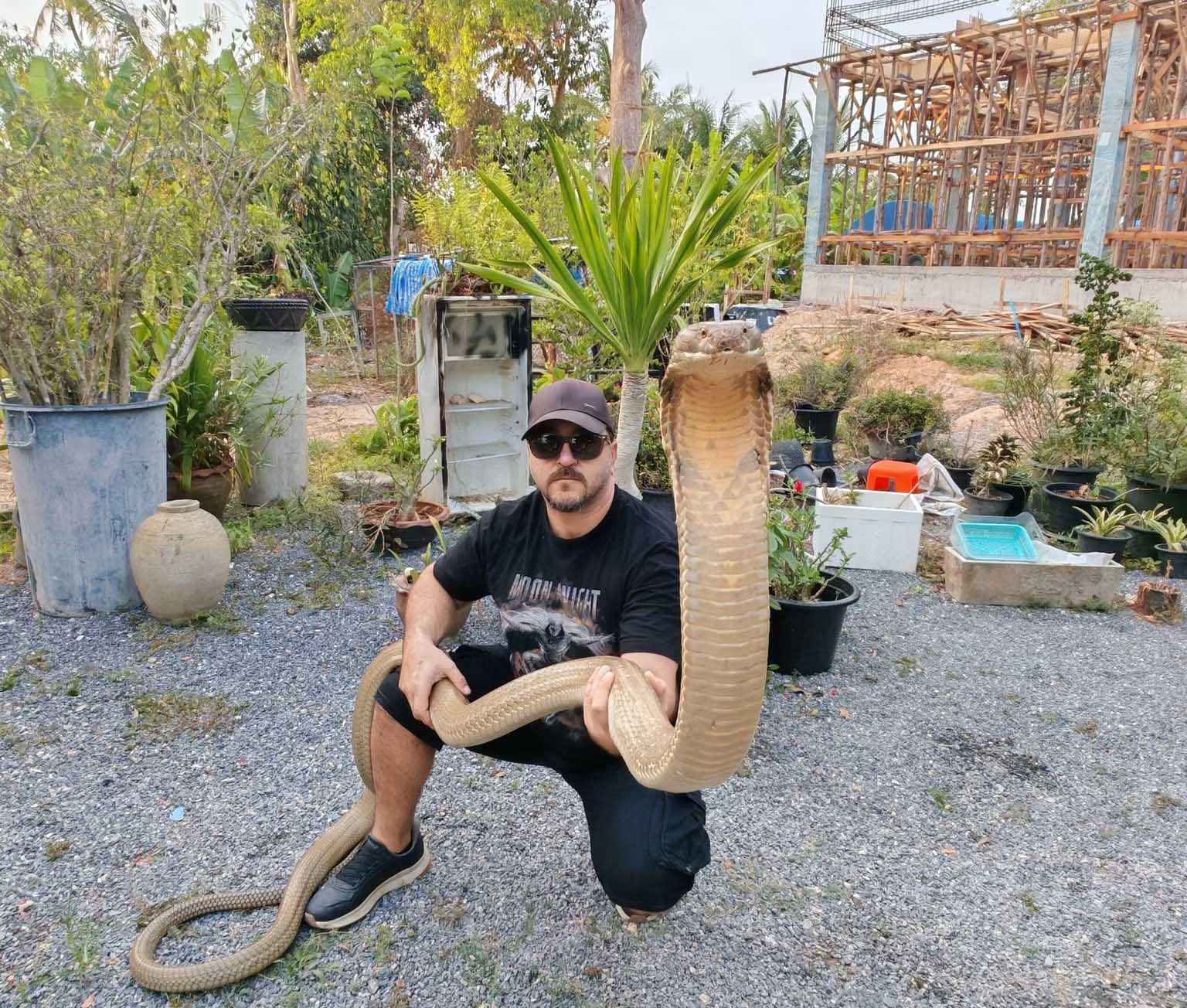
Yiannis catches cobras in Thailand and vipers in Cyprus
The door was open and I stepped in. I was greeted by a squawked “Hello” and responded in kind. As the darkness peeled away, I was momentarily lost in a maze of terrariums alive with all kinds of frogs, turtles, lizards and snakes. Harley brought me back by tugging on my shirt, spreading his gaudy plumes for me to admire. “Good boy”, I said to him and he poked his other foot through the cage to get a better grip, hanging onto the grid by his sharp beak and sizing me up with one inquisitive eye and then the other.
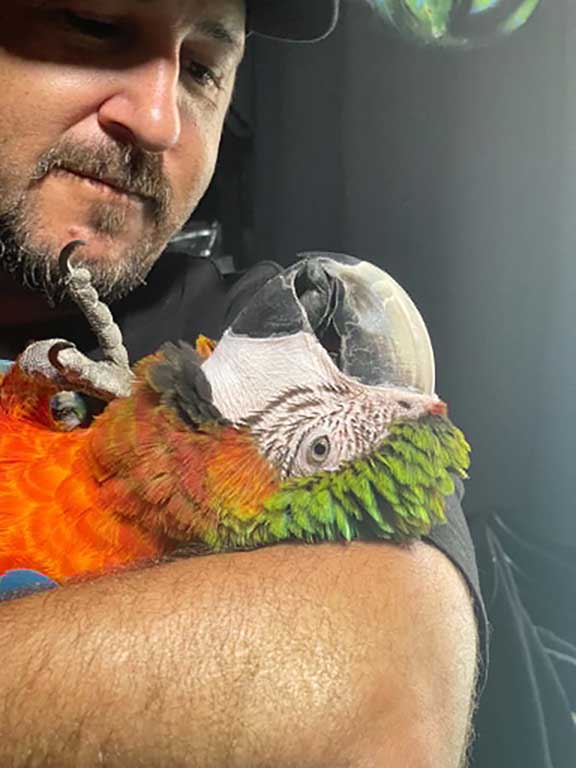
This wonderful place is heaven for reptile lovers. Downstairs is Yiannis Angelis’ Reptile Jungle showroom and upstairs hosts the species for sale.
Reptiles may not be for everyone, but even the reluctant cannot but be mesmerised by the variety.
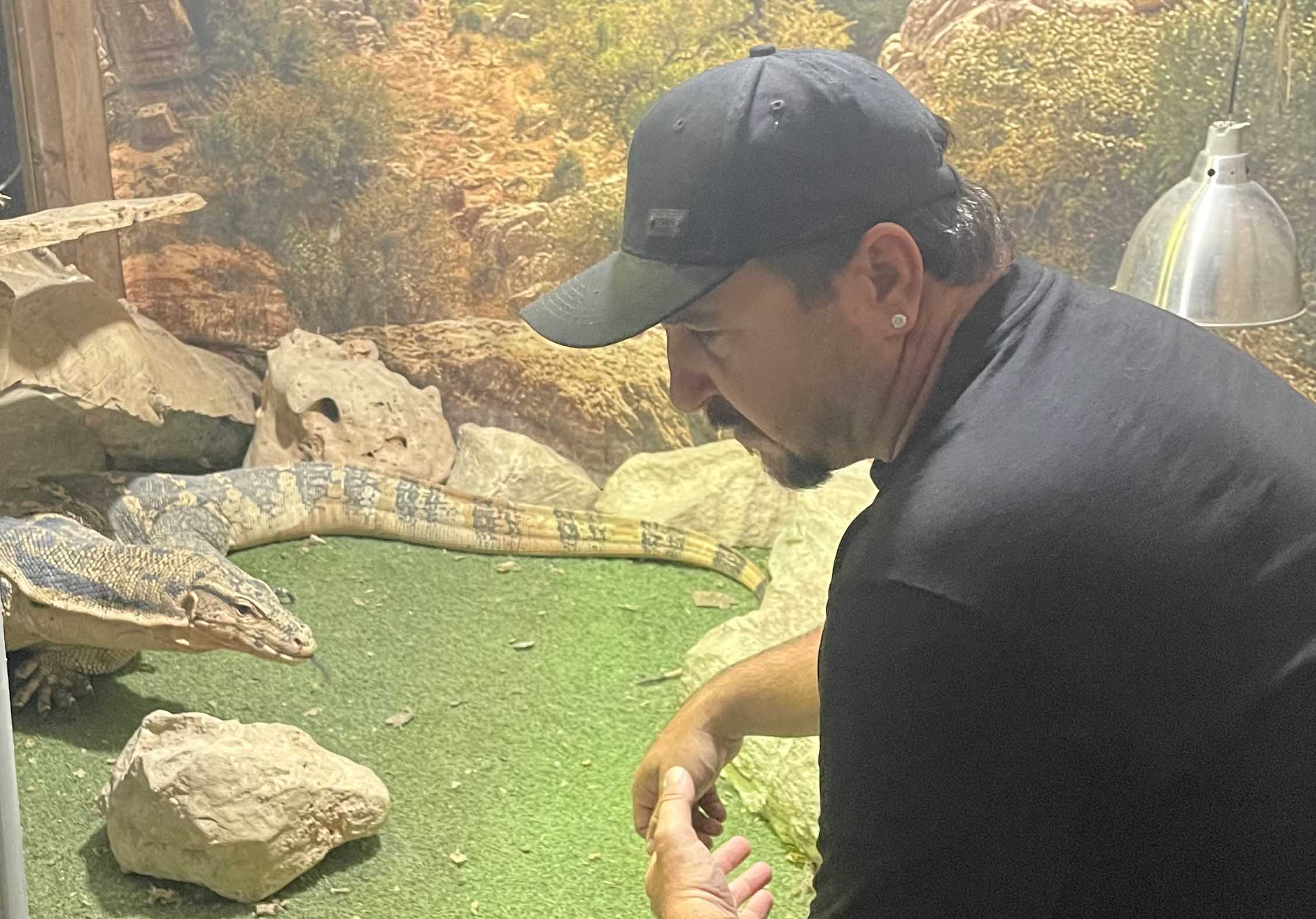
And although I quickly picked my favourites – the curious tree monitors scratching at the glass and the Asian water monitor flicking its blue tongue – I wasn’t at the Reptile Jungle to purchase. I was here to find out more about Yiannis’ frequent trips to Thailand, where he coaches and helps locals remove 5m-long king cobras from residential areas.
While our very own blunt-nosed viper is more versatile and can attack from any angle in a flash, it is much smaller. It is not just the size and shape that sets them apart. The viper’s venom is hemotoxic, while the cobra’s neurotoxic, meaning that the viper will make you sick but the cobra will shut down your limbs and organs one by one. You also have two to eight hours to get to hospital if bitten by a viper, and slim chances of surviving if attacked by a cobra.
Yiannis put this into perspective by explaining that while a viper delivers about a level teaspoon of venom, the cobra injects half a glass of its deadly juice into its victim.
Vipers will also generally leave you alone and slither over your flip-flopped feet back into the vegetation if unprovoked, but not a cobra. Once it becomes aware of you – and it can do so from up to 100m away – it will give you a few seconds to back off and then stalk you until it gets you.
So, how does Yiannis manage to grab them bare-handed, stuff them in a canvas bag, drive them slung over his shoulder on a moped to a safe distance and then release them into the wild?
THE SPARK
“My interest in reptiles started at eight years old. I am now 45, so it’s been a good 37 years. I was at a scouts’ camping trip when a snake came into our tent. While everyone was running away, I caught it from the head and handed it over to those in charge, who then killed it. I was very sad and since then I’ve been wanting to know more.”
Yiannis later went to the Merchant Marine Academies and travelled the world, visiting any reptile exhibition he came across. He then stayed in Thailand for a while, where he trained to handle cobras.
On his return to Cyprus, Yiannis responded to calls to remove snakes and also assisted the fire brigade and spoke at seminars.
The snakes he catches in Cyprus are released into the wild in collaboration with the environment and forestry departments.
In Limassol, Yiannis has “one of the largest reptile shops in Europe”.
“Demand has risen for the allowed species. Many species have been banned, such as pythons. I have geckos, lizards, chameleons, some species of snakes that are not venomous, frogs and turtles. Many people visit Reptile Jungle out of curiosity, to learn about the reptiles and ultimately to purchase.”
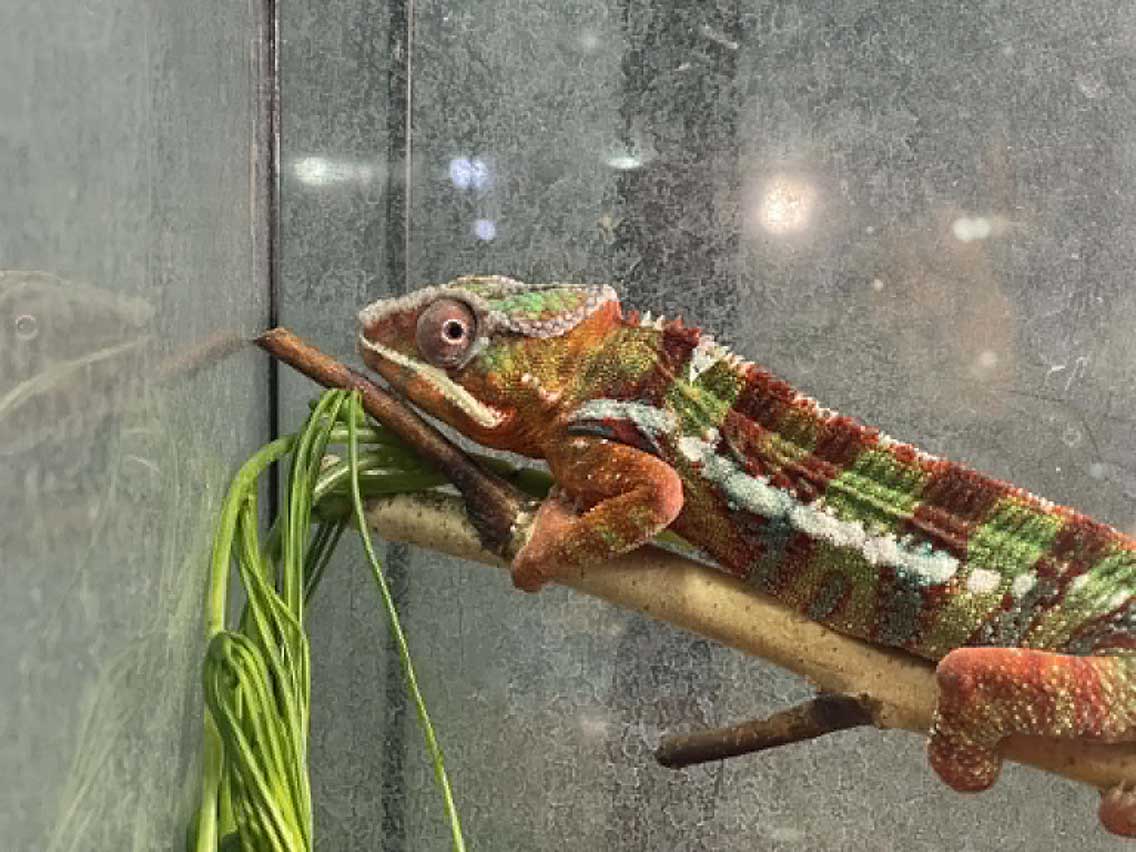
When a purchase is made, Yiannis provides custom terrariums. “Some species become connected to their owner and are good pets, but you can’t expect them to be like a cat or dog. They recognise their owner but don’t show emotion.”
Yiannis said someone might choose a reptile over one of the furry pets because after the initial cost of setting up a terrarium and buying the species of choice, they are pretty much low maintenance and cost around €20 or less a month to keep. They also don’t smell or keep the neighbours awake at night.
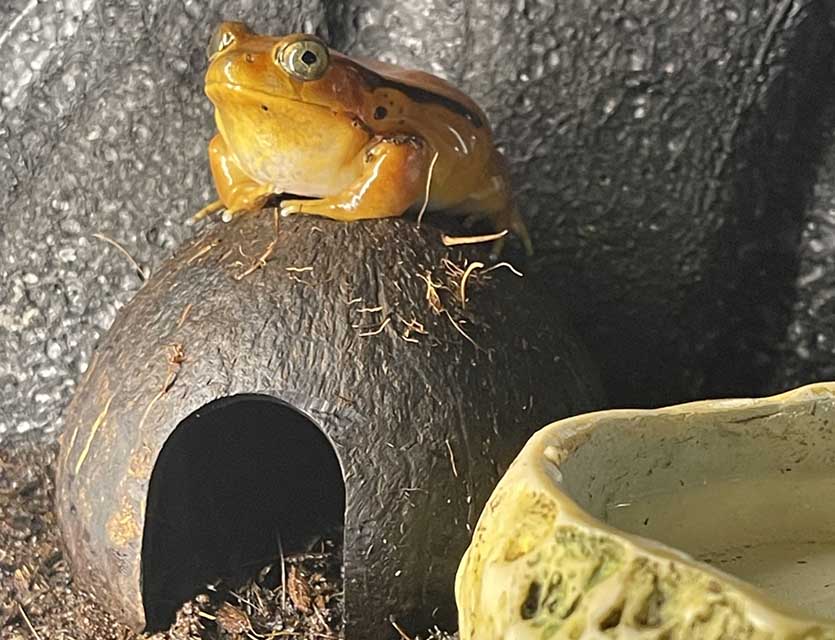
For a first-time pet, especially for children, a gecko or bearded dragon would be a good choice. Some prefer snakes. It all depends on the space available for the terrarium and the set-up budget, which could be up to €1,000, heating bulbs included.
CYPRIOT SERPENTS
One must keep in mind that it is forbidden by law to keep Cyprus’ snakes and wildlife in general in captivity.
There are eight types of snakes in Cyprus, three of which are most commonly sighted, namely the blunt-nosed viper, the black whip snake and the coin snake. Of these, only the viper is venomous. The other five are mainly nocturnal, keep out of the way of human activity and are fast movers so are rarely spotted.
Yiannis explained that the viper will pick a spot and wait for prey to pass. “They are ambush snakes.” The black whip snake and the coin snake are always on the move, hunting their prey. “They prefer birds, which is why you will find them on beams.”
“Apart from the fact that it is forbidden by law, killing them upsets nature’s balance and encourages larger populations of rodents,” Yiannis warned. “Snakes are cold-blooded and cannot transmit any disease to humans, but rats carry typhus and hepatitis, and are also destructive”.
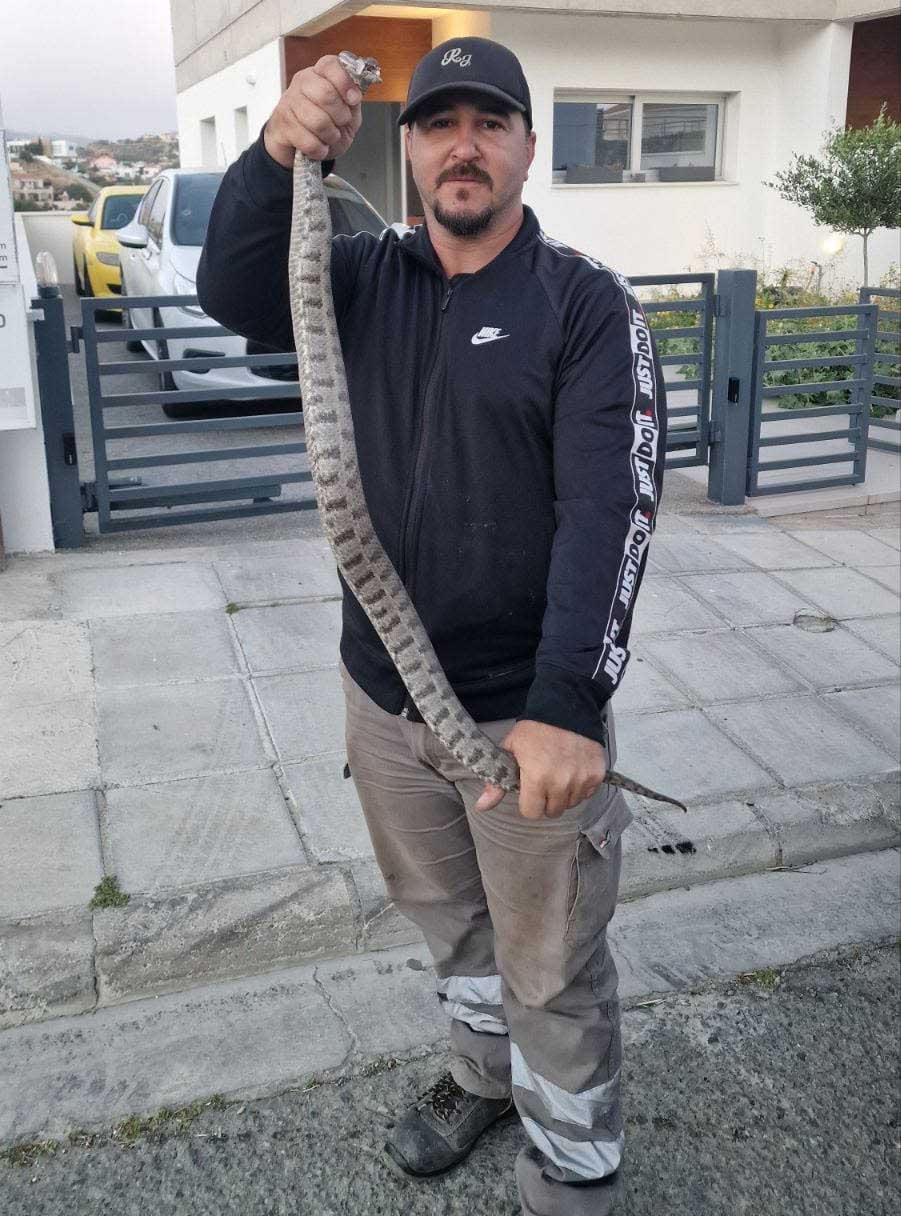
If bitten by a viper in Cyprus, “it is 99 per cent due to human error,” Yiannis said and advised people to become familiar with the viper at least, to be able to recognise it at a glance. The viper has a triangular head that is wider than its neck and is a dull greyish colour with darker brown rhomboid patterns along the back.
Yiannis explained that if one comes across a viper, there is a safety distance of approximately 1m. The snake can lunge forward to up to a third of its length. It can also turn and spring in any direction, but for a shorter distance. “If, however, the viper is stretched out, it can curve its body and launch a strike equal to its length.”
Although vipers typically grow to about 1m to 1.5m in length, they have been known to reach up to 2m in exceptional cases.
“If bitten by a viper, just go to hospital. Don’t do anything else. Don’t make a tourniquet, don’t slit the area, don’t try to suck the venom out. You can tell by the bite if it was a viper. It leaves one or two puncture wounds and the area quickly bruises. Non-venomous snakes leave a horse-shoe shape of small tooth marks.”
Yiannis said that a lot of things can determine the outcome of a bite, even by a non-venomous snake, as people have been known to die of fright.
SNAKE CHARMER
In Cyprus, Yiannis gets called out almost every day during the hot season to remove snakes from buildings and swimming pools, as well as scorpions, bats and even cats. In Thailand, it is mostly for king cobras.
“In Thailand the seasons are opposite. When it is winter here, it is summer there.” So, Yiannis gets snake seasons all year round.
The main problem with snakes, he said, was “ignorance” and that “even with the king cobra, it is a matter of knowledge, knowing how to handle them.”
“For us snake charmers, it is very different. In Cyprus I have crews to handle snakes. In Thailand I have friends who work with me and invite me to go during the snake season to stay and help out because they receive so many calls. The areas are vast and the distances are huge. The more crews, the better.”
Yiannis admits that “there is always a risk and there is no one who is not afraid.”
“But I know their body language, I can ‘read’ them. They are predictable.”
However, “mistakes happen” and Yiannis, who films every case live on Facebook, has a few stories to tell when a routine removal turned into a big surprise.
“There was one time a couple of years ago – and this was being filmed live – I was ready to catch a king cobra when nearby leaves rustled and the snake turned suddenly, I lost my balance and fell backwards, and the cobra came over me. There was someone else with me who was also experienced and things ended well. It can happen. No one is perfect.”
Yiannis’ videos are on social media and one can follow him through Reptile Jungle. The Reptile Jungle is at 164, Franklin Roosevelt avenue, Limassol, and can be easily found through Google Maps and on social media. Call Yiannis on 99107591 for advice on reptiles, to remove a snake or provide pest control services.




Click here to change your cookie preferences