
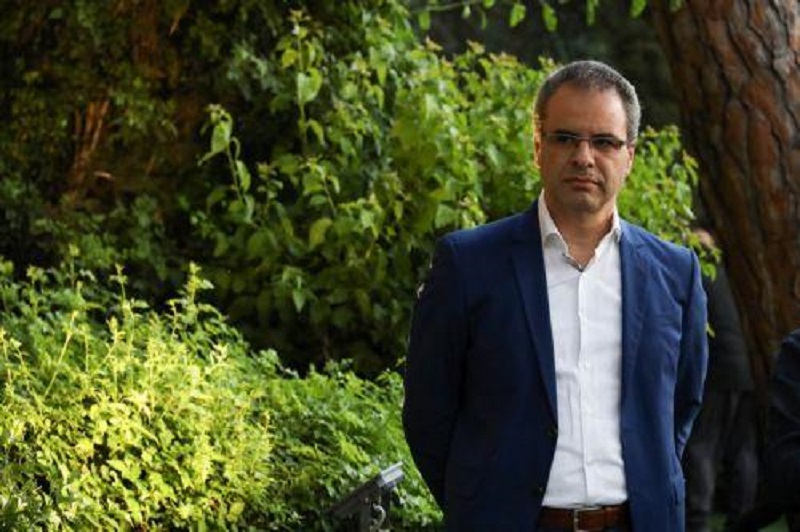
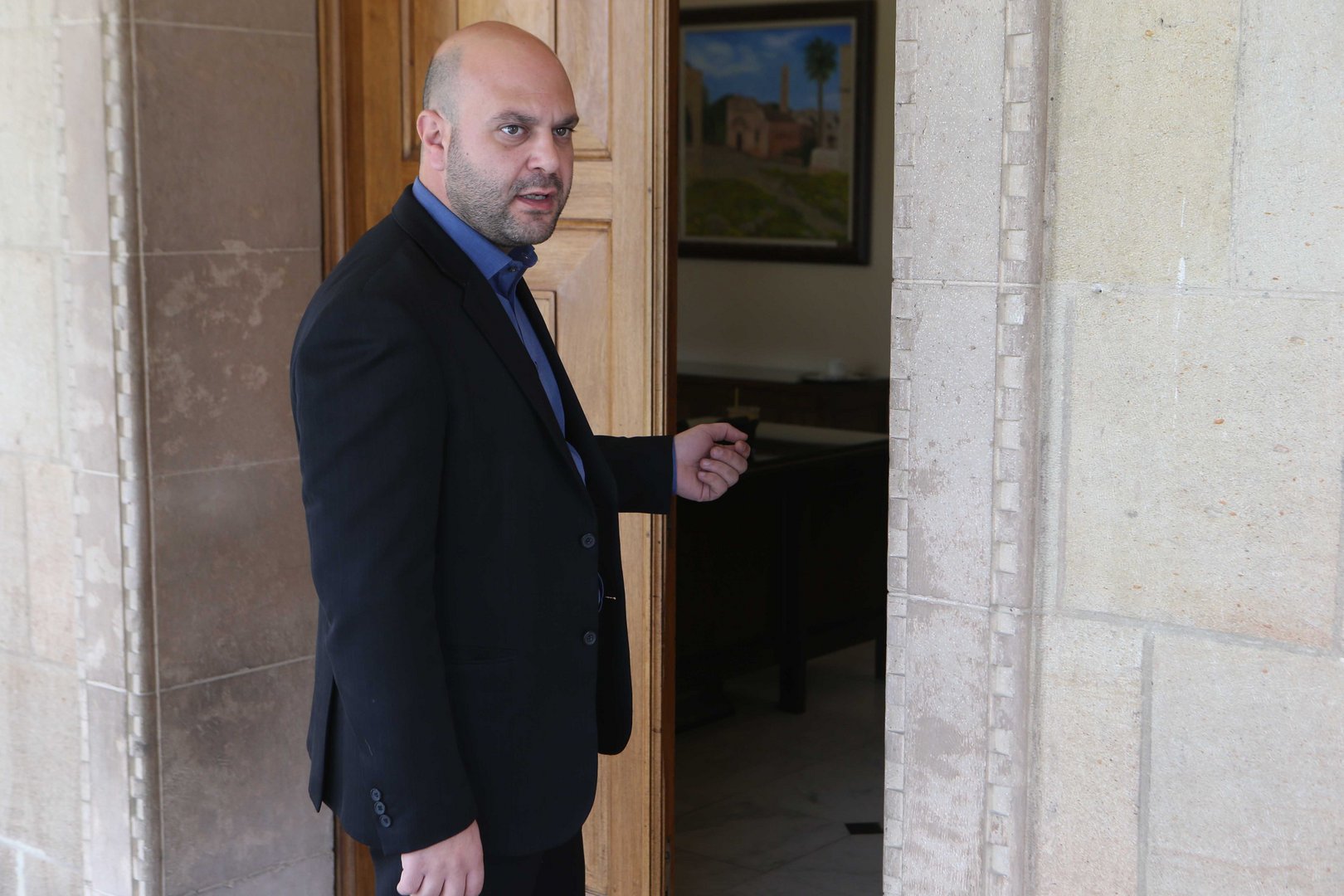
Greek Cypriot chief negotiator Menelaos Menelaou on Sunday said that the “Turkish side” has been “slowing down developments” on the Cyprus problem, and in particular, with regard to the convening of an enlarged meeting.
He told newspaper Haravgi that United Nations Secretary-General Antonio Guterres “has stated that he will go ahead and convene an enlarged meeting”, but that “I recall that the UN’s goal was to hold the enlarged meeting last November” and that “then, the goal was set to hold it in late July or in early August”.
“All this time, we have been faced with an approach of slowing down developments from the Turkish side. We hope that further steps and the convening of an enlarged meeting will not face the same obstacle,” he said.
Nonetheless, he said that Guterres’ visit to the island last month left a “very positive mark”, and that his “reference to convergences” during his visit is “very clear on two crucial issues”.
“Firstly, [it is clear that] the basis of a solution is the federal framework. One state. Secondly, that everything which has been achieved in the past must be preserved and a new effort must focus on the remaining distance,” he said.
Asked whether all sides now agree on the federal framework, he said that the Greek Cypriot side is “committed to the basis of a solution and to preserving the convergences and the six points of the Guterres framework”, which covered security and guarantees, troops, territory, property, Turkish nationals in Cyprus, and power-sharing during negotiations in 2017.
“As for the Turkish side, we hear the public statements from Ankara which reiterate the demand for a ‘two-state’ solution. We follow the frequent meetings and statements between Turkish government officials and politicians from that part of the political spectrum in the Turkish Cypriot community which expresses this line,” he said.
In addition, he said, “we also do not overlook the fact that since the change in leadership in the Turkish Cypriot community, there has been no public reference by the new Turkish Cypriot leadership to a federal solution”.
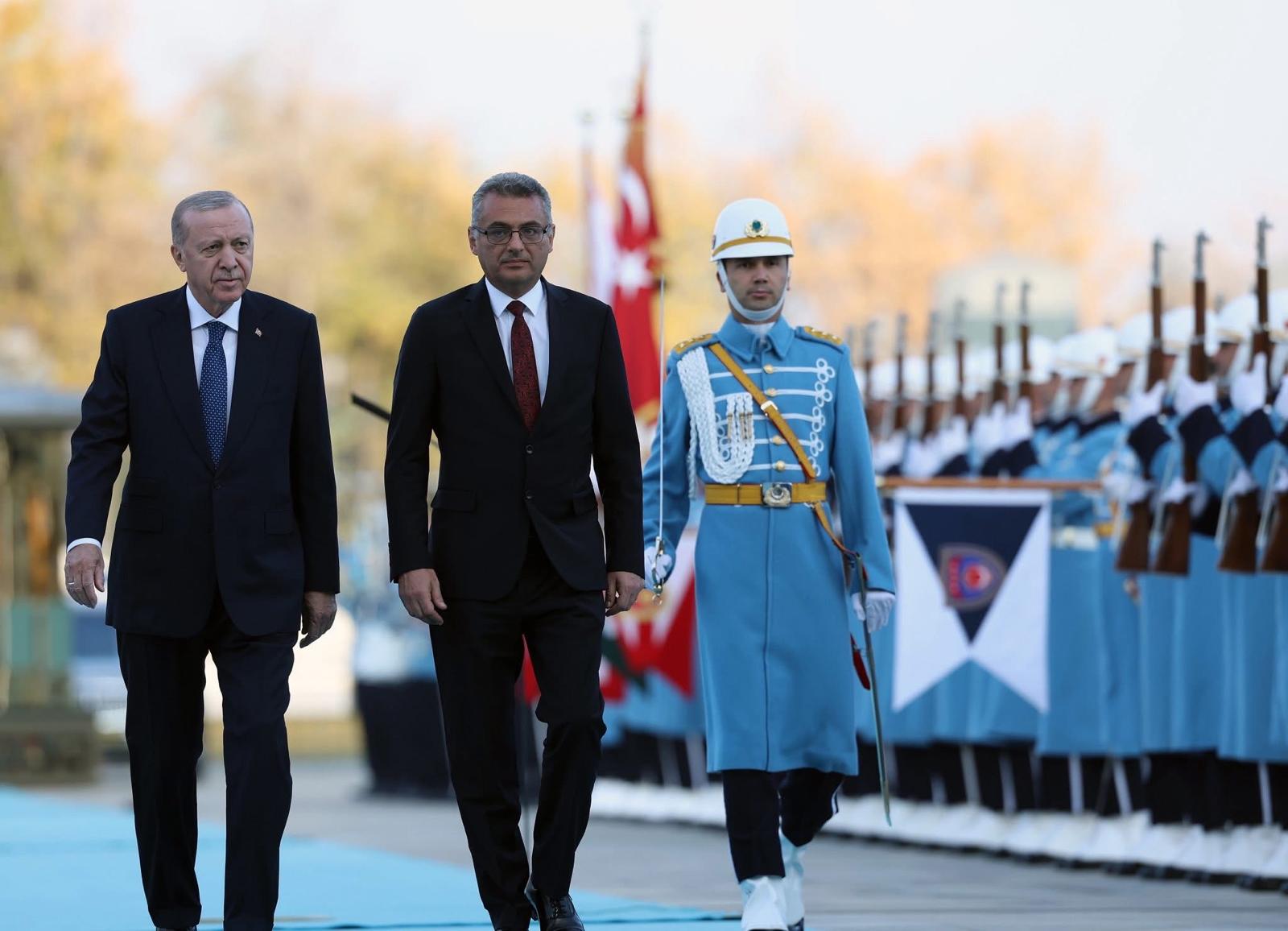
“As a matter of fact, we cannot assess the position of the Turkish Cypriot side independently of the line which Turkey proclaims. Therefore, there is an issue here regarding the Turkish side’s stance which must be clarified,” he said.
Then asked whether Turkish Cypriot leader Tufan Erhurman’s adherence to the UN resolutions on Cyprus is not “clear”, he said that “there are some facts which cannot be ignored”.
“Erhurman made a shift last December with the reference to political equality in accordance with the UN resolutions, which we recognised, and we said that political equality is inextricably linked to the federal framework, hence one state, which is something different from sovereign equality, which is two states,” he said.
On this point, he said that “recognising the limitations due to Turkey’s stance, we gave Erhurman the necessary credit”, but stressed at the same time that “we cannot ignore the prolonged absence of a public reference to a federal solution, nor the approach of slowing down the effort”.
He said that one such example is that “an effort is being made on crossing points” and that “there is a reasonable compromise proposal from the UN” which the Greek Cypriot side accepted but that “the Turkish Cypriot side did not”.
“Then, we hear reports from the Turkish Cypriot side about progress on confidence-building measures as a condition for the effort to move forward and onto the substance,” he added.
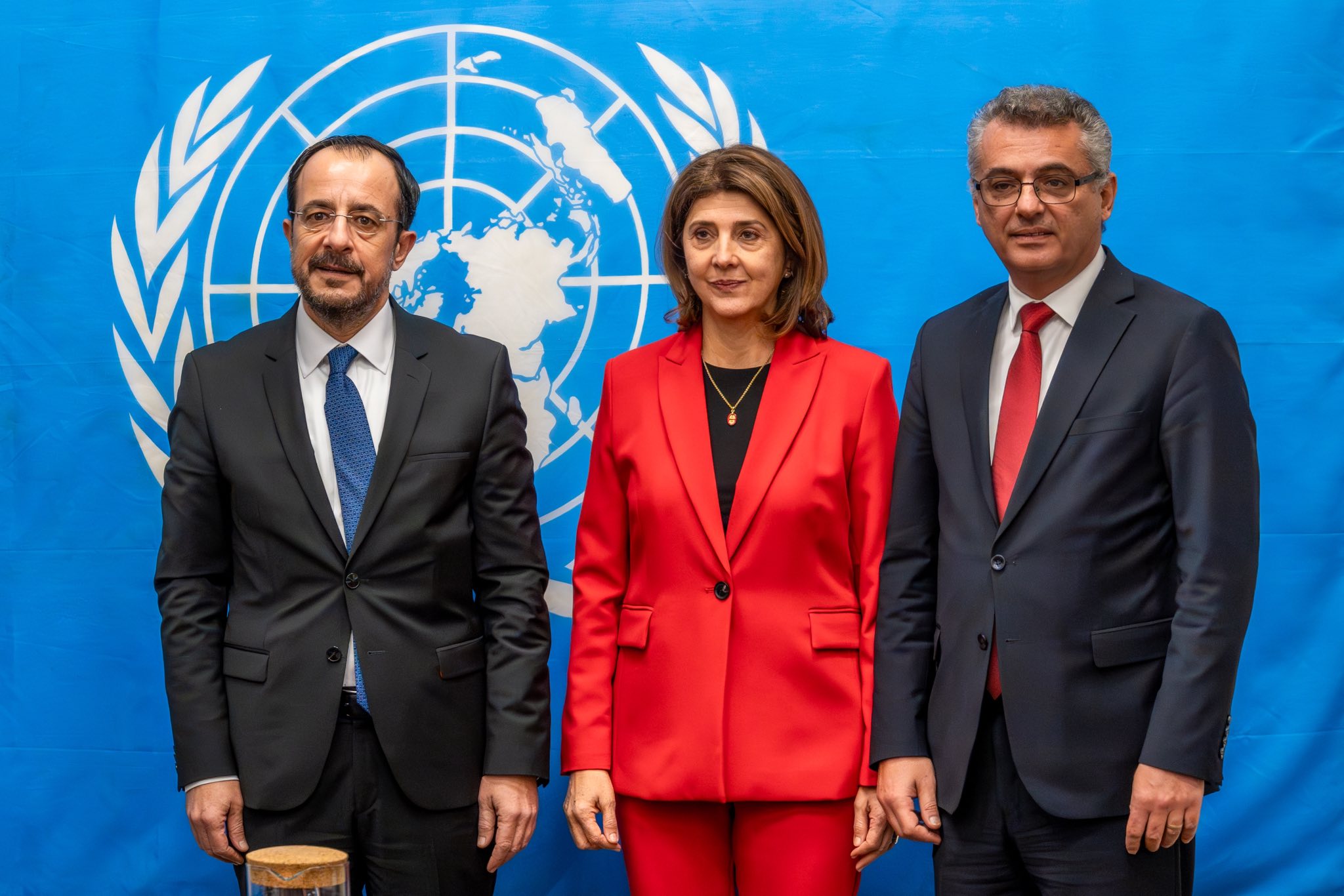
Talks on the opening of crossing points remain deadlocked over the question of whether to break up the package of four locations upon which the sides had agreed last year.
On this matter, the Greek Cypriot side proposed removing Louroujina, northwest of Larnaca, from the package of four, instead opening crossing points near Athienou, and in the eastern Nicosia suburbs of Mia Milia and Aglandjia, and the Turkish Cypriot side flatly refused to entertain any discussions which did not include all four agreed upon locations.
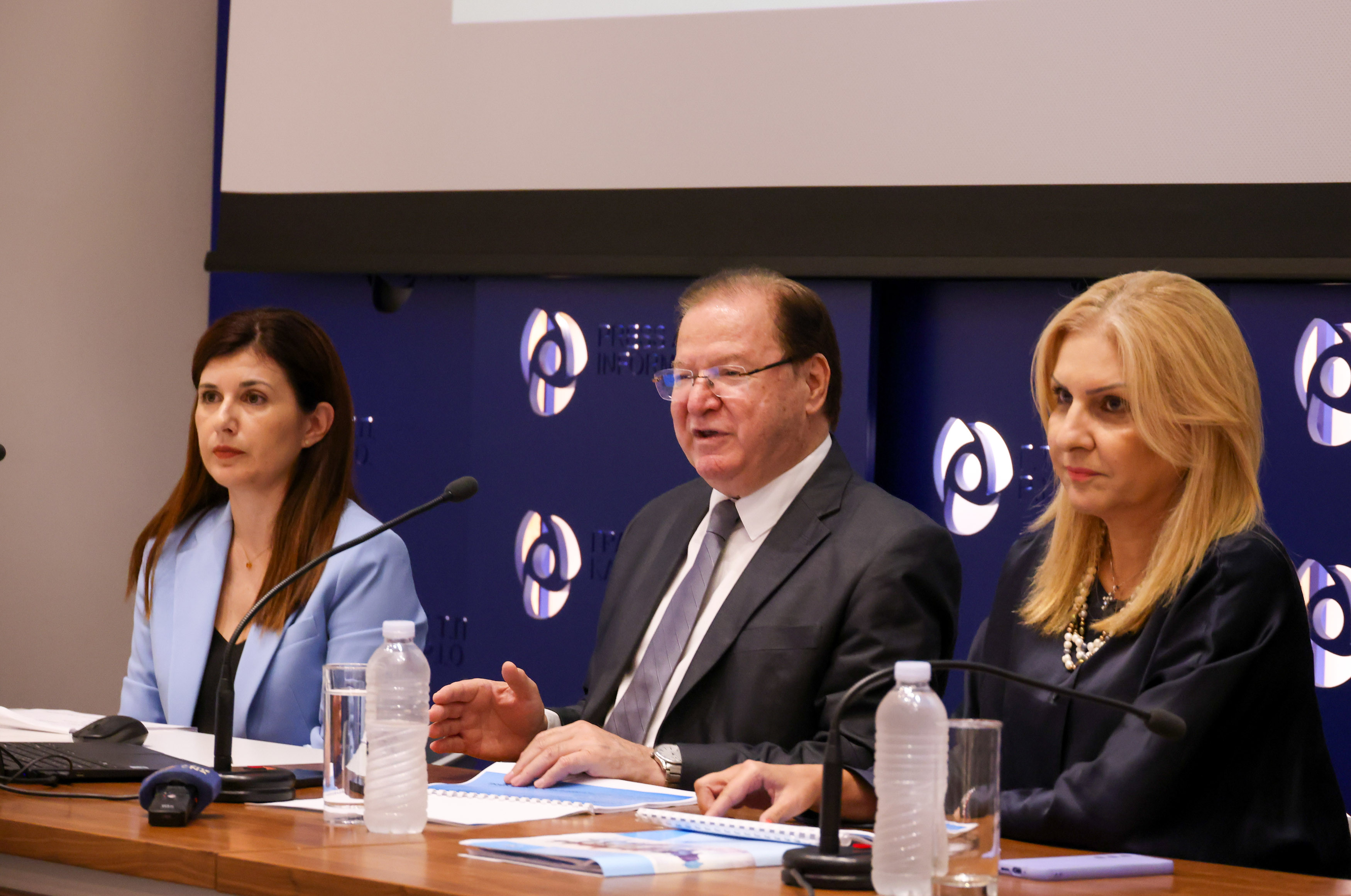
Confidence-building measures were on Sunday described by UN envoy Maria Angela Holguin as an “indispensable condition” for an enlarged meeting on the Cyprus problem to be convened.
Menelaou was on Sunday asked about the matter of convergences reached during previous rounds of negotiations, and said that “our position is that everything which was achieved up until the end of the conference in Crans-Montana should be preserved”, and that “the effort should be focused on what remains”.
“We hope that this will be the approach from the Turkish side as well,” he added.
Asked about the compiling of a document of convergences by the UN, he said that the document, once finished, will “be given to all those involved, to the two sides in Cyprus for the internal aspects, and to the guarantor powers for the external aspects”.
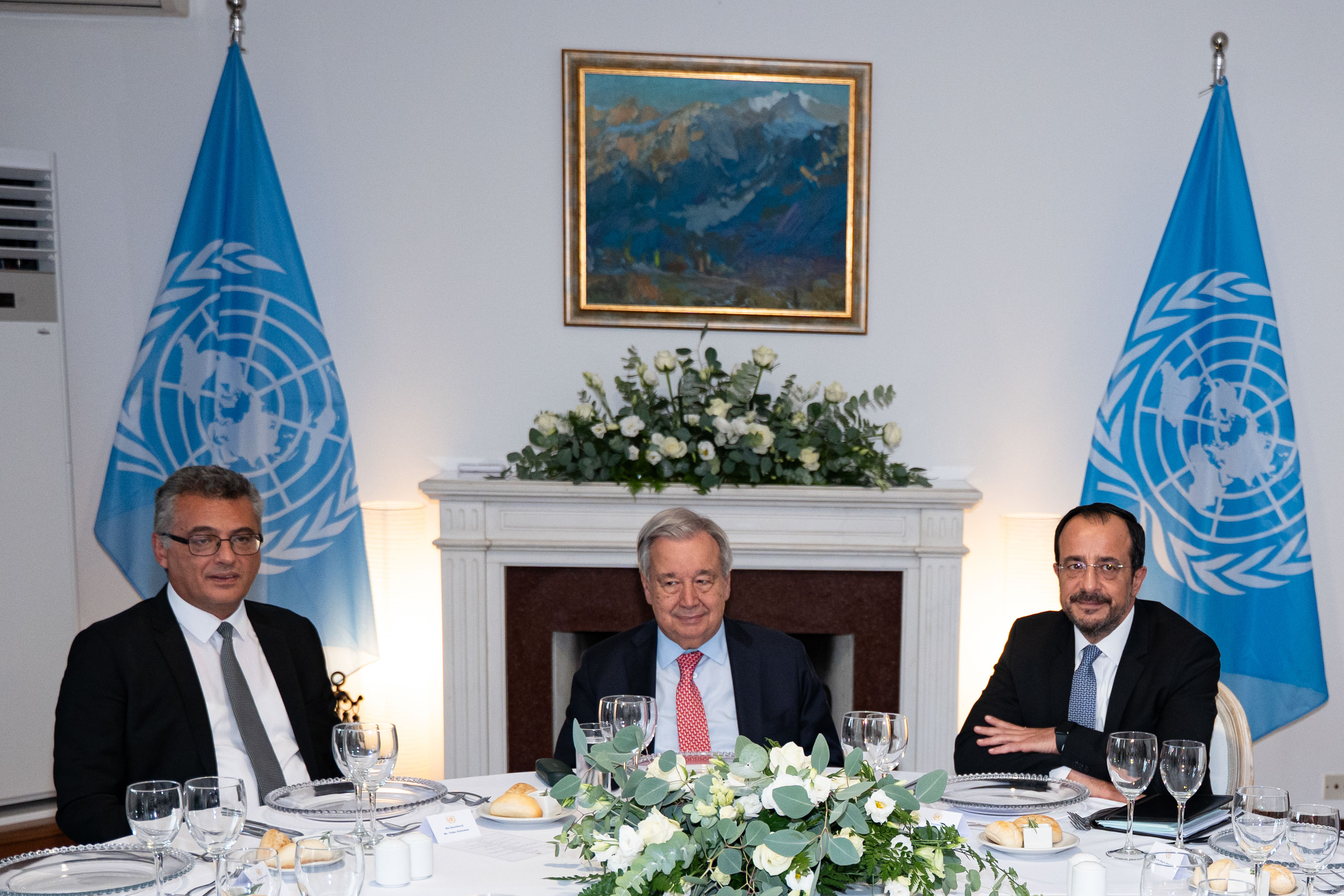
Once that document is circulated, he said, “we will proceed to convene an enlarged meeting, at which it will be decided to resume talks to achieve a comprehensive solution”.
Then asked about opposition to a federal solution inside the Greek Cypriot community, which was led by Elam leader Christos Christou at last week’s National Council meeting, he said that “every point of view is respected”.
“My own view is that, following the tragic events of 1974, President Makarios, assessing the state of affairs which had been formed in a rational and balanced manner, rightly proceeded with the agreement for a federal solution to the Cyprus problem, just as, rightly, all presidents and all governments to date have remained consistent in this commitment,” he said.
He then said that it was this “consistency” which “contributed to the achievement of extremely important goals”, including accession to the European Union in 2004.
“The accession of the Republic of Cyprus to the EU became possible, even if the outcome of the effort at the time to resolve the Cyprus problem was not successful, because, among other things, it was understood that to achieve this goal, we had to consistently pursue a solution to the Cyprus problem within the agreed federal framework,” he said.


Click here to change your cookie preferences