
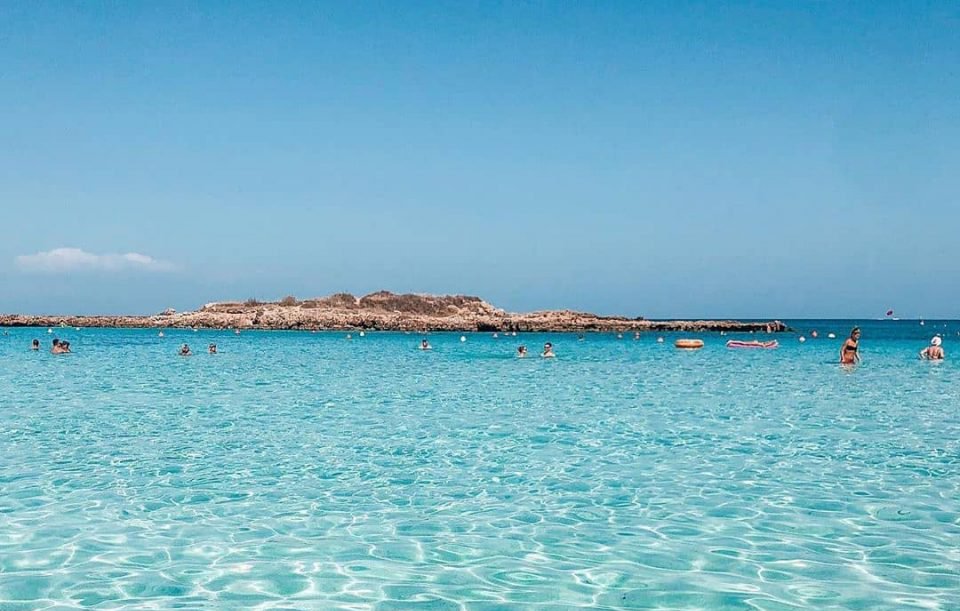
A quote of €2,500 for four days in Protaras is pushing some Cypriot families to look beyond the island, as the August 15 holiday rush leaves fewer rooms available and sends prices higher.
“They asked us for €2,500 for four days in Protaras. With this money, I prefer to take the children and go to Greece”, a Cypriot said to Politis.
It is a complaint increasingly heard among families still trying to organise their summer break, turning the familiar choice between Cyprus and abroad into a calculation of airfares, hotel nights and what remains to be spent after arrival.
Greece remains the clear favourite. The latest official figures show that 35.3 per cent of Cyprus residents returning from an overseas trip in June had travelled from Greece, far ahead of the United Kingdom at 8.3 per cent, Italy at 6.3 per cent and Poland at 3.5 per cent. Overall, overseas trips by residents increased by 7.4 per cent from a year earlier.
“We cannot say that the market is bad. We are at about the same levels as last year,” Antonis Orthodoxou, spokesman for the Association of Cyprus Travel Agents (ACTA), said.
What has changed, he explained, is where people are going. More distant holidays are being postponed, while Europe has gained ground because of cost considerations and the uncertainty created by the Middle East conflict.
Rhodes, Crete and Skiathos are attracting the strongest demand, helped by their direct air links with Cyprus. “Where there are direct flights, we see greater demand,” Orthodoxos noted.
Advertised Greek packages show five-day breaks starting at €469 for Rhodes, €499 for Crete and €539 for Skiathos. Starting prices stand at €569 for Parga, €589 for Lefkada, €629 for Sivota and €649 for Preveza, although the final amount varies considerably according to the departure date, hotel and room type.
Poland and Romania are also drawing more interest, alongside established choices such as Paris and Italy. Current European packages advertise five days in Warsaw from €755, an eight-day tour of Romania from €995 and five days in Paris from €1,145.
According to Orthodoxou, package prices “are a little more expensive than last year but not too much”, with the final bill depending heavily on how early the booking was made.
Cypriots visiting Greek islands generally choose bed-and-breakfast accommodation rather than all-inclusive resorts. The preference allows them to move between beaches, restaurants and villages instead of spending most of the holiday inside a hotel.
The comparison with Cyprus, however, is not straightforward. “This year, from the English market, we had losses, as a result of which several offers are coming out from hotels, especially in the areas of free Famagusta. I don’t think it’s generally true that Cyprus is more expensive than abroad,” Orthodoxou said.
Nevertheless, a platform check for a family of four seeking four nights in Protaras around August 15 found only 24 available properties, with about 97 per cent already unavailable. Apartments started at roughly €654, while hotels offering breakfast ranged from around €1,500 to €2,600. All-inclusive stays began above €1,900 and reached €5,879.
Paphos offered a wider price range, with apartments starting at approximately €482 to €593 and hotels with breakfast generally costing between €900 and €1,400. Higher-category and all-inclusive properties ranged from about €1,600 to more than €3,100, while some luxury seaside hotels exceeded €3,600.
The figures are a snapshot rather than a like-for-like comparison. Package holidays abroad are normally priced per person, while online hotel searches often display the total room cost. Airfares, transfers, meals and the standard of accommodation can also change the calculation substantially.
Meanwhile, the free Famagusta district is still recovering from a difficult start to the season. Panayiotis Constantinou, president of Famagusta Hoteliers Association (Pasyxe), put average July hotel occupancy at around 80 per cent, compared with 90 to 95 per cent during the same period last year.
“March and April were disastrous for our province. May was somewhat better but still reduced, while in June the reduction was around 12 per cent to 15 per cent,” he said.
The wider picture has improved. Tourist arrivals across Cyprus fell by only 1.7 per cent in June, to 489,965, after declines of 27.6 per cent in April and 4.9 per cent in May. However, arrivals during the first half of 2026 remained 10.1 per cent below last year, according to the Statistical Service (Cystat|).
Britain continues to provide the largest share of visitors, accounting for 33 per cent of June arrivals, followed by Israel and Poland. In Famagusta, Konstantinou said the British market was recording a small decline but remained the region’s main support, while Poland had proved comparatively stable.
Hotels are now looking to domestic demand to strengthen August bookings. “I think that August will be quite good. We have a lot of bookings from our compatriots and that is very positive,” Constantinou said, adding that several properties had introduced offers aimed at Cyprus residents.
However, anyone still hoping for a dramatic late deal around the public holiday may have waited too long.
“For August 15, there is essentially no last minute. Most popular destinations are already full,” Orthodoxou concluded.





Click here to change your cookie preferences