
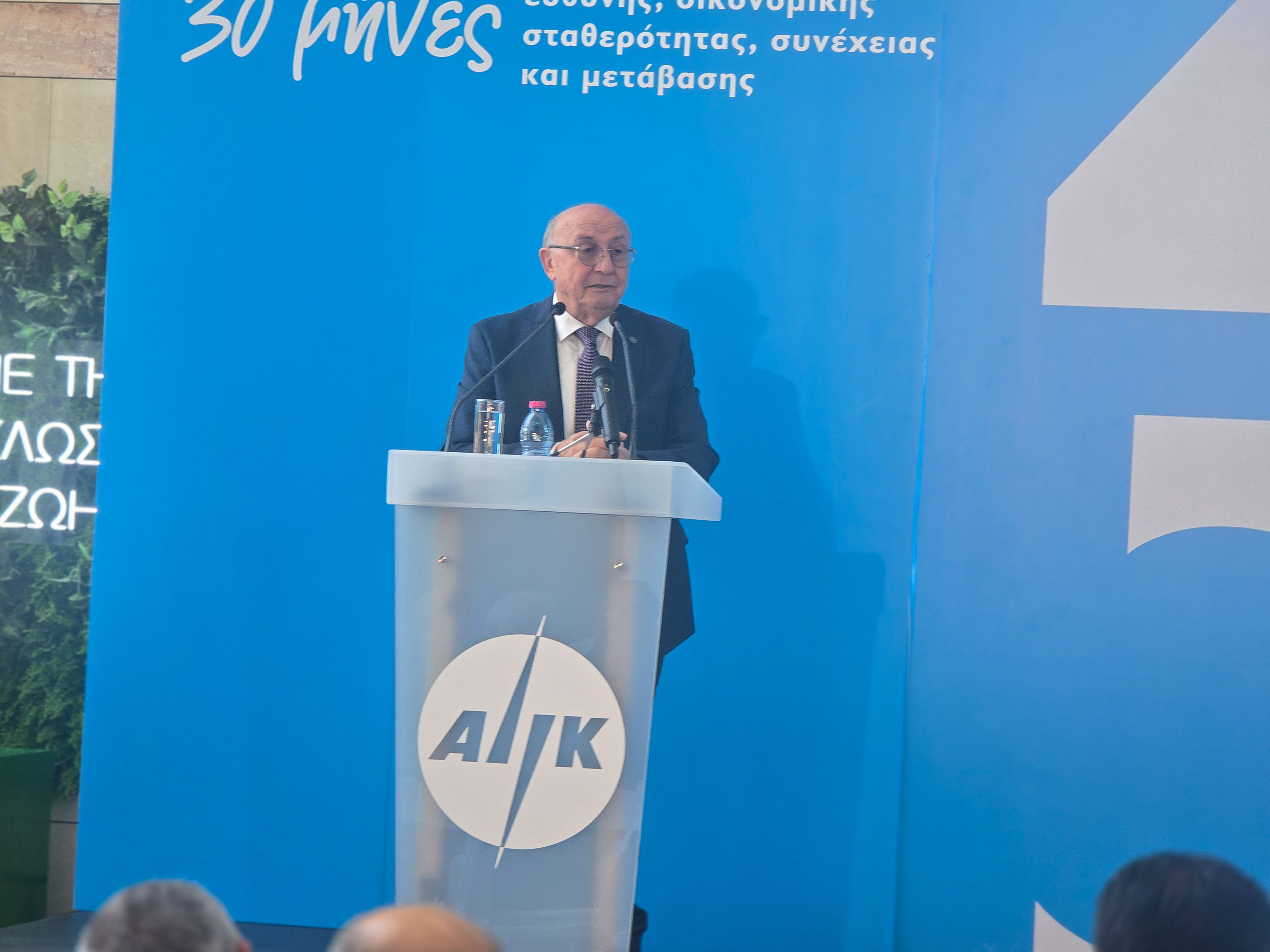
The Electricity Authority of Cyprus (EAC) will remain central to the country’s energy transition as the government pushes ahead with investments in electricity networks, energy storage and conventional generation to safeguard security of supply, Energy Minister Michael Damianos said on Thursday.
Addressing the EAC’s presentation of its 30-month review, Damianos described the EAC as a strategic pillar of Cyprus’ energy policy, saying the transition to a cleaner electricity system depended not only on expanding renewable energy production but on maintaining a reliable, resilient and affordable electricity network.
“The common denominator in all our efforts is affordable electricity for consumers and the safe operation of the electricity system,” he said.
He said the energy transition required “cohesion, national resilience and professionals serving the public interest”, adding that the authority’s contribution remained critical both to achieving Cyprus’ national energy targets and safeguarding the reliability of electricity supply.
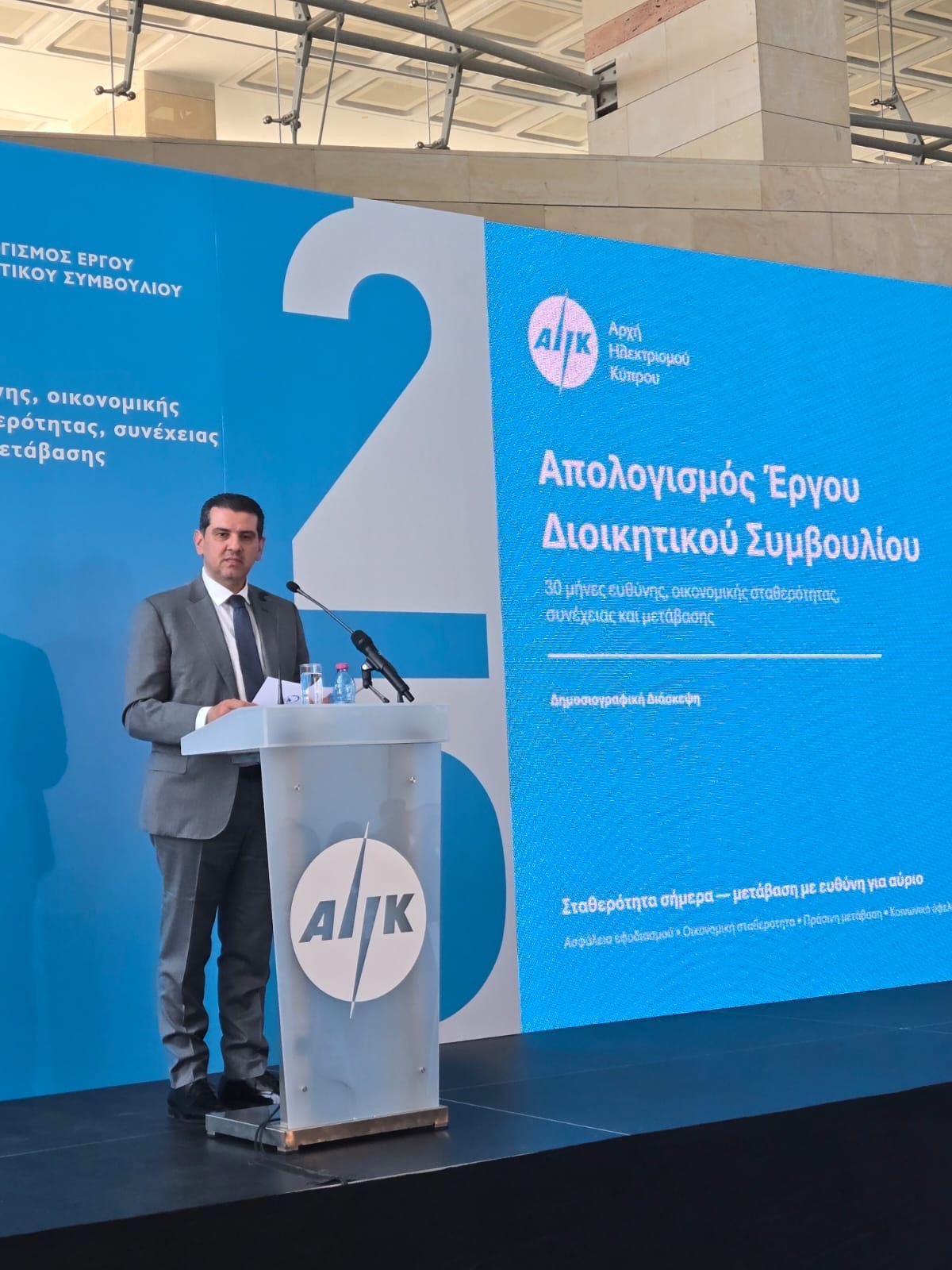
EAC general manager Adonis Yiasemides said the organisation’s mission extended beyond commercial performance, describing electricity as a public good rather than simply an economic commodity.
“EAC will continue to serve society with responsibility, technical expertise and financial prudence, fully recognising that energy is a prerequisite for security, development, social cohesion and the country’s future prospects,” he said.
Yiasemides paid tribute to the authority’s employees, highlighting their response during the devastating Limassol mountain fires last summer, when more than 100 staff worked continuously for 33 days to restore electricity supplies, rebuilding over 100 kilometres of damaged network and replacing around 1,400 electricity poles.
He said the experience had strengthened the authority’s emergency preparedness through additional investment in drones, specialised equipment and wildfire response capabilities.
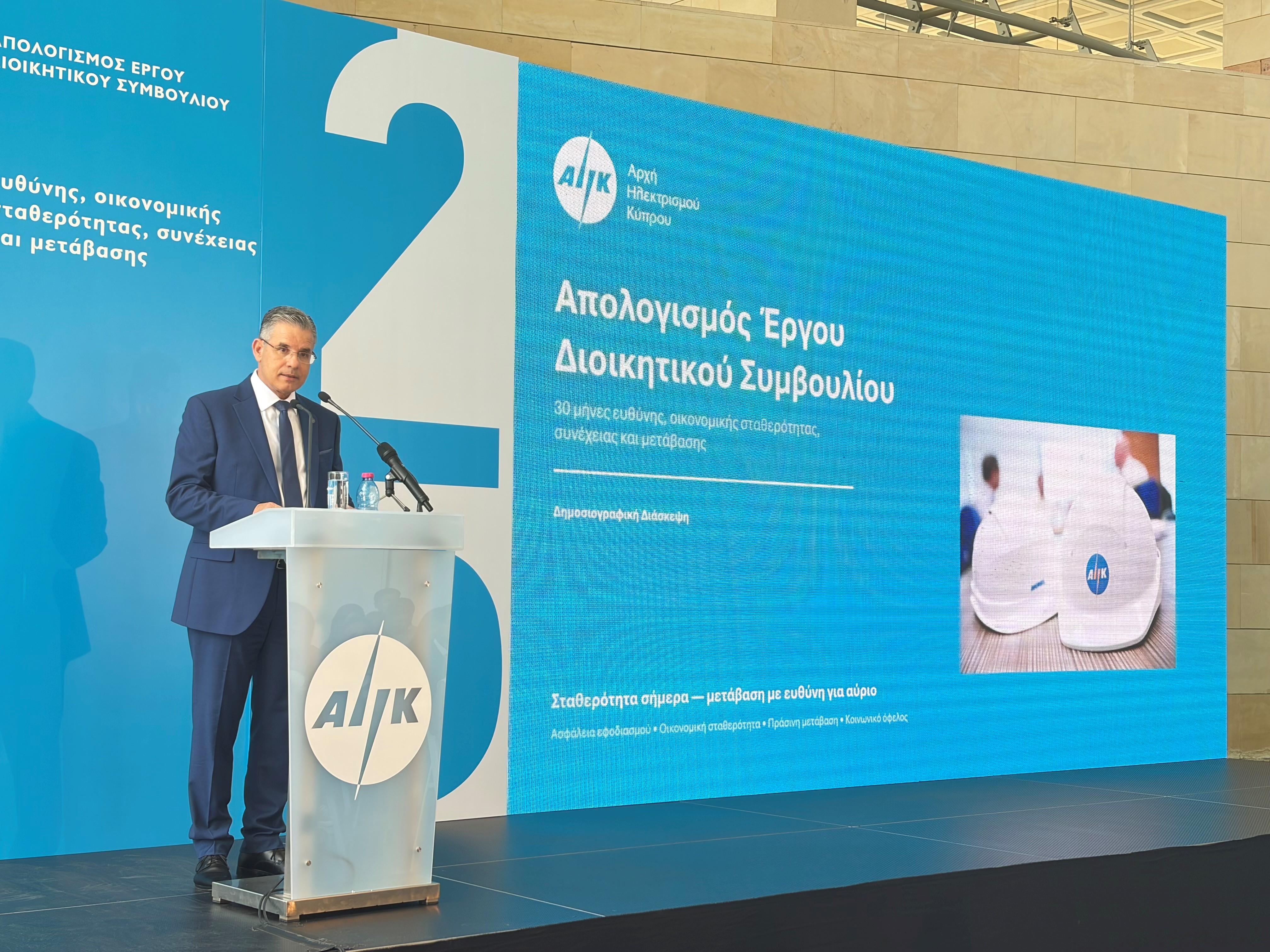
Presenting the report, chairman George Petrou said the authority’s 30-month term had coincided with one of the most demanding periods for Cyprus’ electricity sector, marked by high energy prices, increasing renewable energy penetration, growing investment needs and the introduction of the competitive electricity market.
“EAC is not an ordinary commercial organisation,” he said. “It is an organisation of critical infrastructure and public utility.”
Petrou argued that the authority should be judged not only by its financial results but by its ability to maintain reliable electricity supply while funding the infrastructure needed for the country’s long-term energy transition.
During 2025, the Vasiliko power station produced around 66 per cent of EAC’s electricity generation, while Dhekelia accounted for 32 per cent and Moni around one per cent, illustrating the continued importance of conventional generation while renewable energy capacity expands.
According to the authority’s audited 2025 accounts, EAC recorded revenues of approximately €1.12 billion, expenditure of €1.092 billion, operating profit of €28.7 million and net profit of €12.3 million.
He also highlighted the securing of €215 million in European Investment Bank financing for transmission and distribution projects, describing it as a vote of confidence in the organisation’s financial stability.
Among the authority’s major achievements during the period, Petrou cited the continued expansion of renewable energy, with nearly 97,600 renewable energy systems connected to the distribution network by the end of 2025, representing more than 1,068MW of installed capacity. A further 1,000MW is expected to be connected by 2030.
He also pointed to the completion of photovoltaic installations at 405 schools, the nationwide replacement of street lighting with LED technology, expansion of electric vehicle charging infrastructure and broader digitalisation of the electricity network.
Significant investment has also been directed towards modernising the electricity network.
Between 2024 and 2026, he said, EAC advanced major transmission and distribution upgrades, while by the end of 2025 around 97,600 renewable energy systems, representing more than 1,068MW, had been connected to the distribution network.
The authority has also installed 390,000 smart meters, with a target of 500,000 by June 2027. The project is supported through Cyprus’ Recovery and Resilience Plan, with certified funding of €29.6 million, of which €13.7 million has already been received.
Petrou acknowledged that renewable energy curtailments had become one of the sector’s most pressing challenges, arguing that solving the problem required investment in storage, smarter networks and market reforms rather than limiting renewable energy production.
“The major challenge from now on is to transform green generation into green consumption,” he said.
Petrou also highlighted EAC’s social role, noting that the number of households benefiting from the authority’s special domestic tariff for vulnerable consumers increased from 18 to 20 eligibility categories, with almost 29,900 customers enrolled by the end of February 2026.
He added that no single board could complete Cyprus’ energy transition within one term of office.
Looking ahead, Damianos said modernising the electricity system would remain one of the government’s main priorities.
He highlighted continued investment in transmission and distribution infrastructure, the rollout of smart electricity meters and the development of large-scale battery storage, which he said would be essential to reducing renewable energy curtailments and making better use of solar generation.
According to current planning, Cyprus will require around 600MW of electricity storage by 2030 to support the next phase of the energy transition.
The minister also referred to the completion of Combined Cycle Unit No. 6 at Vasiliko and upgrades to existing generating units, which are being prepared to operate on natural gas once fuel becomes available, while stressing the importance of maintaining conventional generation during the transition.
He said the authority also continued to play an important social role through special electricity tariffs for vulnerable consumers and energy efficiency schemes supporting households and businesses.
“The energy transition cannot succeed without infrastructure, national resilience and people who serve the public interest with professionalism,” Damianos said.
Asked by the Cyprus Mail during the press conference whether there were any short-term solutions to the recent power cuts, given that the ageing generating units will not be replaced until 2028, hence there will be further power cuts, EAC chairman George Petrou said the first improvements would come with the rollout of battery storage.
“As you know, the first batch of batteries should be operational at the beginning of 2027,” he said, adding that a second battery storage project at Dhekelia is “expected to come online in September or October 2028”.
Petrou said that as far as the wind turbines are concerned, three new wind turbines have been ordered for Dhekelia, despite what he described as the difficulties and high cost involved, which would also strengthen the system. The first turbine is expected to be ready for shipment in early 2028, the second in mid-2028 and the third in early 2029. “It is a series of developments that will help us,” he said.





Click here to change your cookie preferences