
Cyprus tourism industry targets recovery after difficult spring
Cyprus tourism stakeholders moved to strengthen cooperation with local authorities earlier this week as the sector continues to face a more challenging summer season.
Specifically, the Paphos Municipality met with the Cyprus Hoteliers Association (Pasyxe) on Monday, reaffirming their partnership while new data showed arrivals and hotel occupancy remained below last year’s record levels.
Indeed, acting mayor of Paphos Angelos Onisiforou and newly elected Pasyxe president Yiannos Pantazis confirmed their commitment to closer cooperation during a meeting at Paphos Town Hall.
The meeting focused on joint efforts to support tourism development, improve services and strengthen Paphos’ tourism offering, according to a statement from the municipality.
Onisiforou congratulated Pantazis on his election as president of Pasyxe and highlighted the long-standing relationship between the municipality and the hotel sector.
“The sector contributes substantially to efforts to upgrade the city and strengthen its tourism product,” Onisiforou said.
Pantazis said cooperation with Paphos Municipality would continue and become even stronger, with both sides working together to address issues affecting tourism growth and service quality.
“We will continue and further strengthen our cooperation, with the aim of jointly addressing issues that affect tourism development and the quality of services provided,” Pantazis said.
The discussions also covered issues of common interest, with both sides expressing their intention to coordinate actions benefiting Paphos, residents and the wider tourism industry.
The renewed cooperation comes as Cyprus’ tourism sector navigates a more difficult year following record-breaking performance in 2025.
Hotel occupancy across Cyprus is averaging around 85 per cent during July and August, according to Pasyxe director-general Christos Angelides, around 10 to 15 per cent below last year’s levels.
August occupancy reached approximately 97 per cent in 2025, but higher energy costs, expensive air travel and continued regional instability have created additional pressure this year.
“Bookings have improved in recent weeks, but we remain behind last year’s performance and uncertainty continues to affect the autumn season,” Angelides said.
He added that demand had improved during long weekends, particularly through last-minute bookings from neighbouring countries and the domestic market.
“There has been stronger demand over long weekends, particularly through last-minute bookings from neighbouring countries and the domestic market, which has helped improve the picture,” he said.
However, Angelides warned that rising energy costs linked to regional conflicts and persistently high airfares remained challenges for the industry.
“We remain optimistic and continue to work together as an industry, but these are issues we must keep in mind,” he said.
The hotel sector is now focusing on extending the tourism season beyond the traditional summer months.
“Our biggest hope is to build on last year’s performance during the November 2026 to April 2027 period. That is where we believe the difference can be made,” Angelides said.
Meanwhile, Association of Cyprus Travel and Tourist Agents (ACTTA) President Haris Papacharalambous said tourism performance remained below last year’s levels, although the decline had not been dramatic.
“We are behind compared with the corresponding months last year,” Papacharalambous said, adding that the Famagusta district had been affected more heavily than other areas.
He said most key tourism markets had recorded declines compared with 2025, with Israel being the main exception.
Arrivals from Israel increased by 170 per cent in June compared with June 2025, when travel was disrupted by the Israel-Iran conflict.
Papacharalambous said perceptions surrounding Cyprus’ proximity to regional conflicts had been among the biggest challenges facing the industry, particularly following the drone incident at the British Bases in March and the way it was portrayed by traditional and social media.
“The effect is visible the very next day,” he said, referring to renewed outbreaks of regional hostilities and their immediate impact on bookings.
He expects overnight stays across Cyprus to end the year around 12 to 14 per cent lower than last year’s record performance.
Official figures from the Cyprus Statistical Service (Cystat) showed tourist arrivals declined by 1.7 per cent in June 2026, with 489,965 visitors recorded compared with 498,527 in June 2025.
For the first six months of the year, arrivals totalled 1.66 million, down 10.1 per cent from 1.84 million during the same period last year.
The United Kingdom remained Cyprus’ largest tourism market in June, accounting for 33 per cent of arrivals with 161,913 visitors.
Israel followed with 80,343 visitors, representing 16.4 per cent of arrivals, while Poland accounted for 35,871 visitors or 7.3 per cent.
Sweden and Germany ranked next, with 26,884 and 21,587 visitors respectively.
Holiday travel remained the dominant reason for visiting Cyprus, accounting for 81.6 per cent of arrivals during June.
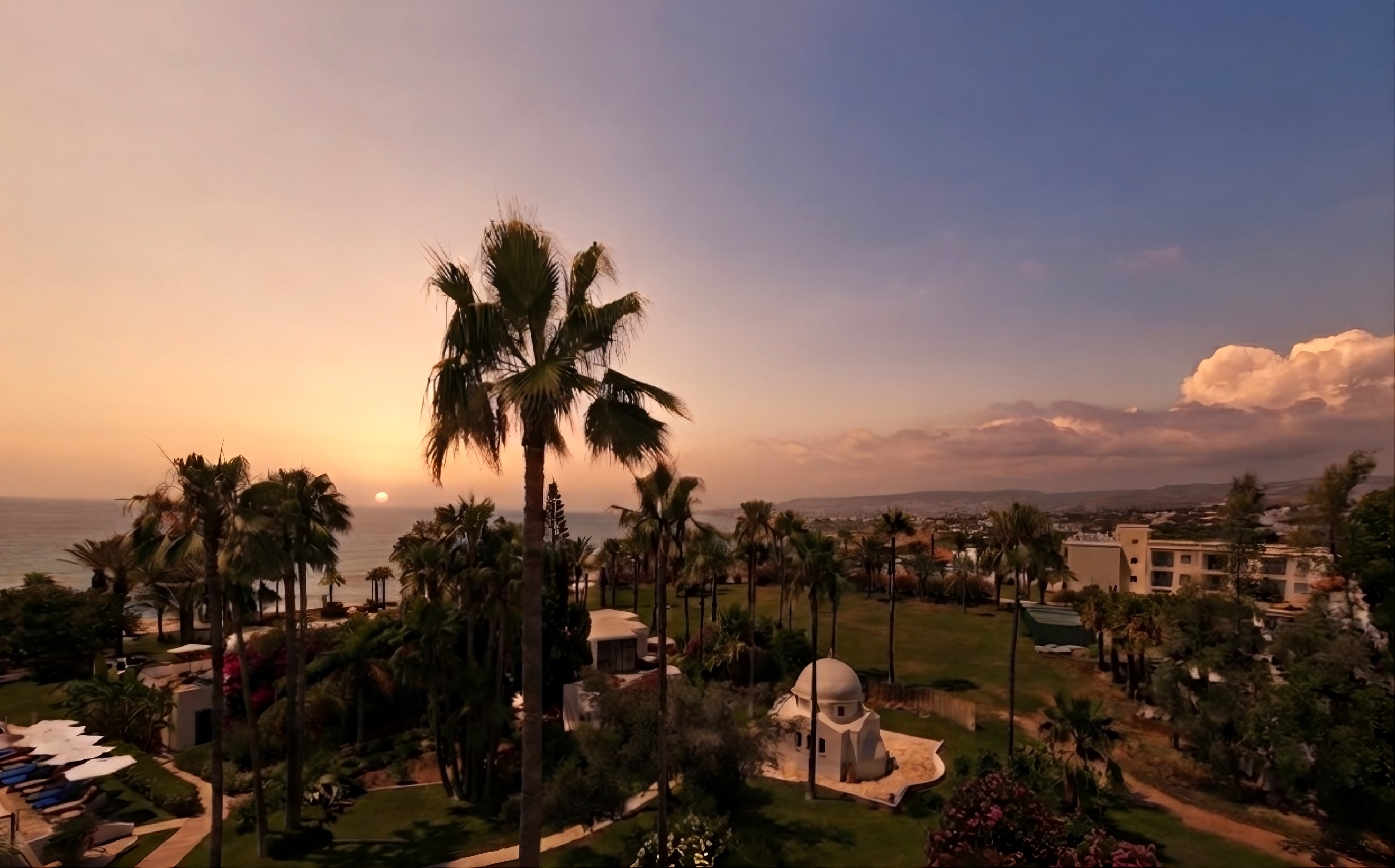
Despite the weaker market conditions, Paphos recently received international recognition after being named the world’s best destination for sunrise and sunset views in a ranking by European photo-printing company Cewe.
The ranking, produced in partnership with travel and wildlife photographer Bella Falk and highlighted by Travel + Leisure magazine, assessed destinations based on visual impact, variety, accessibility and photographic opportunities.
Cewe highlighted Paphos’ west-facing coastline and landscapes, including Petra tou Romiou, also known as Aphrodite’s Rock, Paphos Castle and the Edro III shipwreck.
“Paphos’ sunsets combine light, the sea, mythology, history and the destination’s distinctive landscape,” Paphos regional tourism board executive director Nasos Hadjigeorgiou said.
He added that the recognition would strengthen Paphos’ position in international markets.
The tourism board said the award supported its strategy of promoting experiences beyond the traditional sun-and-sea holiday model, also highlighting locations such as the Akamas Peninsula, Latchi, Polis and Pomos as areas offering strong sunrise and sunset experiences.




Click here to change your cookie preferences