
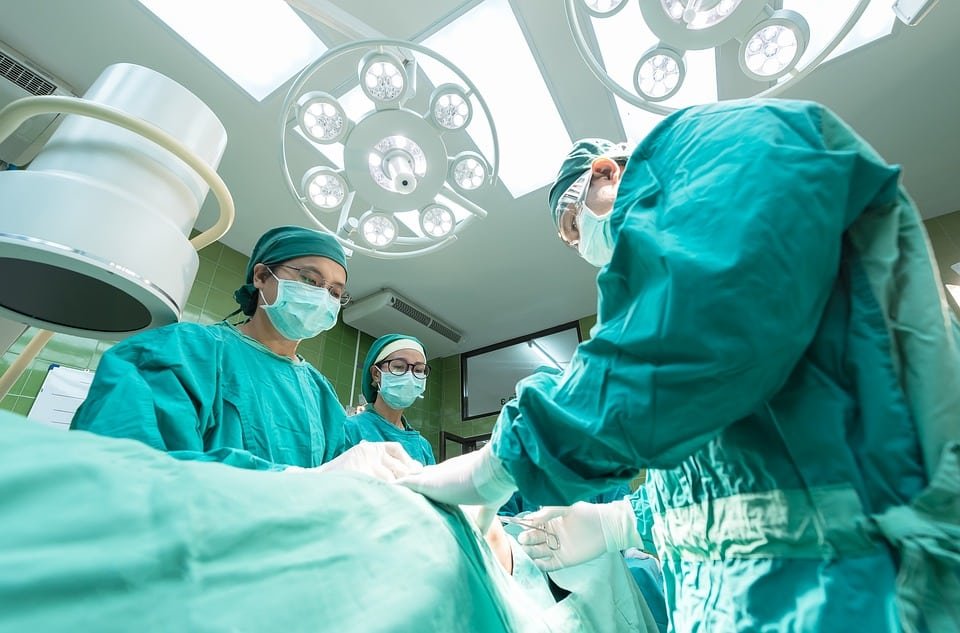
Five people received organ transplants following the donation from a young Cypriot woman who died in a traffic accident, as Cyprus worked with transplant teams in Greece and Israel.
Dr Andreas Soloukides, assistant director of nephrology and head of the transplant clinic at Nicosia general hospital, said the donor’s heart, lungs, liver and kidneys were successfully transplanted.
“These people received a second chance at life,” Soloukides said.
The two kidneys were transplanted into patients in Cyprus, while the lungs went to a patient in Greece, the liver was transplanted in Thessaloniki, and the heart was given to a 45-year-old woman in Israel.
Soloukides, who is also vice president of the transplant council, said the operation involved medical teams from four hospitals in Cyprus, Greece and Israel.
The cooperation allows organs that cannot be transplanted in Cyprus to be offered first to Greece.
If Greece cannot accept an organ, it is then offered to Israel.
If neither country has a suitable recipient, the organ is made available through a European transplant network.
Cyprus does not carry out heart, lung or liver transplants due to the country’s small population and limited number of donors.
“We have an excellent collaboration with both the National Transplant Organisation of Greece and Israel,” Soloukides said.
The cooperation also works in the other direction as Cypriot patients who need heart or lung transplants can be placed on waiting lists in Greece, while Cyprus also takes part in Israel’s kidney exchange programme.
The programme helps patients whose living donors are medically incompatible with them.
Donor and recipient pairs can be matched with other pairs so that kidneys can be exchanged.
Soloukides said seven Cypriot couples had received kidney transplants through the Israeli programme over the past three years.
Children needing kidney transplants are also treated through cooperation with medical teams in Greece and Israel.
“This cooperation is two-way,” Soloukides explained. “We give organs that are available in Cyprus so that they do not go to waste, while Cypriot patients who need transplants are placed on the waiting lists of these countries.”
Nineteen kidney transplants have been carried out in Cyprus so far this year, including two performed earlier this month, with more expected before the end of the year.
Cyprus usually has around ten deceased organ donors each year, a figure Soloukides said placed the country around the middle of the EU.
The council is seeking to increase the number of potential donors, while Cyprus already ranks highly in Europe for living kidney donation.
“All of this is done so that we can help as many people as possible through the loss of a fellow human being,” Soloukides said.





Click here to change your cookie preferences