
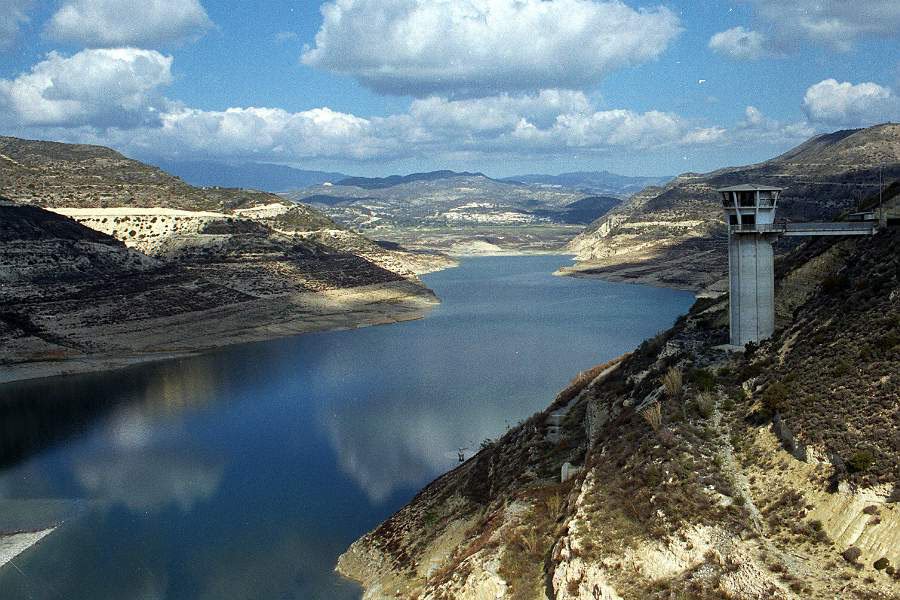
Reservoirs received around 140,000 cubic metres of water in just 24 hours, with about 118,000 cubic metres flowing into Kouris reservoir alone, the Water Development Department said on Wednesday.
Speaking to the Cyprus News Agency (CNA), executive engineer of the Water Development Department (WDD), Alexios Frangeskos, said that although beneficial for irrigation, the rains would not affect further water planning measures as the inflows remained below record-highs recorded in 2019.
According to Frangkeskos, the water stored in the reservoirs currently stood at 120 million cubic metres, making up for 40 per cent of its overall capacity.
“They [the rains] don’t affect the overall picture at all,” he said.
Frageskos explained that with some farms needing watering two to three times a week, farmers may have saved one or two, reducing their overall annual water needs but urged caution.
“We are not in the position we were in last year, but we remain very cautious,” he said.
He reiterated that the WDD’s water planning would not be affected by the recent rains, adding that approximately 300,000 to 350,000 cubic metres of water are required daily for the water supply of cities throughout Cyprus, with more than 75 per cent of water supply needs currently covered by desalination.
When asked about the possibility of making additional quantities of water available from the southern pipeline for the new potato planting season, he said that there does not seem to be any extra capacity for irrigation.
He explained that the WDD had changed the way they assessed the situation, now examining scenarios over a three-year period rather than for each year separately.
“Over a three-year period and based on the conservative scenarios we are examining, we do not have the sufficiency that would make us feel secure enough to be able to make additional quantities available,” he said, adding that more than 20 million cubic metres were utilised for the irrigation of all crops annually.
He cited the Limassol district as a typical example of the use of recycled water for irrigation, adding that new areas are being included in sewage systems and that the quantity of urban wastewater is increasing, which will make more recycled water available for irrigation.
At the same time, he said that with the implementation of the projects planned for the coming years, recycled water will be made available to new areas, citing the Anthoupolis area in eastern Nicosia as a recent example.





Click here to change your cookie preferences