
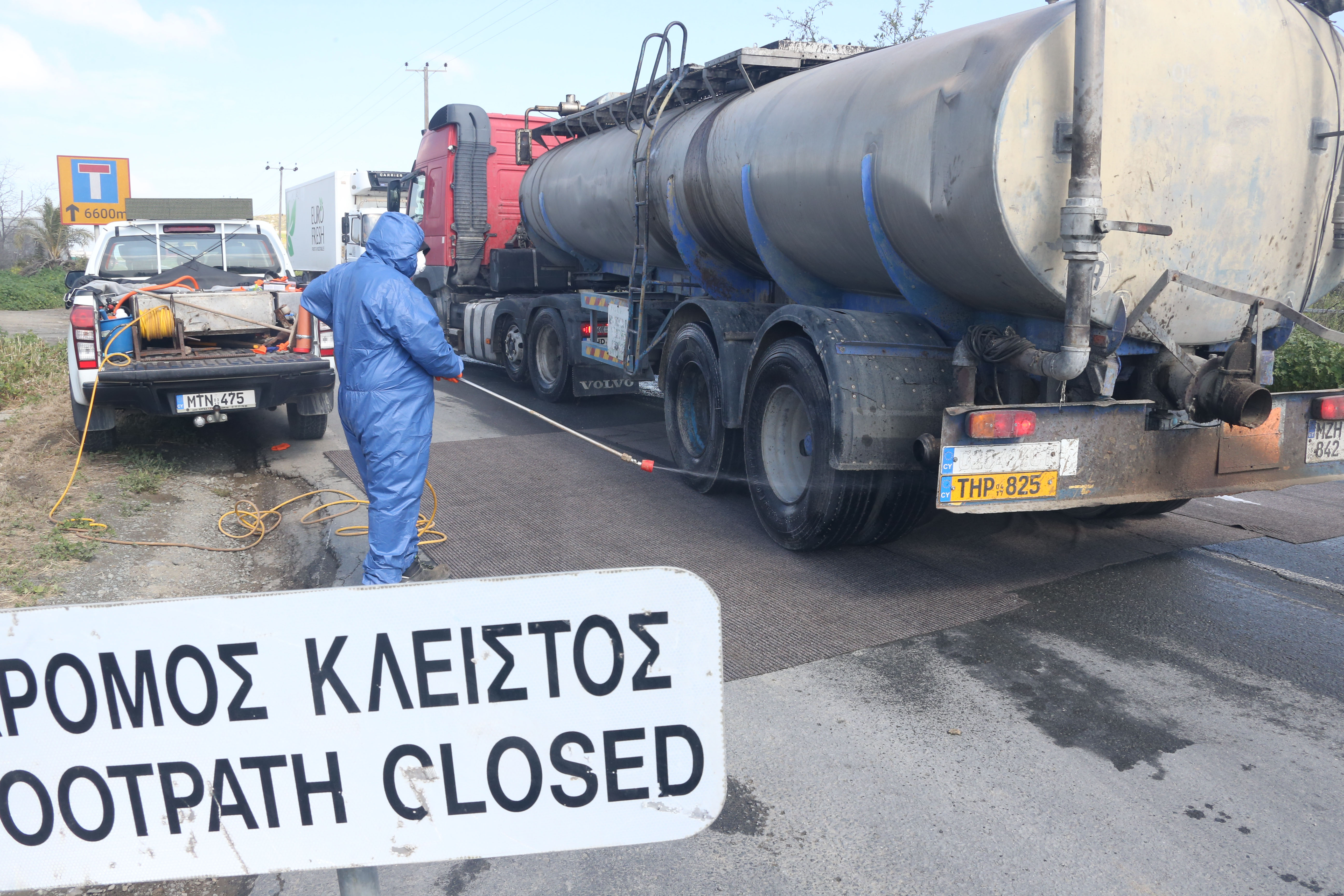
More than 100 livestock farms where animals were culled as a result of the foot-and-mouth disease outbreak have already received compensation, Agriculture Minister Christos Senekis said on Wednesday.
Speaking to CyBC, Senekis said only a handful of cases remained outstanding and expressed confidence that the compensation process would be completed within the coming days.
He said significant sums had been paid to affected farmers to allow them to gradually resume operations and compensate for a large part of the income lost as a result of the outbreak and the subsequent culling of animals.
Attention is now turning towards rebuilding the livestock sector and strengthening its ability to withstand future outbreaks.
Senekkis said the government was awaiting a study by the scientific committee headed by Stavros Malas on the restructuring of the sector, with the aim of allowing livestock farming to fully resume on a more resilient and sustainable basis.
Speaking to the Cyprus Mail, Dr Dimitris Epaminondas, a member of the epidemiological team and president of the Cyprus Veterinary Association, said one of the key issues being examined was the close proximity of livestock farms to one another, which creates weaknesses in biosecurity.
“The plan has to do with the fact that one unit is practically on top of another, and this does not provide biosecurity,” he said.
The way livestock units are located would therefore have to be reconsidered as part of the sector’s reconstruction, he added.
“We need to reorganise how they are positioned. There has to be a protective wall, meaning vaccinations and safety measures,” Epaminondas said.
He stressed that prevention would have to play a central role in the new approach, particularly as changing climatic conditions increase the risk of animal diseases and their potential economic consequences.
“Because of climate change, we are seeing increased activity, both in terms of risks to animals and the consequences for the economy. Prevention is therefore a very important part of this,” he said.
Epaminondas had previously confirmed that there had been no further cullings, with the number of culled animals remaining at approximately 80,000. FMD first broke out on the island in February 2026.





Click here to change your cookie preferences