
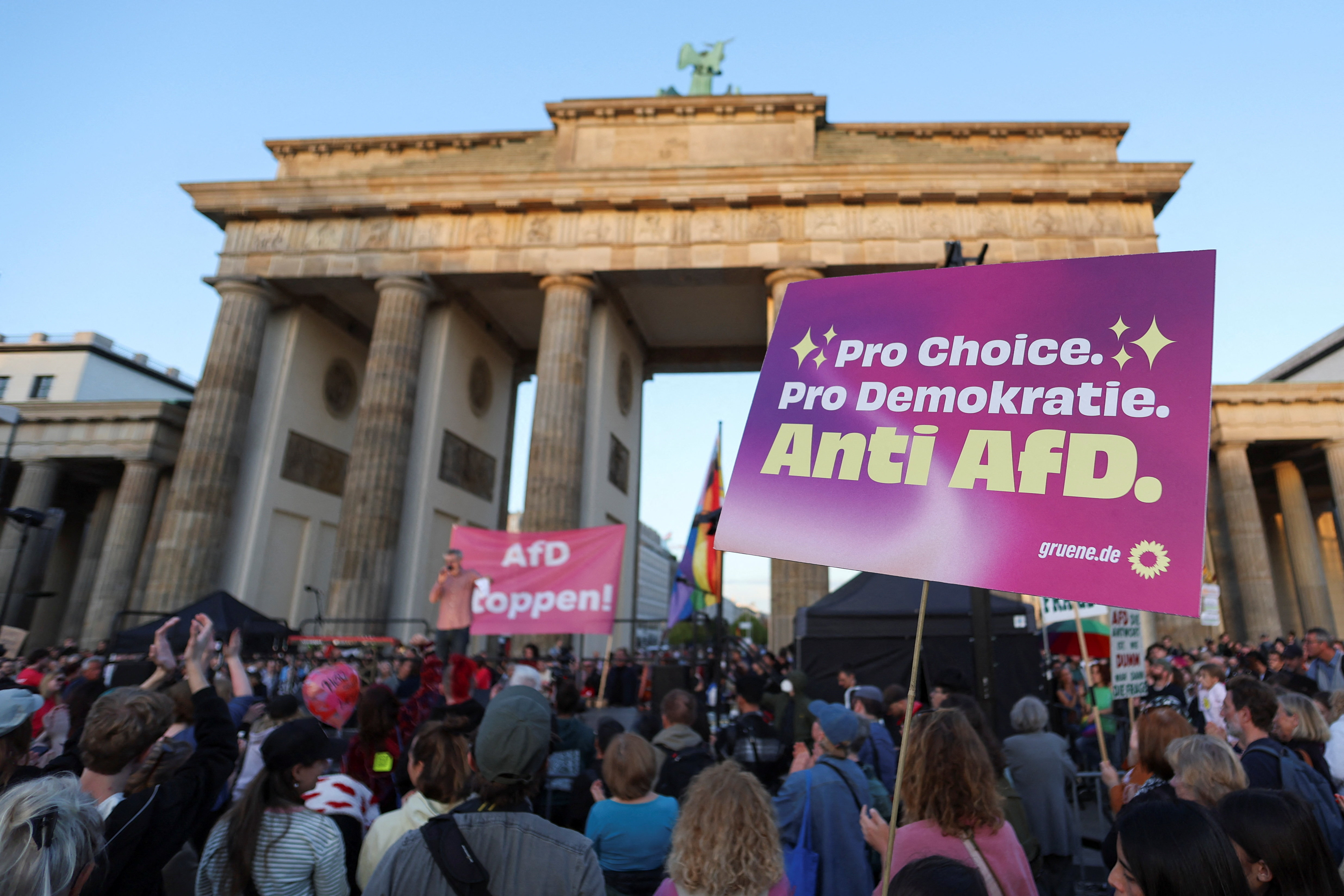
The election triumph of the German far-right party Alternative fur Deutschland (AfD) in the former communist state of Saxony-Anhalt on Sunday sent shockwaves across Europe. The party took almost 44 per cent of the vote, its best showing in an election so far although just short of an absolute majority. The party will try to build a coalition which would allow it to implement its anti-immigration policies and end subsidies for renewable energy and public broadcasting. It is also pro-Russia although that would not be able, at present, to have an impact on Germany’s international relations.
AfD also finished first in elections in Thuringia in 2024 but its victory was less decisive than on Sunday, something that enabled the other parties to put together a multi-ideological coalition. This, however, will not be possible in Saxony Anhalt as the margin of victory was too big and the Christian Democrats (CDU) acknowledged that they did not have a mandate to try to put a coalition together. The ‘firewall’ that worked in Thuringia in 2024 cannot work in Saxony-Anhalt, Germany’s poorest state, and there are fears that AfD will repeat this strong showing in elections in Mecklenberg-Western Pomerania on September 20.
The big fear in the rest of Europe is that AfD is more extreme than other so-called far-right parties such as France’s National Rally and the Brothers of Italy party, which have been targets of the European Left. France’s National Rally refuses to have anything to do with AfD, while the leader of Brothers of Italy and PM Georgia Meloni, who received very negative press when elected almost four years ago, has proved a safe pair of hands leading Italy’s longest-serving government in 80 years. AfD, on the other hand, causes much great fear because of its refusal to take a stand against the Nazis.
On the plus side, the next general election in Germany will be in 2029 which gives plenty of time for the conventional parties to win back public support. Everything will depend on how well the economy is doing. One of the reasons for AfD’s latest success was the economy, not migration according to pollsters. Cost of living issues rather than migration were the main concern of voters on Sunday. Energy prices stoked by inflation of 3 per cent drove voters away from the CDU, many seeing the result as a rebuke of Chancellor Friedrich Merz’s failure to revive the economy.
While there is great concern about the steady strengthening of AfD there is still time to change things before the general election in three years. It is up to the CDU and its coalition partner, the Social Democratic party, to revive the ailing German economy and stop AfD.





Click here to change your cookie preferences