
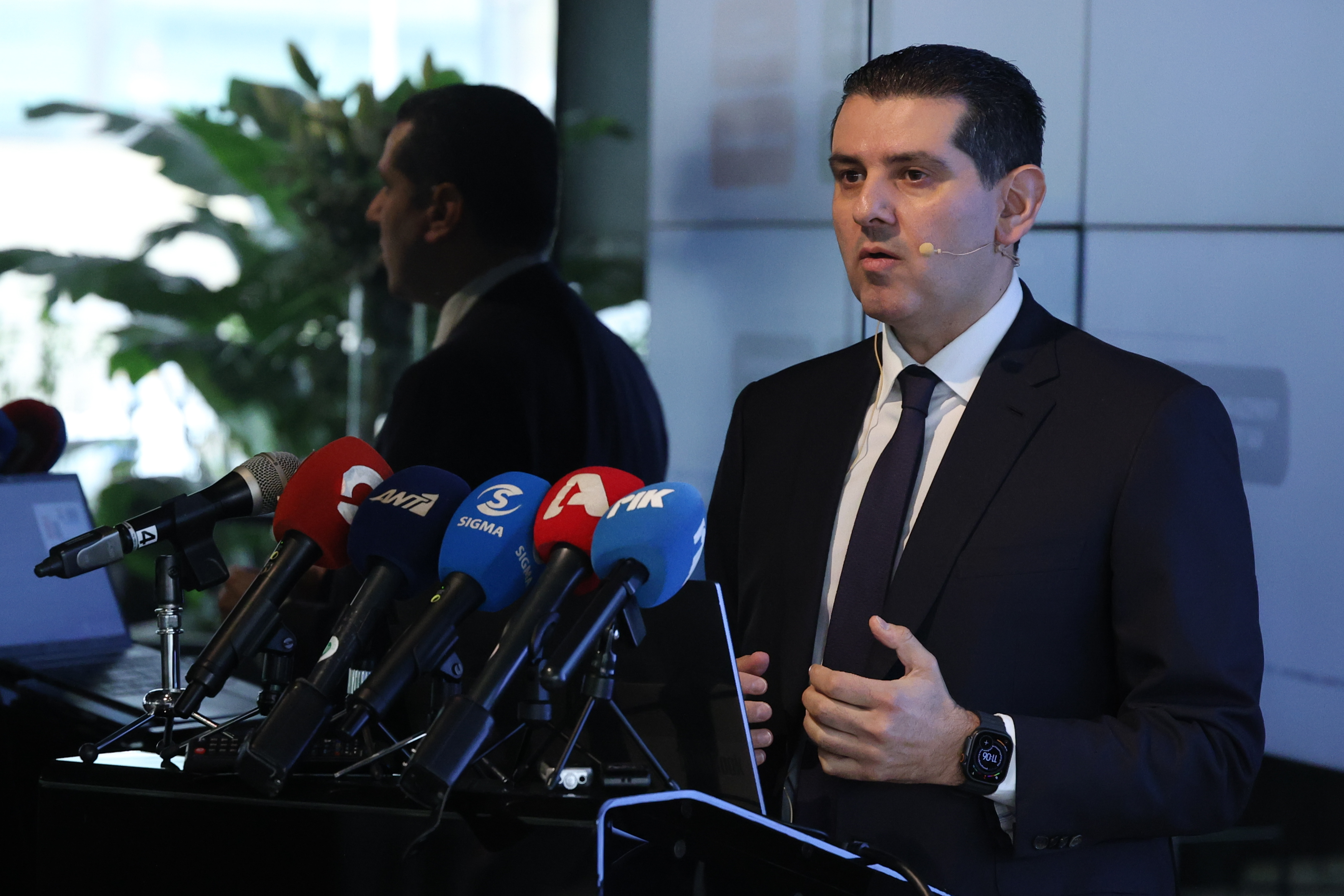
The government supports implementation of the Great Sea Interconnector (GSI) but takes seriously the project’s economic viability and its impact on consumers, Energy Minister Michalis Damianos said on Sunday.
In an interview with Kathimerini, he said calculations already carried out show the project will increase the price of electricity per kilowatt hour, and that if costs rise significantly, “additional funding from European or other funds should be sought”.
Damianos said Cyprus’s potential participation in the project’s share capital “is not an end in itself”, remarking that holding a minority stake would not by itself guarantee a substantive say in decision making.
He said other options were being considered, including adjusting the cost payback period, so that the burden on consumers is spread “in a sustainable manner”.
He said the government wants and supports the project because it would secure electricity supply for Cyprus and carries geopolitical value, adding that the Cyprus to Israel connection would follow the Cyprus to Crete link, forming part of the wider India Middle East Europe corridor (Imec).
He said President Nikos Christodoulides and Greek Prime Minister Kyriakos Mitsotakis had agreed to update the project’s technical and economic parameters, with a study by the European Investment Bank (EIB) expected to be completed before the end of the year, which would produce a clearer picture of the final cost.
Damianos said the overall price of electricity does not depend solely on the interconnector, pointing to the completion of the Vasiliko project, the import of natural gas for electricity generation and an increase in energy storage batteries as factors that would assist in reducing costs.
On whether Cyprus could withdraw from the project if it proved unviable, Damianos said “whether the Republic can refuse a project for which commitments have been made by the previous government is a difficult legal issue”.
He said the government would decide on any share capital participation once the EIB study was complete.
Referring to a 2024 framework of understanding he had previously described to the House as legally “watered down”, Damianos clarified that his comments concerned only its legal standing, stressing that the framework remains a political commitment that Cyprus respects.
He said the entry of French company Meridiam into the project “limits our concerns regarding geopolitical risk”, adding that France, the EU, Israel and the US all support its implementation.
Completion is expected around the end of 2031, though Damianos said it would not be appropriate to give a firm timetable given the scale of the task.
Damianos also addressed the resumption of maritime surveys, saying a Navtex notice from the Greek government is expected within weeks, and said suggestions that private business interests in Cyprus were pressuring the government over the GSI’s implementation were without merit.
He said strong interest remained from energy companies in Cyprus’s exclusive economic zone (EEZ), with a fourth licensing round expected by the end of next year.
According to Kathimerini, French President Emmanuel Macron told Mitsotakis during a meeting in Paris last Wednesday that France was ready to begin surveys in the Levant, saying “we are ready to start soon with a ship under the French flag”.
The newspaper reported that using a French flagged vessel would place primary responsibility for managing any interference with Turkey directly with Paris.
Sources cited by Kathimerini said the surveys are expected to begin between late September and early November.





Click here to change your cookie preferences