
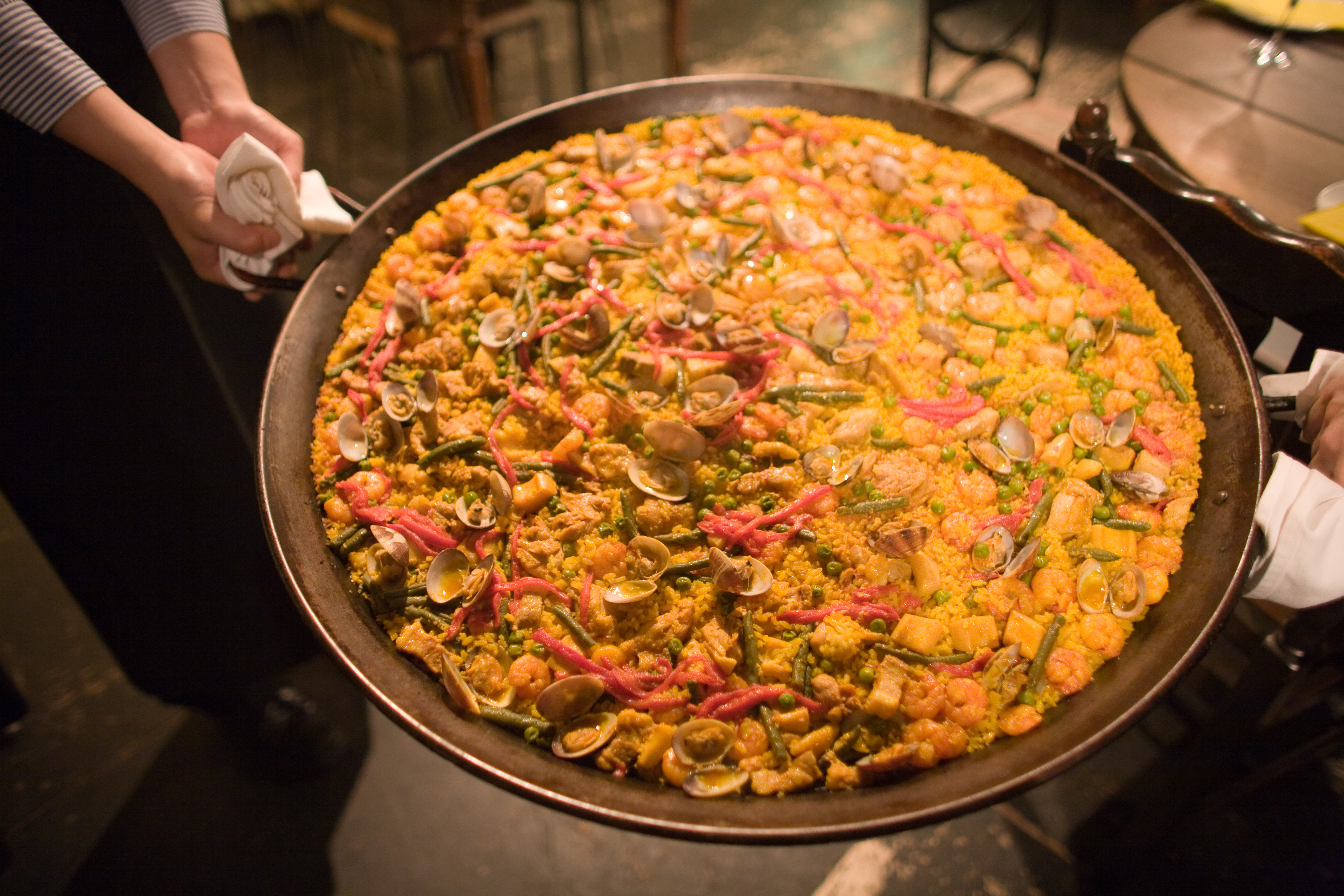
Paella – the emblematic rice dish of Spain – originates in the wetlands of Valencia, where rice cultivation was introduced by the Moors between the eighth and thirteenth centuries.
Early versions were humble field dishes cooked by farmers and labourers over open fires, combining rice with available ingredients such as rabbit, chicken, snails and seasonal vegetables.
Saffron, introduced through ancient trade routes, became the defining spice, giving paella its characteristic golden colour and subtle aroma.
Over time, the dish evolved from rural sustenance into a symbol of regional identity and Spanish culinary heritage, particularly associated with Sunday gatherings and communal eating.
Its cultural significance deepened in the nineteenth and twentieth centuries as it became a celebratory dish served during festivals, family occasions and national celebrations.
While Valencian paella is considered the most traditional form, numerous regional variations have developed across Spain, including seafood paella along coastal areas, mixed paella combining meat and seafood, and modern vegetarian interpretations.
Each version maintains the essential principle of cooking rice in a wide, shallow pan to achieve the prized socarrat, the caramelised crust at the base.
The dish has also evolved internationally, often adapted to local ingredients, sometimes diverging significantly from its original form. In contemporary cuisine, chefs experiment with artisanal stocks, heirloom rice varieties and refined presentation while still respecting its rustic roots.
Paella reflects its environment, with spring and summer versions highlighting fresh vegetables, seafood and herbs, while winter interpretations may feature richer meats and preserved ingredients.
In Cyprus, paella has found a natural place within the island’s Mediterranean food culture, appearing in seaside tavernas and home kitchens where local seafood and produce are incorporated, occasionally alongside ingredients such as halloumi or regional herbs that reflect Cypriot tastes.
Its communal style of serving aligns closely with Cypriot dining traditions, reinforcing its popularity during gatherings and celebrations.
From its agricultural origins in Valencia to its global presence today, paella remains a dish that embodies both simplicity and complexity.





Click here to change your cookie preferences