
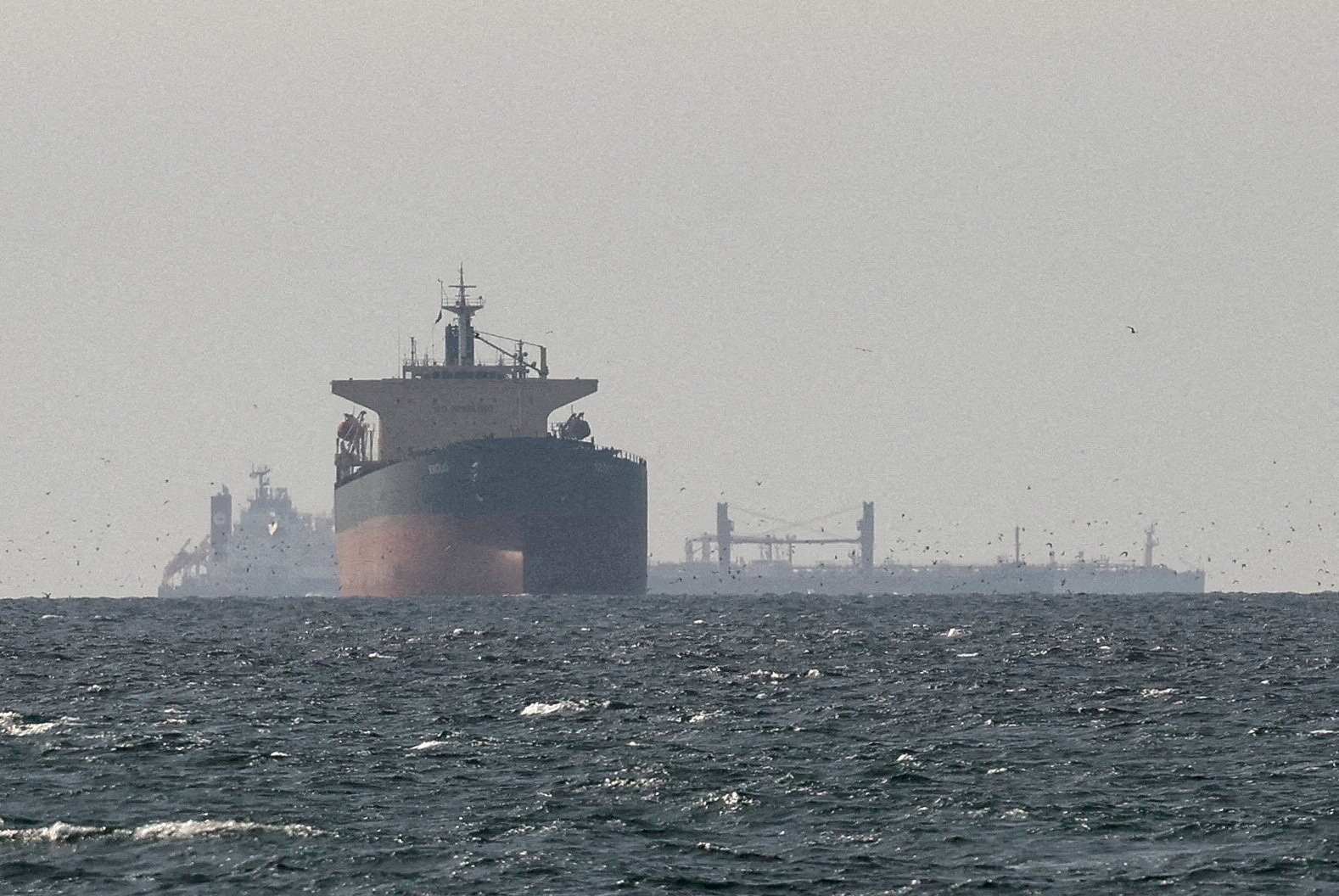
Ship traffic through the Strait of Hormuz fell to just nine vessels this week, as Cyprus joined dozens of countries in calling for the restoration of free navigation through one of the world’s most important shipping routes.
Preliminary Kpler data published on Friday showed that eight vessels left the strait and only one entered, down from 14 crossings a day earlier. The 10-day average stands at 18.
Some vessels may have crossed with their Automatic Identification System transponders switched off and would therefore not appear in the figures.
Among Thursday’s outbound traffic were a ballast very large gas carrier and a fully laden very large crude carrier, while the remaining vessels included Panamax and Supramax ships and short and medium-range tankers.
The only vessel recorded entering the strait was a Handymax dry bulk carrier.
Before fighting involving Iran began on February 28, Hormuz typically handled around 125 large commercial vessels a day, including tankers, gas carriers, bulkers and container ships.
The route is also one of the world’s most important energy corridors, carrying around 20 per cent of global crude oil and liquefied natural gas supply.
Despite the sharp fall in vessel numbers, oil continues to move through the strait.
Saudi Arabia has increased exports through Hormuz after attacks disrupted its East-West Pipeline and reduced the scope for shipments through the Red Sea. Reuters reported this week that Saudi crude flows through Hormuz had risen to around 2.9 million barrels per day, from about 700,000 bpd in August.
The shift, however, is becoming increasingly costly.
Reuters reported on Thursday that the cost of insuring tankers loading from Saudi Arabia’s main Red Sea port had tripled in recent weeks, adding another layer of pressure to a route previously regarded as an alternative to Hormuz.
The latest fall in traffic also comes as the security situation around the Gulf continues to worsen.
The International Maritime Organisation (IMO) had recorded 85 confirmed incidents involving commercial shipping in the region by September 24, with 24 seafarer deaths confirmed.
That was up from 80 incidents and 22 deaths on September 16.
Among the latest cases was the Cape Dao, which was damaged around 15 nautical miles north-east of Khasab, Oman, on September 23, with one seafarer killed.
Two days earlier, the Al Maryah and LR Stephanie were also damaged in the Strait of Hormuz, with two seafarers injured aboard the latter.
Cyprus joined 79 other countries and organisations at the United Nations on Thursday in calling for the urgent restoration of free navigation through Hormuz. The published statement lists Cyprus among the signatories.
Delivered by Bahrain’s Foreign Minister Abdullatif bin Rashid Al Zayani, the statement called for the safe, secure and unimpeded passage of vessels under international law.
It also rejected the imposition of tolls or conditions on ships using the waterway and warned that instability in both Hormuz and Bab el-Mandeb was adding to pressure on maritime security and global trade.
The signatories also stressed that commercial shipping and seafarers should never be used as leverage in wider political or military disputes. The official statement likewise called for full restoration of free transit without delay.
For Cyprus, the issue has become increasingly relevant both diplomatically and commercially.
Foreign Minister Constantinos Kombos met Al Zayani in New York on Wednesday, with regional developments and bilateral relations among the issues discussed on the sidelines of the UN General Assembly.
The pressure is also being felt more directly by the island’s shipping sector.
In Limassol this week, the Cyprus Marine Club hosted a discussion on how war-risk insurance is responding to developments in Hormuz, the Red Sea and the Black Sea.
The presentation, led by Aphentrica Marine Insurance Brokers, examined the higher premiums attached to voyages through high-risk areas, as well as cover for hull damage, salvage, crew liabilities and loss of hire.
The subject has become increasingly important for shipowners and managers as security risks spread across major trade routes.
The Cyprus Union of Shipowners (CUS) has also put freedom and safety of navigation among the main challenges facing the sector.
At its annual general meeting on September 18, president Polys Hajioannou referred to geopolitical developments affecting the safety of navigation, alongside the changing regulatory framework, the EU ETS, FuelEU Maritime and the green transition.
The concerns had also been taken to the UN a day earlier by International Chamber of Shipping (ICS) secretary general Thomas Kazakos, the former director general of the Cyprus Shipping Chamber.
Addressing an Arria-formula meeting of the Security Council on September 17, Kazakos warned that commercial shipping must be able to move through international waterways safely, predictably and without unnecessary restrictions.
“Shipping must not be held to ransom,” he said.
Turning specifically to Hormuz, he described the strait as one of the world’s most important arteries of commerce, carrying about a quarter of global seaborne oil trade, as well as substantial volumes of LNG and fertilisers.
He also argued that ships should not be forced to negotiate passage or accept arbitrary restrictions simply because geopolitical tensions had intensified.
Meanwhile, traffic through Bab el-Mandeb remained steadier on Thursday, with 26 vessels recorded crossing the strait, including 12 entering and 14 leaving.
One of the inbound vessels was a fully laden VLCC carrying Iraqi Basrah crude towards Egypt.





Click here to change your cookie preferences