
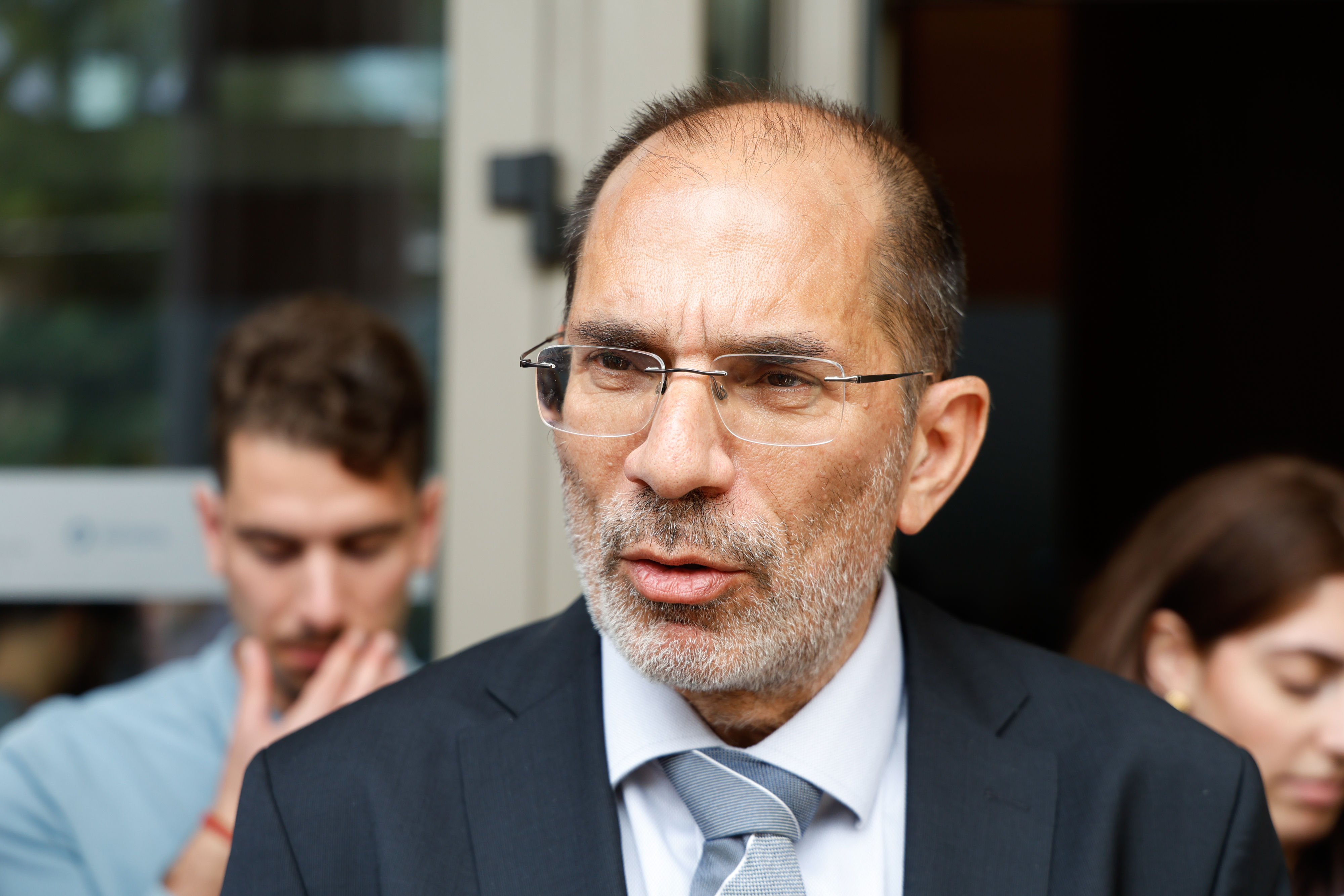
Alma leader Odysseas Michaelides on Wednesday said the Greek Cypriot side should work to dissuade the wider world from the view that it is the Greek Cypriot side itself which is responsible for the current impasse regarding the potential opening of new crossing points, and say that it is Turkey which is responsible.
He said after the day’s National Council meeting that he had suggested that the president handle the issue in a way which would disprove to international public opinion that the Turkish side is positive and the Greek Cypriot side is negative.
“Turkey is the biggest, main, and sole culprit for the lack of progress,” he said.
He added that the Greek Cypriot side could have said that “action could be taken” to open a crossing point in the eastern Nicosia suburb of Mia Milia, as the Turkish Cypriot side has been requesting since 2023, “in the event that negotiations begin on the basis of an agreed framework, rather than the other way around, as has been the case”.
“What I am saying is that our assessment is that the international community is not convinced, and many are looking for a reason not to be convinced, that Turkey is the main culprit for the lack of progress,” he said.
He described the wider state of affairs on the Cyprus problem as “tragic” and said that while “we agree that the Republic of Cyprus and the president should exhaust every possibility of breaking the deadlock in the next few days which remain and the window called Guterres remains open”, he is not optimistic about the prospects of progress.
‘Guterres will hand to his successor a blank piece of paper’
“Our assessment is that Turkey will achieve its goal and that the secretary-general, upon his departure, will hand over to his successor a blank piece of paper,” he said.
“In parallel with the efforts to save this progress, which in my assessment, will not succeed, we must begin drawing up our plan for the next day.”
Later in his remarks, he said that the UN secretary-general who follows incumbent Antonio Guterres “will be particularly wary of getting involved on the Cyprus problem”.
This, he said, is because Guterres “had the unique quality of being an absolutely good expert on the Cyprus issue, of being a European, of having very good relations with European Union leaders, and yet failed to make progress”.
“We consider this to be tragic, in the sense that it will be much more difficult from January onwards to convince the international community to deal with the Cyprus issue again. This only benefits Turkey,” he said.




Click here to change your cookie preferences