
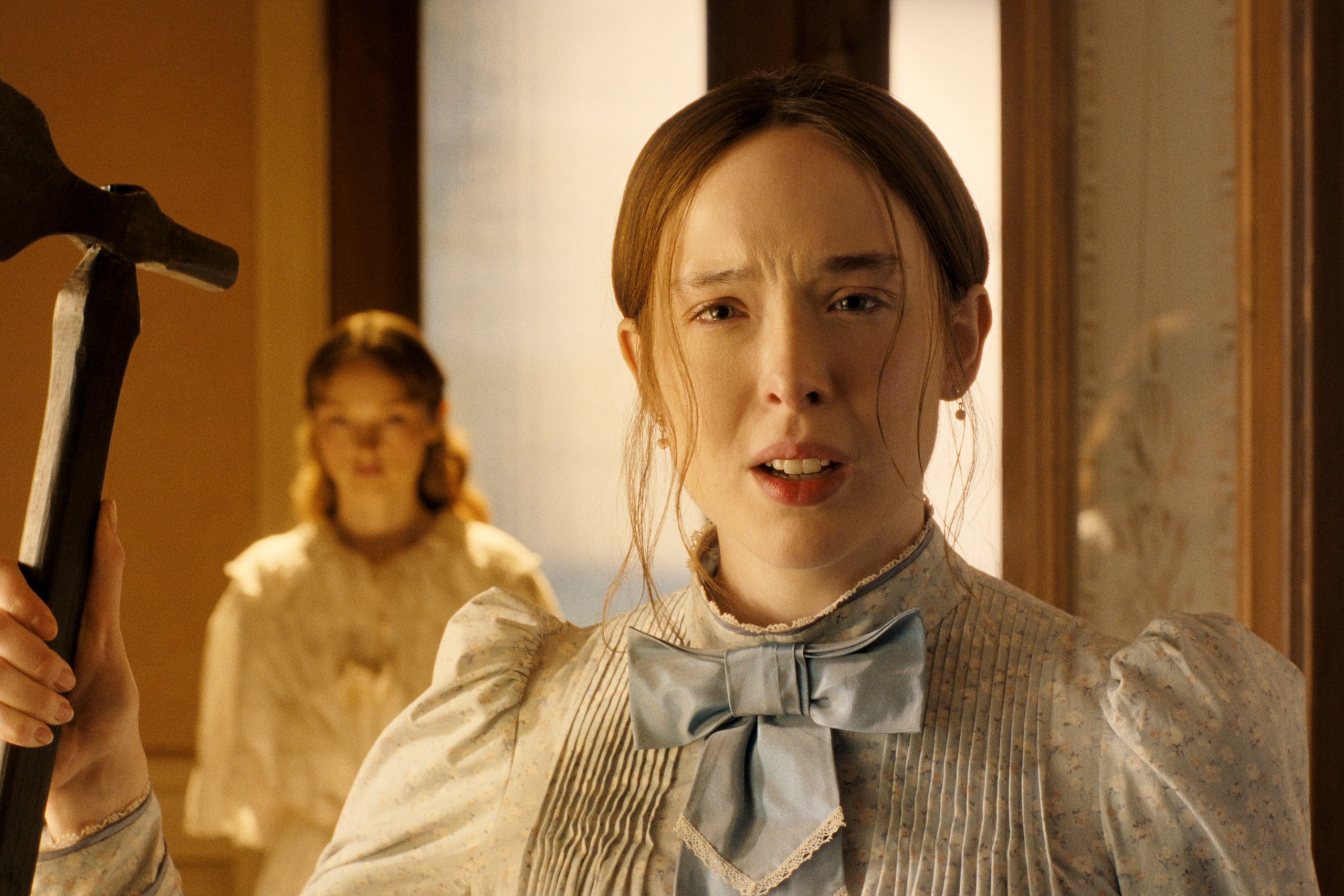
True crime and bloodbaths are not usually my cup of tea so it was a little surprising, even to myself, when my Netflix watch was Monster: The Lizzie Borden Story. The show is the fourth instalment of Ryan Murphy’s anthology series of serial killers, and was recently added to the streaming platform.
The first show on Jeffrey Dahmer hooked me with such intensity, that I was intrigued by the focus on a female murderer of the Victorian era. And one that was never actually convicted of the crimes she was accused of. Even more intriguing.
In 1892, Andrew and Abby Borden were brutally murdered inside their home in Massachusetts, whacked repeatedly with an axe. Soon after, suspicion fell on Andrew’s daughter Lizzie Borden who lived with them yet the act was so violent nobody believed a woman could have committed it. To this day, the case is one of America’s most mysterious unsolved crimes.
The show takes us inside the Borden home, shows us Lizzie’s sensitive nature, the neglect and bullying she receives from her stepmother and father and the unusual relationship she forms with her maid. The eight episodes lead up to the murderous act, her accusation and court order.
Weaved in between the bloody parts (and there are many), its cinematography focuses on nature and soft touches between Lizzie and her maid, Bridget ‘Maggie’ Sullivan, with whom she develops a kind of relationship.
What drew me to the show was not the murders themselves. We know that story already. It was how unbelievable some parts of the story feel: the lesbian love affair, how an actress apparently prepared Lizzie for the perfect trial and the surprising link between Lizzie Borden and Aileen Carol Wuornos, who shot seven men between 1989 and 1990. One was labelled an innocent woman who suffered a tragedy, the other was a serial killer on death row.
According to the show, Wuornos was fascinated by Lizzie’s story and how she got away and she, herself was “just another woman put to death for something a man would have gotten away with it,” as her character says in the final episode.
There are parts of the show that feel over the top: a hand-rotated vibrator for Lizzie’s period cramps, the maid-lover’s obsessive stories about the Countess of Báthory who murdered young girls and bathed in their blood to keep her youth, her coffin-maker father who chopped off his clients’ feet to make them fit, and an unnecessary graphic vomiting scene. I often felt Tim Burton vibes watching the show.
The story is intense, sad and at time feels stretched for the efforts of the TV show, yet it did throw me into a deep dive into Borden and Wuornos’ stories. Out of the all the gory, true crime shows, this is one the faint-hearted may watch too. Don’t let the opening scene put you off.





Click here to change your cookie preferences