
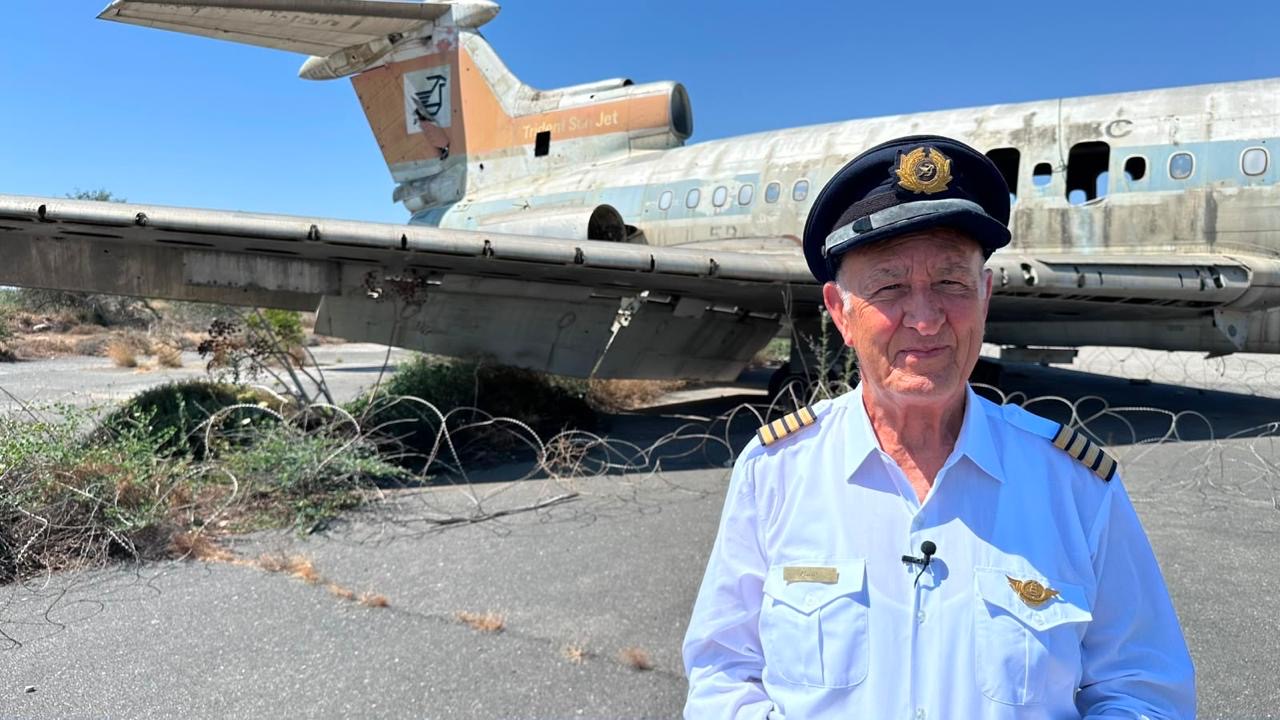
From a childhood fascination with flying to a career spanning Cyprus Airways and private aviation, Captain Adamos Marneros recounts the night he spotted ships approaching Cyprus hours before the Turkish invasion of 1974
Speaking from his home in Limassol, Captain Adamos Marneros recalls a life shaped by determination, chance encounters and a flight that still haunts him: his return to Nicosia in the early hours of July 20, 1974. His account brings together the fulfillment of a boyhood dream and the painful memories of a country on the brink of war.
Long before he watched ships gathering off the coast of Cyprus from the cockpit of his Cyprus Airways Trident passenger jet, Adamos Marneros was a boy who could not take his eyes off the sky. “For some reason, I had a love for anything that flew, whether it was a helicopter, an airplane, a bird,” Marneros says. “Occasionally, propellant aircraft would fly the route for Beirut over the village. And my eyes would be stuck on it until it disappeared from the sky. I loved the idea of flying and I loved the idea of becoming a pilot.” That childhood fascination carried him through family tragedy, restaurant shifts in England and the struggle to pay for flying lessons, eventually bringing him home to fly for Cyprus Airways.
Born into a family of eight, Marneros describes a happy, if frugal, childhood. “I had a business mind, for pocket money, and in spring, I used to wonder in the fields to pick daffodils… I put them into bunches and I’d walk to Verengaria village, where (British military personnel and their families were housed during British rule) pilots, engineers who worked in Akrotiri lived. I found a weak spot in the barbed wire fencing and with my bucket of water and flowers, I’d go underneath the wire – I was very brave those days, Verengaria was out of bounds for anybody who wasn’t British or didn’t work for the British – and I knocked on doors to sell my flowers.”
One family buying them took him under their wing. “Fly Lieutenant Swinburne walked in in his uniform,” recalls Marneros, “he was a pilot. He bought me some books, and I would go to their house regularly. We kept in touch through letters after they went back to England and with my little English, I would reply. He kept sending me books, and sent me enough information on how to apply and where to apply to go for an interview with the ministry of aviation in the UK. I kept that information and of course, I became more and more excited about becoming a pilot.”
A childhood dream takes flight
By 1960, the 16-year-old Marneros had graduated from gymnasium, the same year his father was killed by gangsters from a vendetta during British rule, and began working as a docker at Limassol port. “1960 was a time of a new republic, there were no jobs unless you had contacts,” he recalls. Eventually, he became a messenger for Amathus Navigation, another chance encounter with the general manager who encouraged Marneros’ decision to leave the island a couple of months into the job to pursue his dream. “He paid for the air ticket to England and the staff collected 50 pounds for me.”
At 18, he boarded an Olympic Airways flight with a single Cypriot contact who owned the Metropole Hotel restaurant in Yarmouth. “I had a dream. Naturally, I asked the stewardess if I could go in the cockpit but the pilot refused. I promised myself that when I became a pilot, all children would be welcome.”
He worked as a dish washer in the hotel, eventually becoming a waiter, perfecting his English and making money. “In Cyprus, there wasn’t a day I got out of bed and went outside without seeing people I recognised, and I thought, God, I don’t recognise anybody here.”
He eventually moved to London, determined to get an interview with the civil aviation office to learn how to fly. That’s where he found out that his gymnasium certificate wasn’t enough to be accepted in the RAF; he needed O and A levels. “I enrolled in West Ham College of Federal Education to get my GCSEs and worked in a Greek nightclub in Soho… during summers and holidays I worked in Yarmouth where the money was better.”
GCSEs in hand and medical check done, he was due to start training with the RAF in October 1965. But a chance encounter took him on another path. A man he served in the pub he was working in introduced him to the London School of Flying that trained pilots for civil airlines. At the time, “it cost £3,800 for 52 weeks to become a pilot. If you had at least £1,500, you had more chance to be sponsored by an airline.” He looked around for sponsors, including Cyprus Airways, and was eventually sponsored by Invicta Airways who also offered him a contract to work for them for three years.
“I flew Vikings and eventually, I was promoted to a larger DC 4 engine, which took me far to Cape Town, Bangladesh, until the airline went bust.”
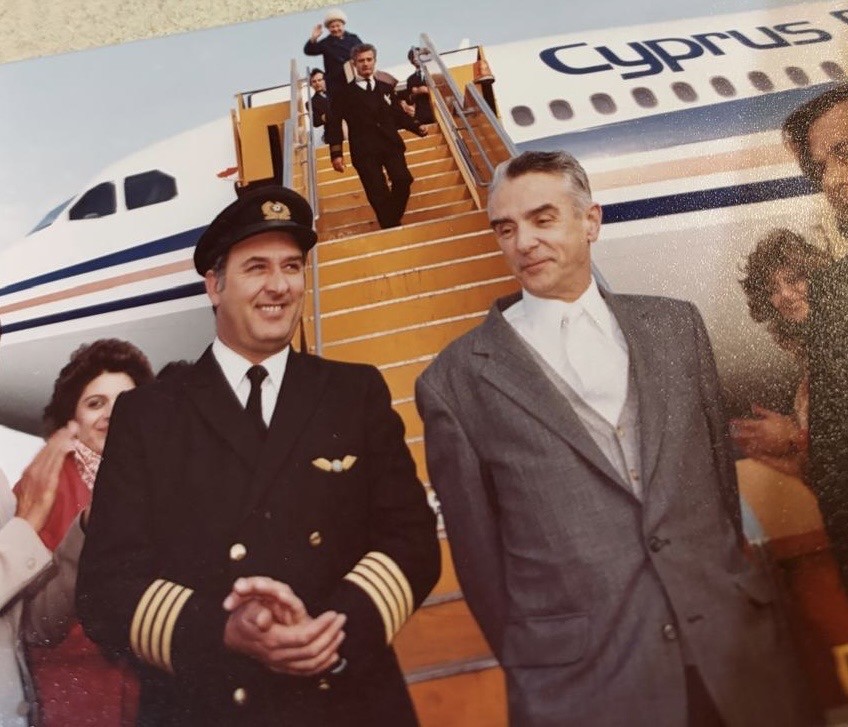
On the job market once again, he finally got an interview with Cyprus Airways, moving to Cyprus as a co-pilot in December 1969. “All pilots of Cyprus Airways were British. I came to Cyprus in 1969 as a co-pilot, building up my hours and experience, until I became the first Cypriot Captain in May 1974.” Little did he know that three months later, the unthinkable would happen.
The flight over Cyprus before the invasion
“One of the flights that I had to do was on the July 18, 1974,” Marneros says, a moment that “left an imprint on my life, not a pleasant one, a sad one”. After the coup on July 15, 1974, the airport was closed but Nicosia International Airport reopened to evacuate tourists, Cypriots, and foreigners.
“I flew the first flight out of Cyprus to London with a schedule to return back on the 19th via Rome. I arrived at Heathrow late afternoon, the flight was full, including my ex-wife and my young baby daughter. People were very frightened. Very anxious,” he says.
“I managed to get my wife and daughter on a train to go to my in-laws and went to the hotel. All night, the TV was showing Turkey getting prepared to invade Cyprus. It was obvious there was going to be an invasion. Everybody knew that. In fact, reporters who were at the airport when I arrived were interviewing people who came from Cyprus, and they asked me, “Are you taking this flight back to Cyprus? And I said yes. ‘You must be mad,’” they replied.
The next day, Marneros and his two co-pilots left Heathrow late in the afternoon headed for Rome. “We were to take passengers to Rome, refuel and go on to Nicosia. But we only had seven passengers on board.” Regardless of Marneros’ efforts to cancel the flight, the instructions were clear: fly to Cyprus. “I couldn’t disobey because if I did and there was no invasion, there’s no way I would be let back into Cyprus.
“At midnight we took off from Rome, heading to Cyprus. Over Rhodes we made a right turn straight for Cyprus… we were pointing down towards the coast, and could I see the coast of Turkey. I noticed six or seven dots, which I hadn’t seen before. These dots were not islands, I knew that, and I could see that behind these dots, there was a whitewash, and I presumed they were boats heading for Cyprus. When I changed frequency to Cyprus, I passed this information on to air traffic control in Nicosia.
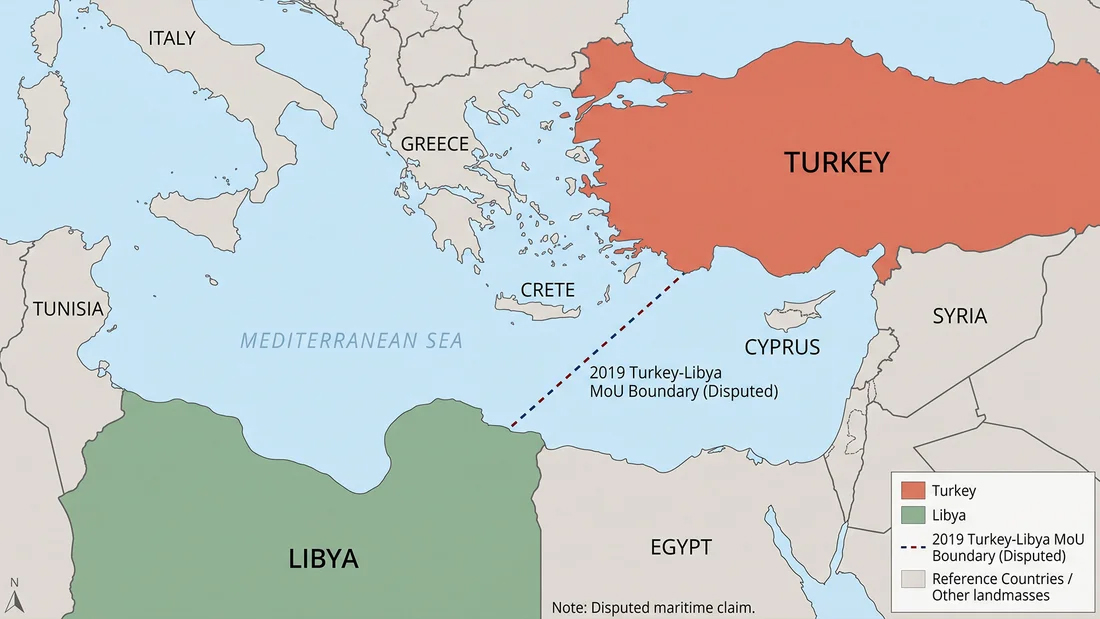
“When the coast of Cyprus came up on my screen, I noticed seven dots just outside Paphos. I asked Nicosia if I could stay at 15,000 feet and do a round of Cyprus to see what was going on all around the island. I was the only airplane in the air and they allowed me. I headed towards Larnaca and followed the coast outside Famagusta. I saw a huge dot and two smaller dots – Hermes, the Royal Navy aircraft and helicopter carrier – and then I went towards Apostolos Andreas and made a left turn; that left turn showed me a picture which was frightening. I drew a map of Cyprus and wrote down all the ships I saw. 21 ships around Cyprus.”
Marneros says he through about heading back to Rome. Yet with the consent of his co-pilots, he decided to land in Nicosia.
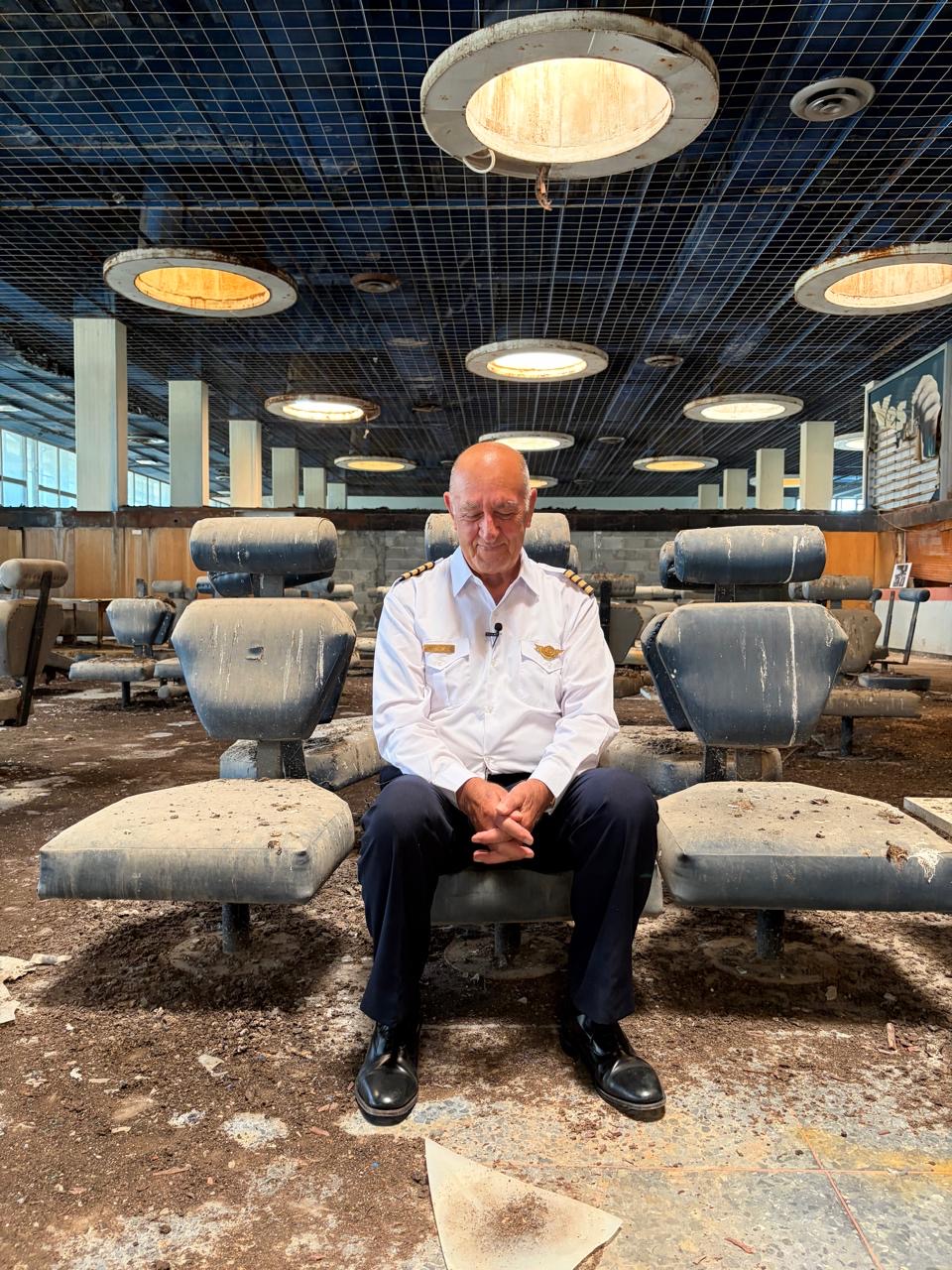
“We landed at 3.15am, in the dark. I went to the operations room, the airport was quiet at this point. There were a few Eoka B people wandering around. There were three people on shift that night and I suggested they pack up and go home because there was going to be an invasion. I went to my car… All I could see was the sky full of Turkish paratroopers coming down like mushrooms, a twin probe aircraft dropping them, going over the runway and turning right to return to Turkey. I stood there watching them so clearly, so vividly, with their guns in their hands, and I thought, if I stay here, I’m dead.”
Rebuilding a career after the war
After the war, Marneros sought to fly again but failed to take up a post with what was then Air Ceylon as his wife did not want to move to Sri Lanka.
Still on a £180 pound a year retainer from Cyprus Airways, Marneros was called in to the old airfield in Larnaca to rebuild flying operations. Once the runways where in place and terminals built, Marneros describes the small airplanes the state rented from British Midlands that could take off from short runways and fly to Athens, Beirut, Tel Aviv. “When we extended the runway, we brought DC9s from Douglas, America and we trained for those. When the runway was made even bigger, we brought DC8s to fly Larnaca to London direct. And eventually we bought airbuses.”
Marneros was the first to train on the Airbus and the first to fly an Airbus to Cyprus. “I came off the plane last and I could see my mom coming towards me to hug me.”
As chief pilot, instructor and examiner, he made a career at Cyprus Airways but didn’t have a “good relationship with the unions” and eventually took compensation when the company was looking to downsize its pay roll. He was then hired to fly for the Sultan of Brunei. “He had bought a private Airbus and wanted someone to teach him to fly it,” says Marneros. “I accepted and signed a contract for a year, which became nine. I lived like a king. It was an experience with the richest man in the world, the best people that you can meet, in a jungle with luxury.
“My last flight was from New York to Charles de Gaule in 2003 to bring the Sultan’s son to Paris.” By this point Marneros has made the switch from flying commercial to private. “I was still living out of a bag but under very different circumstances. And I loved it.”
Once Marneros chose to stay on the ground, it was his venture in the flower business as a young boy that came back to him. He went into the business of old people’s care homes after his ex wife got ill. He bought and managed three old people’s homes in the UK and eventually sold them to return to Cyprus, the place he calls home, as a witness of its history and a guardian of the skies he’s explored. Three years ago he met up with one of the Greek families on that last landing at Nicosia airport. He’s still in touch with one of his co-pilots from that flight. And from his home base in Polemidia, where he has retired, he sometimes goes into schools to talk about Nicosia Airport and its importance in Cyprus’ history.
Click here to change your cookie preferences